How Do Headphones Produce Bass: The Science Explained

If you use headphones with an iPhone, Android phone, laptop, or home audio system in the United States, bass comes from the same basic process: a small speaker driver moves air back and forth at low frequencies. That motion creates changes in air pressure that your ears hear as kick drums, bass guitars, movie effects, and deep electronic tones.
Headphones do not create bass through a special “bass signal” alone. They need the right combination of driver movement, ear-cup design, a good seal, enough electrical control, and a properly tuned audio source. This guide explains how headphones produce bass, why some models sound deeper than others, and what to check when bass is weak.

What Is Bass in Headphone Audio?
Bass is the low-frequency part of sound. In common audio use, bass usually covers about 20 to 250 hertz (Hz), although the exact range varies by design and personal preference.
A hertz measures cycles per second. A 60 Hz tone makes the driver move through 60 full back-and-forth cycles each second. A 20 Hz tone moves much more slowly, but the driver must travel farther to create a strong sound level.
Bass includes several useful ranges:
| Bass range | Approximate frequency | Common sound |
|---|---|---|
| Sub-bass | 20–60 Hz | Deep rumbles and low movie effects |
| Mid-bass | 60–120 Hz | Kick drums and bass guitar weight |
| Upper bass | 120–250 Hz | Warmth, body, and fullness |
These ranges overlap. A headphone that has strong sub-bass may not have strong mid-bass. That is why two headphones can both sound “bass-heavy” while producing very different results.
Bass is also affected by sound pressure. The driver must move enough air to create pressure changes near your eardrum. Because headphone drivers are small, they rely on very short distances between the driver and your ear.
How Do Headphones Produce Bass?
Headphones produce bass when an electrical audio signal makes a driver move air at low frequencies. The driver acts like a tiny pump: it moves outward and inward, creating pressure waves that reach your ear.
Most headphones use a dynamic driver. A dynamic driver has four main parts:
- A permanent magnet
- A voice coil
- A diaphragm
- A suspension system
The music signal travels through the voice coil. The coil sits in the magnetic field of the permanent magnet. When the signal changes direction, the magnetic force on the coil also changes direction.
That force moves the coil and the attached diaphragm. The diaphragm pushes air when it moves forward and pulls air when it moves back. The repeated air-pressure changes form the sound wave that your ear detects.
Why bass needs more driver movement
Low frequencies have long wavelengths. A 50 Hz sound has a wavelength of about 6.9 meters in air, while a 10,000 Hz sound has a wavelength of about 3.4 centimeters.
Headphones cannot reproduce a full bass wavelength inside the ear cup. Instead, they create the needed local pressure changes close to your ear. To produce strong low bass, the diaphragm often needs greater excursion, which means greater travel from its resting position.
A simple relationship helps explain this:
Bass output depends heavily on how much air the driver moves.
Air movement depends on both diaphragm area and excursion:
Volume displacement = diaphragm area × diaphragm movement
A larger driver can move more air at the same excursion. A smaller driver may need to move farther to create a similar bass level.
This does not mean larger headphones always have better bass. Driver tuning, ear-cup volume, seal, distortion, and amplifier control also matter.
Why the driver does not move at only one speed
A music signal contains many frequencies at once. The driver follows the changing electrical waveform rather than producing one fixed tone.
For example, a track may contain:
- A 60 Hz bass guitar note
- A 100 Hz kick drum fundamental
- A 1,000 Hz vocal tone
- A 10,000 Hz cymbal detail
The driver combines these movements into one complex motion. The diaphragm may move slowly for the bass while making smaller, faster movements for treble. This combined motion recreates the changing waveform of the recording.

What Makes Headphones Sound More or Less Bass-Heavy?
The main factors are the driver, enclosure, ear seal, tuning, source, and fit. The driver creates the sound, but the rest of the headphone system determines how much bass reaches your ears.
Driver size and excursion
A larger driver can move more air, but size alone does not determine bass quality. A well-designed 32-millimeter driver may produce deeper bass than a poorly designed 50-millimeter driver.
Important driver traits include:
- Maximum excursion
- Diaphragm stiffness
- Motor strength
- Suspension control
- Distortion at high volume
- Resonant frequency
A driver that moves too far may create distortion. You may hear bass as fuzzy, loose, or muddy instead of clean and deep.
Closed-back and open-back ear cups
Closed-back headphones use a sealed or mostly sealed ear cup. The enclosed air can help build pressure around your ear. These models often make strong bass easier to achieve, especially when the pads seal well.
Open-back headphones allow air to pass through the rear of the driver. They can sound spacious and natural, but they usually leak sound and may deliver less physical bass pressure.
Neither design is automatically better. Closed-back headphones often suit travel, gaming, and noisy rooms. Open-back headphones often suit quiet home listening.
The ear-pad seal
A proper seal is one of the most important parts of headphone bass. If air escapes around the pads, low-frequency pressure can drop sharply.
Bass may weaken when:
- Glasses create a gap under the ear pads
- The pads are too small
- The headband pressure is too light
- Hair breaks the seal
- The pads have flattened with age
- The headphones do not fit your head shape
This is why moving the ear cups slightly can change bass. The fit changes the enclosed air volume and the path that sound takes to your ears.
Headphone tuning
Manufacturers use acoustic parts and electronic filters to shape frequency response. Tuning may raise or lower parts of the bass range.
A bass boost can increase:
- Sub-bass rumble
- Mid-bass punch
- Warmth
- Perceived fullness
Too much boost can mask vocals and make drums sound soft. A dip in the upper bass can make headphones sound thin, even if their sub-bass reaches very low frequencies.
Your audio source and amplifier
The source must provide the bass information in the recording. The amplifier must then deliver enough voltage or current to control the driver.
Most portable headphones work well with phones and laptops. Some high-impedance or low-sensitivity headphones may need a dedicated headphone amplifier to reach a useful volume.
More amplifier power does not automatically mean more bass. It mainly provides more available headroom and control. If a headphone already reaches the needed volume without distortion, extra power may produce little audible change.
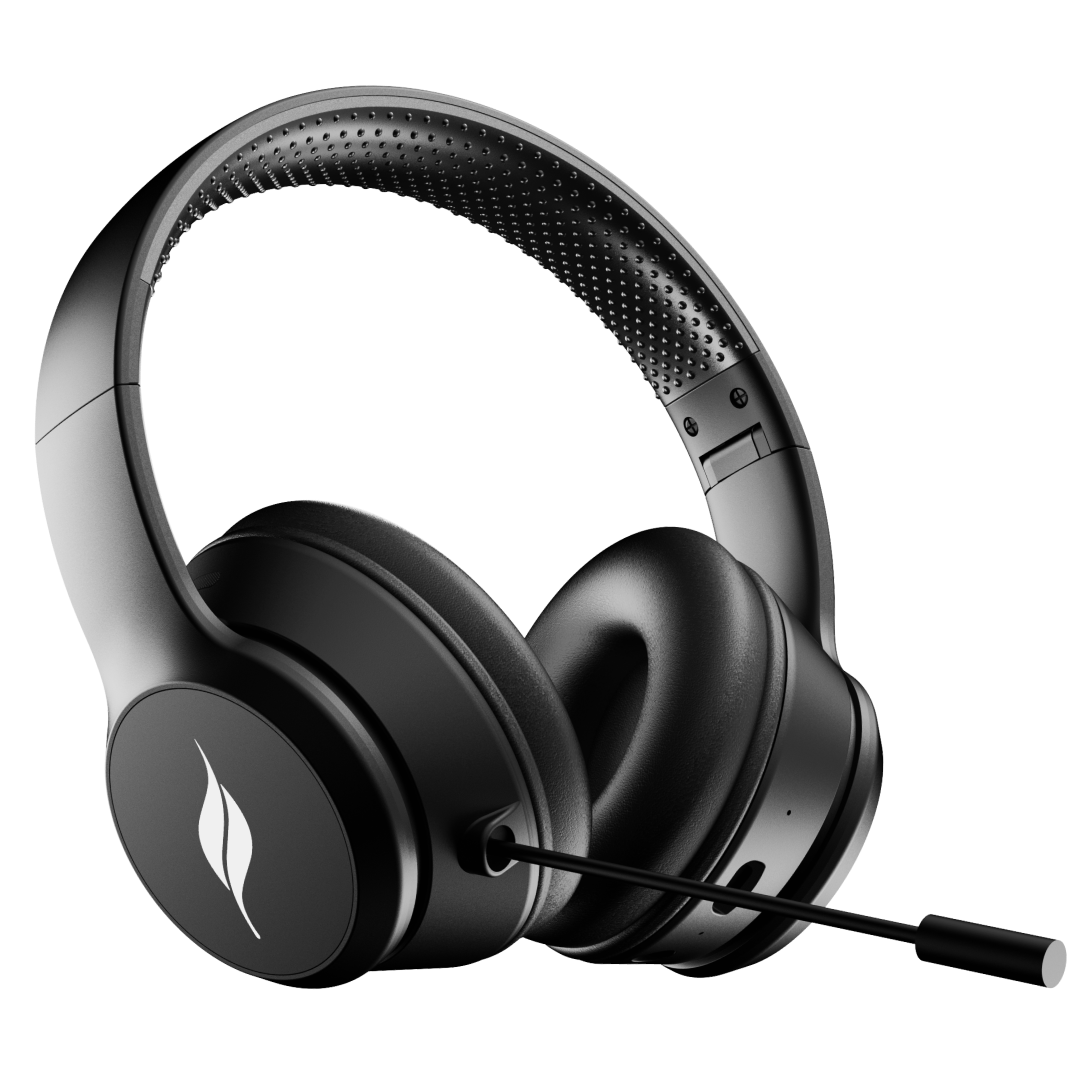
Why Does a Good Seal Increase Bass?
A good seal increases bass because it prevents low-frequency air pressure from escaping. Low-frequency waves are especially sensitive to leaks between the ear pad and your head.
You can think of a sealed headphone as a small air chamber. When the driver moves, it changes the pressure inside that chamber. If the chamber has a large leak, the driver cannot build the same pressure near your ear.
This effect is different from noise cancellation. Passive sealing comes from the ear pads and ear-cup shape. Active noise cancellation, or ANC, uses microphones and electronics to reduce outside noise.
ANC headphones may sound bassier in a noisy airplane or train because they reduce low-frequency background noise. That does not always mean they produce more bass. They may simply make the bass easier to hear.
A quick fit test can reveal a seal problem:
- Play a familiar song with steady bass.
- Press the ear cups gently against your head.
- Listen for a noticeable increase in low-end sound.
- If bass improves, inspect the pad fit, pad condition, and headband adjustment.
If pressing the cups changes the sound, the headphone fit is likely limiting bass.

Do Wireless and Wired Headphones Produce Bass Differently?
Wireless and wired headphones use the same basic acoustic idea: a driver moves air. The main difference is how the audio signal reaches the driver.
Wired headphones
A wired model receives an analog electrical signal through its cable. The headphone amplifier drives the voice coil directly.
The result depends on:
- The source device
- The cable connection
- The headphone impedance
- The headphone sensitivity
- The amplifier's output capability
Wireless headphones
A wireless model receives digital audio through Bluetooth or another wireless link. Its internal electronics convert the signal and use a built-in amplifier to drive the driver.
Wireless headphones can also apply digital signal processing, or DSP. DSP may control:
- Bass response
- Volume limits
- Active noise cancellation
- Equalization
- Distortion correction
- Battery-saving behavior
Wireless headphones do not inherently have more or less bass. Their bass depends on the driver, tuning, seal, DSP, amplifier, and battery state.
Some wireless headphones may change their sound when the battery is very low. The exact behavior depends on the model. A wired mode may also bypass some wireless processing, so the sound can differ between modes.
How Do Planar Magnetic and Dynamic Headphones Make Bass?
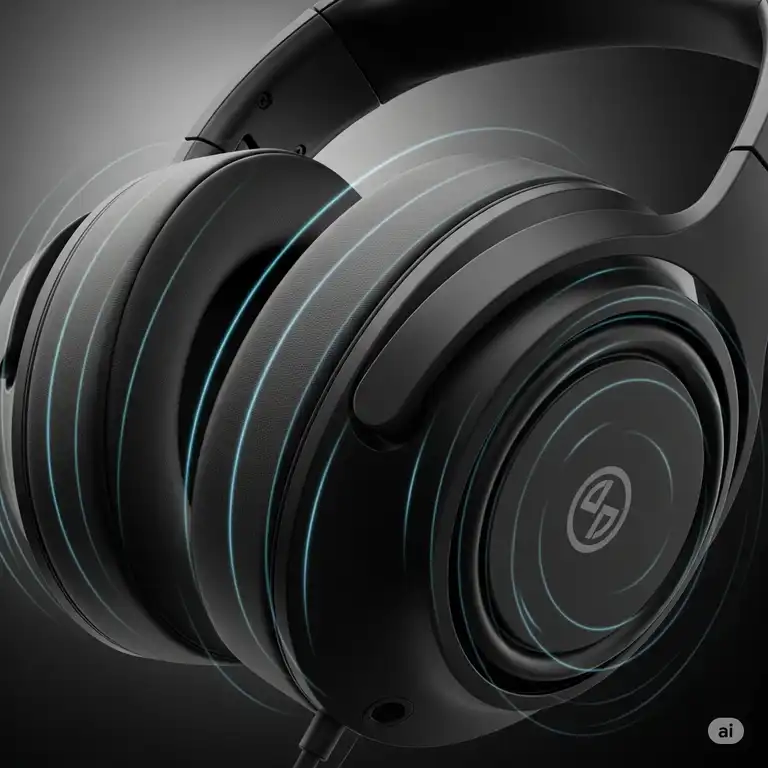
Dynamic and planar magnetic headphones use different driver structures, but both produce bass by moving air.
Dynamic drivers
Dynamic drivers use a voice coil attached to a diaphragm. They are common because they can be efficient, compact, and relatively affordable.
Their bass depends on the motor, diaphragm, suspension, and enclosure. Many dynamic headphones can produce strong bass with a phone or laptop.
Planar magnetic drivers
Planar magnetic headphones use a thin diaphragm with conductive traces placed in a magnetic field. The force spreads across much of the diaphragm instead of acting mainly through a small voice coil.
This design can offer controlled movement and low distortion, but many planar magnetic models need more amplifier power. That is not a universal rule, so the manufacturer's impedance and sensitivity specifications still matter.
Planar headphones can produce deep bass, but their open or closed enclosure design, tuning, and fit remain important. The driver type alone cannot predict whether a headphone will sound bass-heavy.
Electrostatic headphones
Electrostatic headphones use a very thin charged diaphragm between two electrically charged plates. They can reproduce detailed sound, but they require specialized amplification.
Their driver technology does not make them automatically strong or weak in bass. The full design, including the enclosure and frequency tuning, determines the result.

Why Is Bass Weak, Boomy, or Distorted?
Weak, boomy, or distorted bass usually points to a fit, source, tuning, or hardware issue. Use the safest and simplest checks first.
Weak bass
Possible causes include:
- A poor ear-pad seal
- Incorrect ear-cup placement
- A damaged or worn pad
- A loose cable or connector
- A device equalizer setting
- A mono or channel-balance problem
- A recording with little low-frequency content
- A headphone design with a restrained bass response
Start by playing a known recording. Check the fit, then compare the headphones with another device. If the bass is weak only on one device, inspect its EQ, audio effects, accessibility settings, and volume controls.
Boomy bass
Boomy bass can result from too much mid-bass energy, a loose enclosure, or heavy equalization. It can also come from the room when using speakers, but room acoustics are not normally a major factor with headphones.
Try reducing the EQ band around 80–200 Hz rather than lowering all bass. Small changes are often enough.
Distorted bass
Distortion may come from:
- Excessive volume
- Too much EQ boost
- A damaged driver
- A loose part inside the ear cup
- An amplifier running out of headroom
- Poorly encoded or damaged audio
Lower the volume first. If you use a bass boost, reduce the overall preamp level in the equalizer to prevent clipping. Test another recording and another source.
If one ear produces buzzing or rattling on every bass note, stop using the headphone at high volume. The driver or enclosure may need repair or replacement.

How Can You Increase Bass Without Damaging Sound Quality?
You can often improve perceived bass by fixing the fit before changing the equalizer. A good seal gives the driver a better acoustic load and may restore bass that was already present.
Use this order:
- Adjust the fit. Center each ear cup over your ear and set the headband evenly.
- Inspect the pads. Replace pads that are cracked, flattened, or too thin.
- Check the source. Turn off conflicting sound modes and confirm that the balance is centered.
- Use moderate EQ. Add a small boost to the desired bass range.
- Lower the preamp when boosting. This helps prevent digital clipping.
- Compare with another track. Some recordings have little sub-bass by design.
- Check for hardware problems. Rattles and one-sided bass may indicate damage.
Equalization cannot make a driver move beyond its safe mechanical limits. Large boosts can cause clipping, strain, and distortion. A smaller boost across a narrow range is usually more controlled than raising every bass slider.
The best EQ setting depends on your headphones, hearing, music, and listening level. Use a trusted measurement-based EQ profile only when it matches the exact headphone model and pad type. Changing ear pads can change the sound enough that an EQ profile no longer matches.

How Much Bass Is Safe to Hear?
Bass is not harmless just because it feels less sharp than treble. Loud headphones can damage hearing at any frequency when exposure is high enough.
The National Institute for Occupational Safety and Health recommends an exposure limit of 85 dBA averaged over an eight-hour workday for occupational noise. Consumer listening is not identical to workplace exposure, but the principle is useful: louder sound allows less safe listening time.
Use these habits:
- Keep volume as low as practical.
- Take quiet breaks.
- Use noise isolation or ANC in loud places instead of raising volume.
- Watch for ringing, muffled hearing, or ear discomfort.
- Stop listening if sound causes pain.
- Seek medical advice for persistent ringing or hearing changes.
Bass can feel less loud than treble because it has a different physical and perceptual effect. Do not use vibration or comfort as the only measure of safe volume.

Common Misconceptions About Headphone Bass
Several popular claims oversimplify how low-frequency sound works.
“A larger driver always has more bass”
A larger driver can move more air, but bass depends on the entire acoustic system. A smaller driver with better excursion, tuning, and sealing can outperform a larger one.
“Higher impedance means stronger bass”
Impedance describes how much the headphone resists the flow of alternating current. It does not directly describe bass quality. A high-impedance model may need more voltage, while a low-sensitivity model may need more power.
“More power always improves bass”
More power can help a headphone reach a higher level without clipping, but extra power does not repair poor tuning or a leaking seal. Excessive power can damage a driver or your hearing.
“Bass response down to 20 Hz proves deep bass”
A specification that lists a 20 Hz lower limit does not show how loud the headphone is at 20 Hz or how much distortion it produces there. Frequency-response limits need a tolerance and measurement method to be meaningful.
“Wireless headphones cannot have accurate bass”
Wireless headphones can use DSP to tune bass precisely. Their performance depends on implementation, not simply on the presence of Bluetooth.

Frequently Asked Questions
Do headphones need a subwoofer to produce bass?
No. Headphones do not need a separate subwoofer. Their drivers can produce low-frequency sound close to your ears. A subwoofer moves much more air in a room, so it creates stronger physical impact across your body. Headphones create a more local sensation.
Why does bass disappear when I wear glasses?
Glasses can create a gap between the ear pads and your head. That leak reduces low-frequency pressure. Try adjusting the glasses, repositioning the ear cups, or using pads that fit better around the frame.
Can headphones produce bass below 20 Hz?
Some headphones can reproduce signals below 20 Hz, but the output may be very quiet or distorted. Human hearing also varies, and many people sense extremely low frequencies more as vibration than as a clear tone.
Does noise cancellation add bass?
ANC does not always add bass. It reduces outside noise, which can make existing bass easier to hear. Some headphones also use DSP to change their frequency response when ANC is active.
Why does bass sound different with different ear pads?
Ear pads change the seal, distance from the driver, ear-cup volume, and reflections around your ear. A different pad can increase, reduce, or reshape bass. It can also alter the rest of the frequency response.
Is bass boost bad for headphones?
A moderate bass boost is usually not a problem when the volume remains controlled. A large boost can cause clipping, distortion, or excessive driver movement. Reduce the equalizer preamp when needed and stop if you hear rattling or strain.
Conclusion: The Simple Explanation of Headphone Bass
Headphones produce bass by moving a diaphragm back and forth in response to a low-frequency electrical signal. That diaphragm changes the air pressure near your ear, and your hearing system interprets those changes as low-frequency sound.
The strongest factors are driver movement, enclosure design, ear-pad seal, tuning, source quality, and amplifier control. If bass sounds weak, check the fit before buying new equipment. If it sounds boomy or distorted, reduce EQ and volume before assuming the driver is defective.
For the best result, use a secure seal, moderate volume, careful EQ, and headphones whose tuning matches the music you enjoy.