How Do Noise Cancelling Headphones Work: Simple Guide

Introduction
In the United States, noise-cancelling headphones help people focus in busy places such as airplanes, subway cars, open offices, college libraries, and coffee shops. They are also common for calls, music, and travel.
But active noise cancellation does not create total silence. It uses microphones, a small computer chip, and a second sound wave to reduce steady background noise. The result works best when the headphones fit well and the unwanted sound is low, steady, and close to the ear.
Quick answer: How do noise-cancelling headphones work?
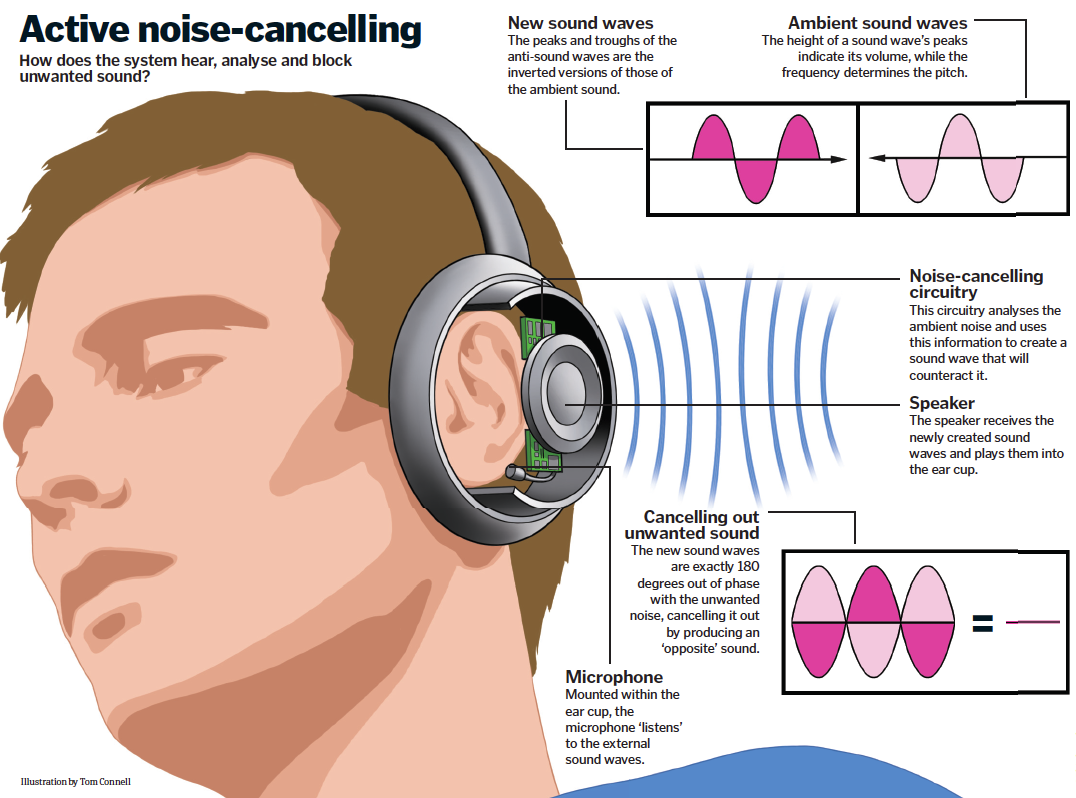
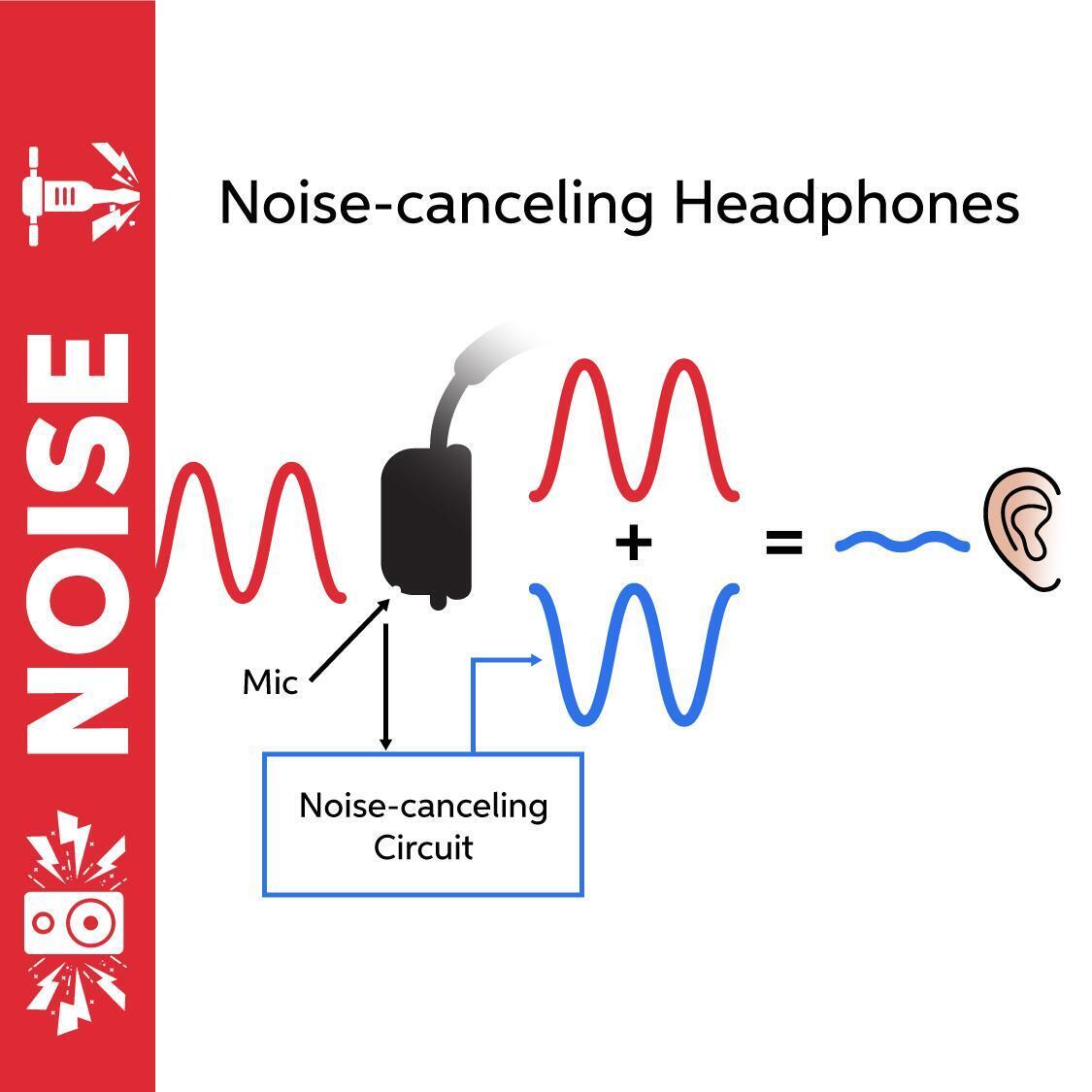
Noise-cancelling headphones listen to outside sound with tiny microphones. A digital signal processor then creates a new sound wave with the opposite pattern. When the two waves meet, they partly cancel each other. This process is called destructive interference.
The headphones also block sound in a physical way. Their ear cups, ear pads, or ear tips act as barriers. This is called passive noise isolation.
So, most noise-cancelling headphones use two methods:
- Passive isolation: The headset blocks sound with its materials and fit.
- Active noise cancellation (ANC): The headset produces an opposite sound wave to reduce incoming noise.
ANC is usually strongest against low, steady sounds. It may reduce the hum of an airplane engine or air conditioner very well. It is less effective against sudden sounds, voices, clapping, or a nearby dog barking.
The basic science behind active noise cancellation
Sound moves through air as changes in pressure. A speaker creates these pressure changes, and your ears detect them.
A sound wave has peaks and valleys. If a second wave has the same shape but moves in the opposite phase, its peaks can meet the other wave’s valleys. The pressure changes then become smaller.
This is destructive interference.
A simple example is two water waves moving toward each other. A high point from one wave can meet a low point from the other. The surface becomes flatter for a moment. Noise-cancelling headphones use the same basic idea with sound waves.
The headset cannot cancel sound perfectly in every place. The result depends on:
- The timing of the anti-noise
- The shape of the sound wave
- The position of the microphones
- The seal around your ears
- The shape of your head and ears
- The type of noise
- The amount of processing delay
The anti-noise does not remove sound energy from the whole room. It reduces sound near the listener’s ears. Someone sitting next to you will not experience the same level of cancellation.
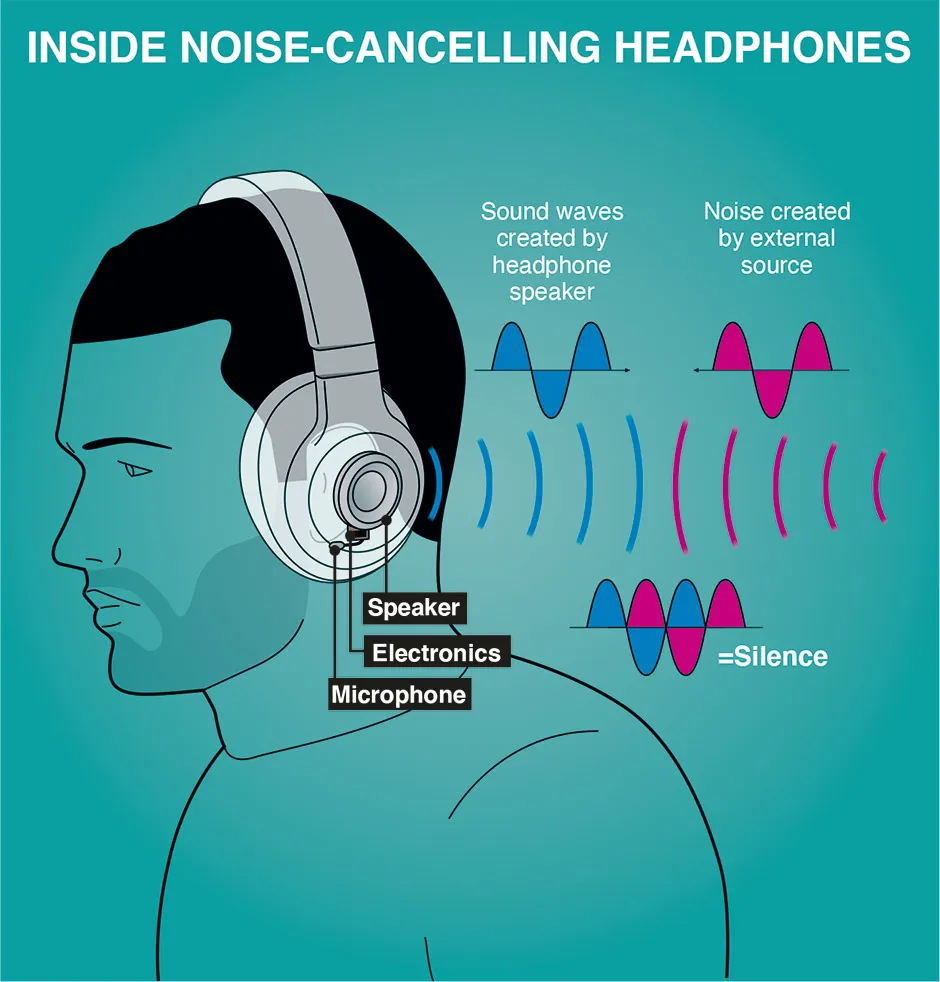
What happens inside noise-cancelling headphones?
A typical ANC headset follows a short electronic process:
- A microphone captures outside sound.
- A digital processor studies the sound.
- The processor creates an inverse signal.
- The headphone speaker plays the inverse signal.
- The original noise and inverse signal meet near your ear.
- The combined sound becomes quieter.
The system performs this cycle many times each second. It must react quickly because sound waves change constantly.
The processor does not always create a perfect mirror image of the noise. It estimates what will reach your ear and adjusts the signal. This is why ANC performance differs between models, ear shapes, and listening conditions.
The headphone speaker still plays your music, podcast, or call. The anti-noise is added to that audio signal. You hear the intended audio along with less of the outside noise.
The role of the microphones
ANC headphones may use one or more microphones. Each design has a different job.
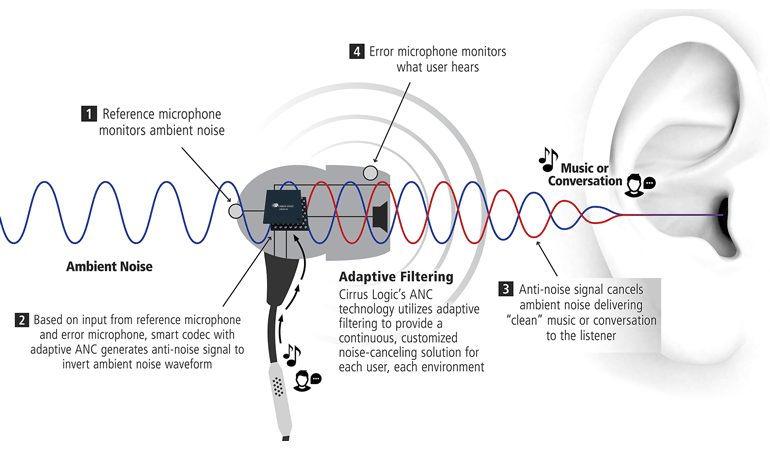
Feedforward ANC
Feedforward headphones place a microphone on the outside of the ear cup or earbud. It hears sound before that sound reaches the ear.
The system can then create anti-noise in advance. This design may react well to outside sounds, but the external microphone can also pick up wind. It may need careful tuning to avoid unwanted noise.
Feedback ANC
Feedback headphones place a microphone inside the ear cup or earbud. This microphone measures the sound that remains near your ear.
The system can use that information to correct the signal. Feedback ANC can account for some changes caused by the ear seal, but it has less time to respond to outside noise.
Hybrid ANC
Hybrid systems use both outside and inside microphones. The outside microphone predicts incoming noise. The inside microphone checks the result near the ear.
This approach can give the processor more information. It can also increase cost, power use, and design complexity. More microphones do not automatically guarantee better cancellation.
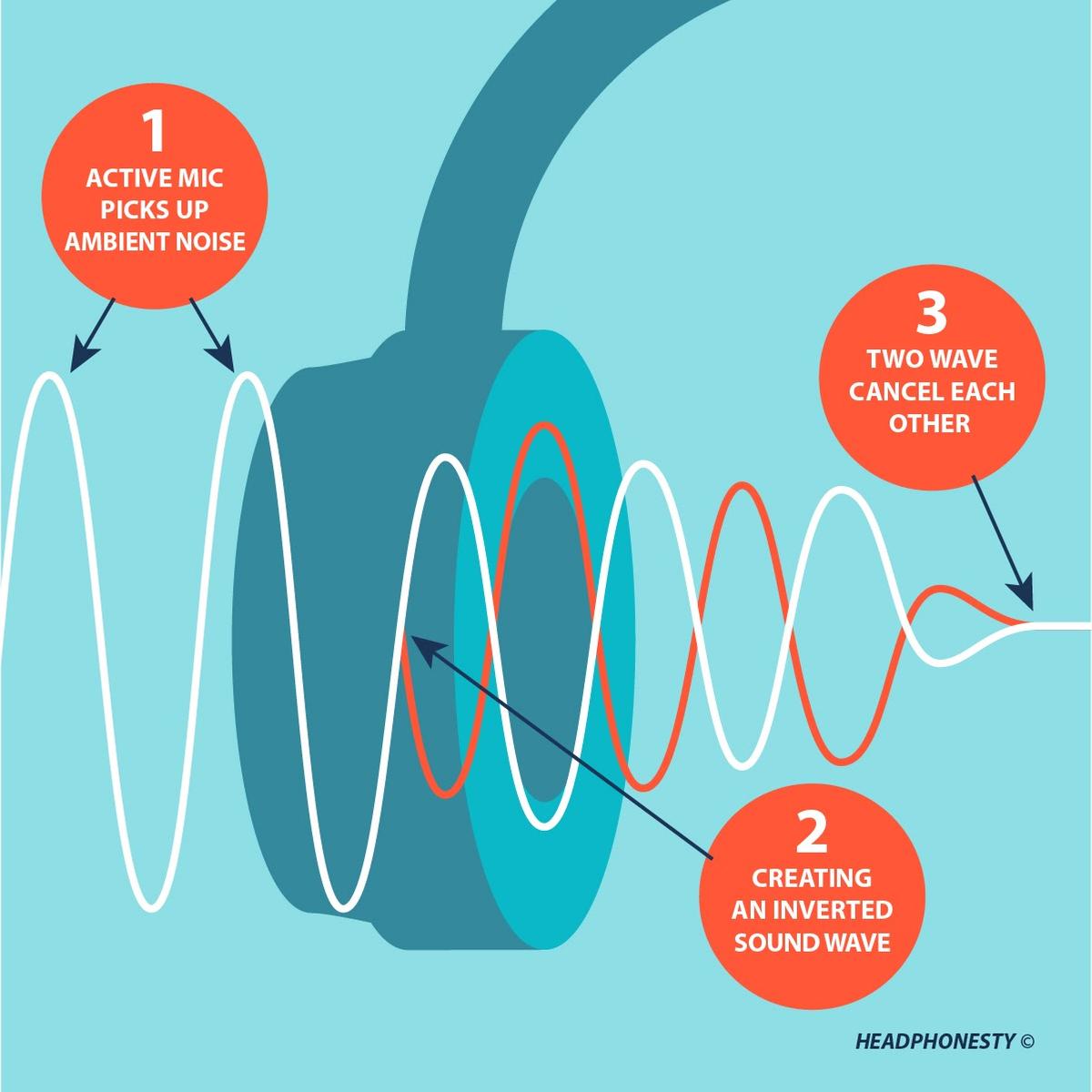
Passive noise isolation vs. active noise cancellation
Passive isolation blocks sound without creating another sound wave. It comes from the physical design of the headphones.
Over-ear headphones use padded ear cups. In-ear headphones use ear tips that seal the ear canal. A tight seal often makes a large difference, especially with higher-pitched sounds.
Active noise cancellation uses electronics. It is strongest against sounds with a steady pattern, such as:
- Aircraft engine rumble
- Bus and train vibration
- Heating and cooling systems
- Office ventilation
- Road noise
- Computer fans
Passive isolation may work better for short, sharp sounds. For example, a good ear seal can reduce a hand clap, keyboard click, or dropped object even though ANC may not react in time.
The best results often come from both methods. You can think of passive isolation as a wall and ANC as an active sound-control system behind that wall.
Why does ANC work better on airplane noise than on voices?
Airplane noise is a good target for ANC because it is often loud, low in pitch, and fairly steady. The headphones can detect its pattern and create a matching inverse signal.
Human speech changes quickly. It contains many frequencies and natural gaps. A person’s voice may also come from different directions. These factors make speech harder to cancel completely.
ANC may lower the background level of a conversation without removing every word. This can make music easier to hear, but it may not make a nearby conversation disappear.
The same limit applies to sudden sounds. A door slam can reach your ears before the processor has enough time to measure and reduce it.

What affects noise-cancelling performance?
The strongest ANC system can perform poorly if the fit is wrong. Performance depends on the complete system, not only the electronics.
Fit and seal
For over-ear headphones, the ear pads should surround your ears without large gaps. Glasses, hair, earrings, or worn-out pads can create small openings.
For earbuds, the ear tip should sit securely and seal the ear canal. If the tip is too small, outside sound can leak in. If it is too large, it may feel uncomfortable and still fail to seal correctly.
A poor seal can cause:
- More outside noise
- Weaker bass
- Uneven cancellation
- A hollow or strange sound
- More temptation to raise the volume
Noise frequency
ANC generally works best with low-frequency sound. Passive materials often perform better against higher-frequency sound.
This is not a strict rule. Headphone design and software matter. Still, it explains why engine rumble may fade while a child’s voice remains clear.
Wind
Wind can strike the outside microphones and create rumbling or rushing sounds. Some headphones use wind filters, microphone placement, or software processing to reduce this problem.
If ANC sounds worse outdoors, try a lower ANC setting, a wind-reduction mode, or passive mode. The best choice depends on the model.
Battery power
Most wireless ANC headphones need battery power for active cancellation. If the battery runs out, the headset may:
- Stop playing audio
- Switch to passive listening
- Disable ANC
- Continue working only through a wired connection
The exact behavior depends on the product. Check the manufacturer’s manual before relying on a wired mode during travel.
Processing and sound quality
ANC can change the sound of music. Some listeners notice a faint hiss, pressure-like sensation, bass changes, or a small shift in tone.
These effects do not mean the headphones are damaging your ears. They usually reflect the way the system measures and adjusts sound. However, discomfort is a valid reason to turn ANC off or use a different mode.
Does noise cancellation damage your hearing?
ANC itself does not make music safe or unsafe. Hearing risk mainly depends on sound level and exposure time.
Noise-cancelling headphones may help you listen at a lower volume because they reduce background noise. That can be useful on airplanes, buses, and busy streets. But ANC does not protect you from every hazard, and it does not replace hearing protection designed for industrial or shooting environments.
The National Institute for Occupational Safety and Health provides guidance on occupational noise exposure. The CDC also advises reducing loud sound exposure and taking steps to protect hearing.
Use these practical habits:
- Keep the listening level as low as needed.
- Take breaks during long sessions.
- Stop if you notice ringing, pain, muffled hearing, or dizziness.
- Do not use regular ANC headphones as a substitute for certified hearing protectors.
- Keep awareness of vehicles, alarms, cyclists, and other hazards.
In the United States, noise-cancelling headphones may reduce awareness of your surroundings. Use transparency or ambient mode when you need to hear announcements or nearby people. Do not assume that ANC makes walking, cycling, driving, or working around machinery safe.

What is transparency or ambient mode?
Transparency mode uses microphones to bring outside sound into the headphones. It does the opposite of full noise cancellation.
The headphones may still use passive isolation, but the microphones pick up voices, announcements, and other sounds. The processor then plays that sound through the headphone speakers.
Transparency mode can help when you need to:
- Hear an airport announcement
- Speak with a coworker
- Listen for traffic
- Order food
- Stay aware of a nearby alarm
Some headphones offer an adaptive mode. It changes the amount of cancellation or outside sound based on the environment. The result depends on the model and its software.
Transparency mode is not the same as natural hearing. It may add a slight delay or alter the direction of sound. For safety-critical work, follow workplace rules and use equipment made for that task.
How to use noise-cancelling headphones effectively
You can improve ANC with a few simple steps.
-
Choose the correct ear tips or adjust the ear cups.
Look for a comfortable seal with no obvious gaps. -
Place the headphones correctly.
Over-ear cups should sit around the ears. Earbuds should sit securely without causing pain. -
Turn on the strongest suitable ANC mode.
Use a travel or high-cancellation mode for steady engine noise if the device offers one. -
Reduce wind exposure.
Move away from strong airflow or use a wind-reduction setting. -
Keep the microphones clear.
Dirt, clothing, hair, or a case can cover microphone openings. -
Update the device when appropriate.
Firmware updates may change ANC behavior, but do not assume every update improves performance. -
Use a safe listening level.
ANC reduces background noise; it does not give permission to turn up the music. -
Use transparency mode when awareness matters.
This includes announcements, street crossings, and conversations.
A sign that ANC is working is a clear drop in steady background noise without severe distortion or discomfort. If you hear loud crackling, feedback, or sudden bursts, turn ANC off and inspect the fit, microphones, and software settings.

Common ANC problems and their causes
| Symptom | Possible cause | Useful first step |
|---|---|---|
| Little change in outside noise | ANC is off or the fit is poor | Check the app or button and adjust the seal |
| Strong wind noise | Wind is reaching an external microphone | Use wind reduction or a lower ANC mode |
| Uneven sound between ears | Uneven fit, blocked microphone, or ear tip issue | Refit both sides and clean them as directed |
| Hissing sound | Normal electronic noise from the ANC system | Compare ANC, transparency, and passive modes |
| Pressure-like feeling | ANC sound and isolation feel unfamiliar | Lower ANC or take a break |
| Music sounds thin | Poor seal or audio changes in ANC mode | Try another ear tip or adjust the ear cups |
| ANC stops when the battery is low | Power-saving design | Charge the headphones or use the documented wired mode |
| Sudden feedback or squeal | Microphone blockage, loose fit, or fault | Turn ANC off and check the headset |
Do not put liquid into microphone openings. Follow the product manual for cleaning. If one side repeatedly produces loud feedback, pain, or unusual noise, stop using the headset and contact the manufacturer.

Noise-cancelling headphones vs. noise-cancelling earbuds
Both types use the same main idea, but they behave differently.
Over-ear headphones usually provide:
- Larger ear cups
- More room for microphones and speakers
- Strong passive isolation
- Longer comfort for some users
- More size and weight
Noise-cancelling earbuds usually provide:
- Small size
- Easy portability
- A seal inside the ear canal
- Less physical coverage around the ear
- Greater dependence on the correct ear tip
Neither style is always better. Choose over-ear headphones when comfort, battery size, and physical isolation matter most. Choose earbuds when small size and portability matter most.
The key test is fit. A well-sealed earbud can outperform a poorly fitted over-ear headset for one listener, while the reverse may be true for another.
Key takeaways
- Noise-cancelling headphones use microphones, a processor, and speakers.
- The processor creates anti-noise to reduce incoming sound near your ears.
- Passive isolation comes from ear cups, pads, and ear tips.
- ANC works best against steady, low sounds such as engine rumble.
- Voices, claps, and sudden noises are harder to cancel.
- A good fit often matters as much as the electronics.
- Transparency mode helps you hear your surroundings.
- ANC does not replace certified hearing protection.
- Keep volume low enough to protect your hearing.
Frequently asked questions
Do noise-cancelling headphones block all sound?
No. They reduce some sound, especially steady low-frequency noise. They do not create perfect silence and may leave voices, high-pitched sounds, and sudden noises audible.
Can noise cancellation work without music?
Yes. ANC can reduce outside noise even when no music is playing. The headphones still need power if the model requires a battery for ANC.
Why do my ears feel pressure when ANC is on?
Some people notice a pressure-like sensation because low-frequency sound has been reduced and the headphones create a new sound signal. ANC does not create a vacuum in your ears. Try a lower ANC setting, a different fit, or passive mode.
Is ANC better than earplugs?
They serve different purposes. ANC headphones are made mainly for listening comfort and sound reduction. Earplugs and earmuffs designed for hearing protection are intended for specific noise hazards. Use certified protection when the situation calls for it.
Does ANC use more battery?
Usually, yes. Active microphones and signal processing need power. The exact battery effect varies by design, ANC level, wireless features, and whether the headphones also play audio.
Conclusion
Noise-cancelling headphones work by combining physical sound blocking with electronic sound reduction. Microphones detect outside noise, a processor creates an inverse signal, and the speakers play that signal near your ears. Destructive interference then lowers part of the unwanted sound.
For the best result, use a proper fit, select the right listening mode, control the volume, and keep safety awareness when you are outdoors or near hazards. The next practical step is simple: test the headphones with steady noise, speech, and wind. That will show what the headset can reduce and where passive isolation or transparency mode works better.