Can I Connect Headphones to Roku TV Easy Guide

Yes, you can connect headphones to a Roku TV in many setups, but the best method depends on your model and headphone type. The easiest options are the Roku mobile app, Bluetooth if supported, or a wired headphone jack when available.
If you’re asking, “can i connect headphones to roku tv,” the short answer is yes in many setups, but the method depends on your Roku TV model and the headphones you own. Some people can use the Roku mobile app, some can pair Bluetooth headphones directly, and others need a wired jack or a simple adapter workaround.
- App first: Roku private listening is often the simplest option.
- Bluetooth varies: Not every Roku TV supports direct wireless pairing.
- Wired is reliable: A 3.5mm jack usually gives the most stable audio.
- Gaming needs low lag: Wired headphones are usually best for minimal delay.
Can I Connect Headphones to Roku TV? What the 2025 Answer Looks Like

In 2025, Roku TV headphone support is still a mix of convenience and model-specific compatibility. The easiest route for many users is private listening through the Roku app, while some TVs and devices also support Bluetooth audio or a physical headphone output.
Why people ask this before buying a Roku TV or headphones
Most buyers want a quiet way to watch late at night, avoid disturbing roommates, or keep audio private during gaming and streaming. Others are trying to figure out whether they need wireless headphones, a soundbar, or a special adapter before they spend money.
This question also comes up because Roku branding can be confusing. A Roku TV, a Roku streaming stick, and a Roku remote may all handle audio differently, so it helps to know the exact setup before you buy.
What this guide covers for private listening, gaming, and late-night TV
This guide focuses on practical ways to listen privately on a Roku TV without overcomplicating the process. We’ll cover app-based listening, Bluetooth pairing, wired options, and the common problems that trip people up.
If you’re comparing headphone styles for TV use, it also helps to understand basic fit and sound preferences. Our guides on types of headphones explained and noise cancelling headphones can help you choose a better match for your room and listening habits.
Roku TV Headphone Connection Options Explained

There is no single universal method for every Roku setup. The right option depends on whether your TV supports Bluetooth, whether your Roku remote has a headphone jack, or whether you’re happy using the Roku mobile app.
Using the Roku mobile app with private listening
For many users, the Roku mobile app is the simplest answer. It can route the TV audio to your phone, and then you connect your headphones to the phone for private listening.
This is often the most beginner-friendly option because it avoids extra hardware. It can also work well for casual TV watching, though the experience may vary depending on your phone, app version, and Wi-Fi connection.
If you already use wireless headphones with your phone, the Roku app method can be a low-cost way to listen privately without buying a new TV accessory.
Connecting Bluetooth headphones to a Roku TV or Roku device
Some Roku TVs and Roku devices support Bluetooth audio, but not all of them do. If your model supports it, you can pair compatible Bluetooth headphones directly for a cleaner wireless setup.
This is a good option if you want to move around a bit while watching. Just remember that Bluetooth performance may vary by model, and some users notice a small audio delay during fast-action scenes or gaming.
Using the TV’s headphone jack, USB adapter, or soundbar workaround
If your Roku TV has a 3.5mm headphone jack, wired headphones are usually the most straightforward option. Plug in, adjust the volume, and you’re ready to go.
If there’s no headphone jack, some users rely on a USB audio adapter, external DAC, or soundbar setup with a headphone output. These workarounds can be useful, but compatibility depends on the TV’s ports and audio settings.
Not every adapter works cleanly with every Roku TV. Before buying one, check the TV’s input and output ports carefully so you do not end up with a device that only charges or only passes video.
How Roku TV models differ from Roku streaming sticks and boxes
Roku TV models are built into the television itself, so audio output depends on that specific TV’s hardware. Roku streaming sticks and boxes can behave differently because they rely on the TV’s own audio features and the Roku device’s compatibility.
That means one living room setup may support Bluetooth headphones while another does not, even if both say “Roku.” If you’re still shopping, check the exact model page instead of assuming every Roku product works the same way.
Step-by-Step: How to Connect Headphones to Roku TV
Before you start, it helps to know which connection method your setup actually supports. A quick check of the TV menu, ports, and remote can save a lot of trial and error.
- Whether your Roku TV supports Bluetooth audio
- Whether your remote has a headphone jack
- Whether the TV has a 3.5mm output or USB audio option
- Whether your headphones are wired, Bluetooth, or app-based
Pairing wireless headphones through the Roku app
Download or open the Roku app on your phone and make sure it is connected to the same Wi-Fi network as your Roku TV.
Find the private listening feature in the app and follow the prompts so the TV audio routes through your phone.
Pair your Bluetooth headphones to the phone or plug in wired headphones, then adjust the volume from your phone controls.
This method is especially handy if multiple people are watching different things around the house. It also avoids the need to confirm whether the TV itself has Bluetooth support.
Setting up Bluetooth headphones when your TV supports it
Follow the headphone manual so the device becomes discoverable and ready to connect.
On supported models, look for the Bluetooth or audio menu and search for nearby devices.
Choose your headphones from the list, then play a show or movie to confirm the connection and volume.
If pairing fails, reset the headphones and try again. For more general troubleshooting, our guide on how to reset Bluetooth headphones may help when a device gets stuck in pairing mode.
Wired headphone setup for TVs with a 3.5mm port
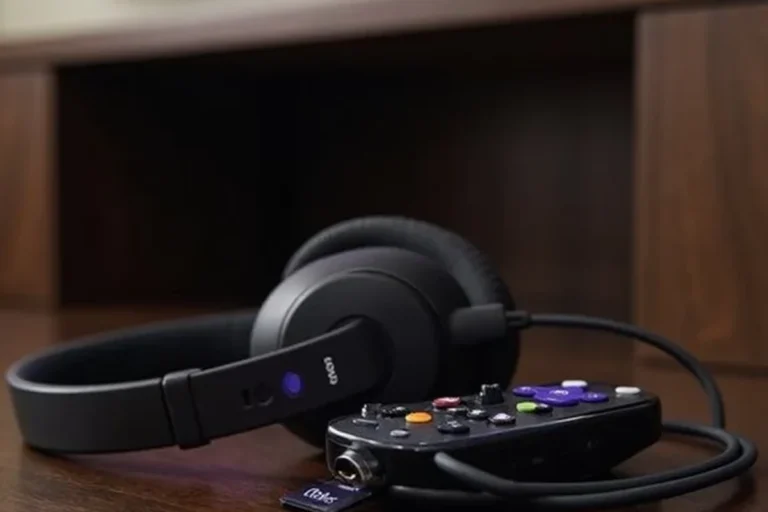
Wired headphones are still one of the easiest solutions for TV listening. If your Roku TV has a headphone jack, just plug in the cable and check that the TV audio switches over automatically.
Wired listening can be a smart choice for people who want simple setup and low lag. It is also useful if you do not want to worry about battery life during long movie nights.
Some TVs lower or mute the built-in speakers when headphones are connected, while others let you control both outputs separately. The behavior depends on the TV model and audio settings.
What to do if your Roku TV has no built-in headphone output
If there is no headphone jack and no Bluetooth support, you still have a few options. The Roku mobile app is usually the easiest fallback, followed by a compatible external adapter or soundbar with headphone support.
Before buying an accessory, check whether it is designed for TV audio output, not just charging or data transfer. Low-quality adapters can create frustrating issues like weak sound, channel imbalance, or no audio at all.
Best Headphone Use Cases for Roku TV in 2025
Headphones are not just about convenience. For many households, they solve a real listening problem by making TV time quieter, more personal, and more flexible.
Watching movies without disturbing others
Private listening is perfect for apartments, shared homes, and bedrooms where sound carries easily. It lets you enjoy dialogue and effects without turning up the TV for everyone else.
Closed-back headphones are often a practical choice here because they help keep sound in and outside noise out. If you want a deeper comparison of headphone styles, our headphones vs earphones complete guide can help you decide between over-ear and in-ear options.
Gaming on Roku TV with lower-latency audio needs
If you use a Roku TV for gaming, latency matters more than it does for casual streaming. Even a small audio delay can make action scenes feel off or make gameplay less responsive.
For that reason, wired headphones are often the safest choice for gaming. Bluetooth can still work, but performance varies by model, codec support, and the way the TV handles wireless audio.
Listening with hearing comfort in shared rooms or apartments
Some viewers use headphones because TV speakers sound harsh or too bright at night. Others simply want clearer dialogue without raising the overall volume.
If you have hearing sensitivity or want to avoid strain, comfort and clarity matter as much as loudness. Over-ear headphones with soft pads are often easier for long sessions, but fit and preference vary from person to person.
Dialogue clarity often improves more from a good fit and balanced tuning than from pushing the volume higher.
Using headphones for night viewing and family-friendly setups
Night viewing is one of the best reasons to connect headphones to a Roku TV. You can keep the room quiet while still hearing every line of dialogue.
This is especially helpful in homes with sleeping kids, early risers, or neighbors close by. It also makes it easier to watch one more episode without waking anyone up.
Listening at high volumes for long periods can cause hearing damage. Keep volume at 60% or below for extended sessions.
Common Problems and Mistakes When Connecting Headphones to Roku TV
Most connection problems come from assuming the TV works like a phone or laptop. Roku TV audio is usually easy once you know the limits, but the wrong assumption can waste time.
Assuming every Roku TV supports Bluetooth audio
This is one of the biggest mistakes. Some Roku TVs support Bluetooth headphones, but many do not, so it is important to check your exact model before buying wireless gear.
If Bluetooth is not supported, the Roku app or a wired connection may be the better route. That is why compatibility matters more than brand name alone.
Confusing Roku TV features with Roku remote headphone jacks
Some users assume the remote includes a headphone output on every Roku setup. That is not always true, and remote features can vary by model and package.
Always check the remote itself, the TV menus, and the ports on the back or side of the television. Those details tell you more than the “Roku” label on the box.
Audio delay, one-ear sound, and pairing failures
Bluetooth delay is common enough to be worth mentioning, especially for fast-paced video and gaming. If the audio seems late, wired listening or the Roku app may give you a more stable experience.
One-ear sound or uneven volume can happen when a cable is loose, an adapter is poor quality, or a headphone plug is not fully seated. Pairing failures often improve after resetting the headphones and rechecking the TV’s audio menu.
Volume control issues and why TV settings matter
Sometimes the headphones are connected correctly, but the volume is still too low or too loud. That usually means the TV’s output settings, the app volume, or the headphone volume itself needs adjustment.
Take a minute to test each control separately. Small settings changes can make a big difference in clarity and comfort.
If you notice persistent distortion, ear pain, ringing, or uneven hearing during TV listening, consider speaking with an audiologist. Safe listening habits matter just as much as the gear you buy.
Expert Advice: What to Check Before You Buy Headphones for Roku TV
Not every headphone is equally good for TV use. A model that sounds great on a phone may not be the best fit for movies, gaming, or long viewing sessions.
Latency, comfort, battery life, and wireless range
For Roku TV use, latency is one of the most important factors, especially if you watch sports or play games. Comfort matters too, because even good sound gets old if the headphones pinch or feel heavy.
Battery life and wireless range are also worth checking if you plan to move around the room. Exact performance varies by brand, model, and how crowded your wireless environment is.
Wired vs wireless: which works better for your setup
Wired headphones usually offer the simplest setup and the least delay. Wireless headphones offer more freedom, but they can introduce pairing issues, battery concerns, or audio lag.
If you mainly watch movies and shows, wireless may be worth it for convenience. If you game often or want the most dependable connection, wired is usually the safer bet.
Price comparison: budget, mid-range, and premium headphone options
There is no single best price point for Roku TV headphones. Budget options can be perfectly fine for casual streaming, while mid-range and premium models may offer better comfort, tuning, and features.
What matters most is matching the headphone type to your use case. A cheaper wired pair may outperform an expensive wireless model if your main goal is simple TV listening.
Warning signs to avoid low-quality adapters and unsupported accessories
Be cautious with adapters that promise everything but do not clearly explain compatibility. If an accessory does not list TV audio support or requires unclear setup steps, it may be a poor fit for your Roku TV.
Also avoid assuming a USB port will always output audio. Some USB ports are for power only, which can lead to disappointment if you buy the wrong adapter.
- Check TV support before buying wireless gear.
- Wired options are often simpler and more reliable.
- App-based private listening is a strong fallback.
- Good comfort and low lag matter for long viewing.
Best Setup Recommendations for Different Roku TV Owners
The best setup depends on how you watch TV and what you value most. A casual streamer, a gamer, and a family sharing one screen may all need different solutions.
Best choice for casual streaming users
For most casual viewers, the Roku mobile app with private listening is the easiest place to start. It avoids extra hardware and works well for everyday shows, news, and movies.
If you prefer a more direct setup, a simple wired headphone connection is also a strong option when your TV has the right port.
Best choice for gamers who want minimal lag
Gamers should usually lean toward wired headphones first. If your Roku TV supports Bluetooth with acceptable delay, that can work too, but wired remains the most dependable choice for responsiveness.
If you are building a gaming-focused audio setup, it may also help to read more about Bluetooth headphone lag fix so you know what causes delay and how to reduce it.
Best choice for older TVs without Bluetooth
Older Roku TVs or non-Bluetooth models are often best served by a wired jack, adapter, or the Roku app. Those options keep the setup simple without forcing you to replace perfectly good headphones.
If your TV lacks a headphone output, double-check whether a soundbar or external audio device can provide one. That workaround may be more practical than buying a new TV just for headphone support.
Best choice for families sharing one TV
Families often benefit most from private listening through the Roku app because it keeps the main TV speakers free for everyone else. This can be especially useful when one person wants quiet and another wants to keep watching normally.
For shared spaces, comfort and easy reconnection matter more than fancy sound features. The simpler the setup, the more likely everyone will actually use it.
Final Recap: The Easiest Way to Use Headphones with Roku TV
So, can i connect headphones to roku tv? Yes, in many cases you can, but the easiest method depends on your model and the type of headphones you own. The Roku app is often the most flexible option, while wired headphones are usually the most reliable and Bluetooth is the most convenience-focused when supported.
Quick summary of the simplest connection method for most users
For most people, start with the Roku mobile app if you want private listening without extra gear. If your TV supports Bluetooth or has a headphone jack, those can be even more convenient for some setups.
Key takeaways on compatibility, cost, and performance
Compatibility should come first, because not every Roku TV supports the same audio features. After that, choose the method that fits your budget, your comfort needs, and whether you care more about convenience or low-latency sound.
Frequently Asked Questions
Wired headphones usually give you the most stable connection and the least delay. Wireless headphones are more convenient, but performance can vary by model and Roku TV support.
Yes, noise cancelling headphones can help reduce room noise and make dialogue easier to hear. They are especially useful in shared spaces, but comfort and fit still matter.
Over-ear headphones are often the most comfortable for long sessions, while in-ear models are more compact and portable. On-ear styles can work too, but fit and pressure vary by person.
Latency, comfort, battery life, and connection type matter more than flashy specs for most TV users. If you stream or game often, check whether the headphones are designed for low-delay audio.
Try adjusting the TV volume, headphone volume, and any EQ settings available on your device or app. Clear dialogue often improves more from balanced tuning and a good fit than from higher volume.
No, not always. A budget wired pair may be better for simple TV watching than a premium wireless model if you want easy setup and low lag.