How Much Noise Do Noise Cancelling Headphones Block: Facts

Introduction
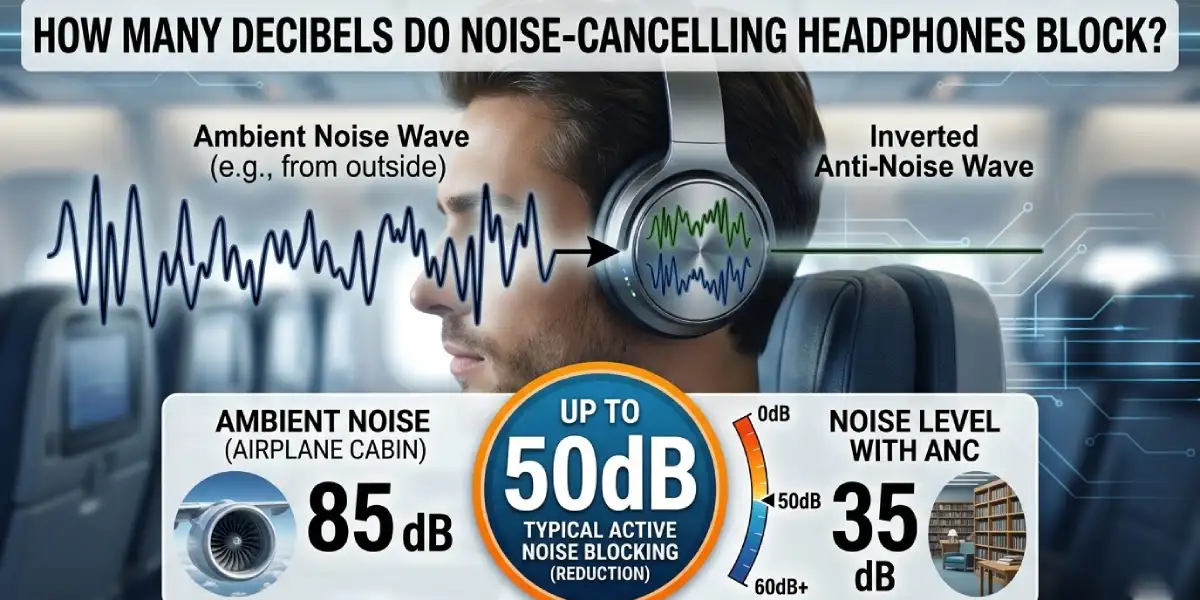
In the United States, most good noise-canceling headphones reduce steady, low-pitched background noise by about 20 to 30 decibels (dB). Some high-end models can reach roughly 30 to 40 dB of reduction in certain test conditions.
That does not mean they make a plane, train, or busy street silent. Noise cancellation works best on constant sounds, such as an airplane engine or air conditioner. It works less well on speech, horns, barking dogs, clattering dishes, and other sudden sounds.
The final result depends on three things:
- Active noise cancellation (ANC) made by the electronics.
- Passive isolation created by the ear cups or ear tips.
- Fit, including the seal around your ears.
A well-fitted pair of over-ear headphones may make a low rumble seem 75% to 90% quieter. However, that is a practical estimate, not a promise for every model or setting.

What noise-canceling headphones actually block
Noise-canceling headphones reduce noise. They do not block all sound.
Most ANC headphones use microphones to detect outside noise. The headphones then create a second sound wave with the opposite phase. When the two waves meet, some of the unwanted sound is reduced. This process is called destructive interference.
ANC works best when the outside sound is:
- Low in pitch
- Loud but steady
- Repetitive
- Close to the microphones
- Reaching both ears in a similar way
That is why ANC is useful on airplanes, buses, trains, and office HVAC systems.
Passive isolation handles sound in a different way. The ear cups act like a barrier, while ear tips fill the gap in the ear canal. Passive isolation is often better for higher-pitched sounds, such as voices, claps, and dishes.
The best result comes from both methods working together:
Total noise reduction = active noise cancellation + passive isolation
These two values should not be added as simple numbers. Their performance overlaps across different frequencies. A headphone that claims 35 dB of ANC does not always provide 35 dB of total reduction across the full sound range.

How many decibels do ANC headphones reduce?
Most consumer noise-canceling headphones reduce low-frequency noise by approximately 20 to 30 dB. Some models may perform near or above 30 dB in a narrow frequency range, but results vary by model, fit, ear shape, and test method.
| Noise type | Typical ANC performance | Why |
|---|---|---|
| Airplane engine rumble | About 20–35 dB | Low and steady |
| Bus or train vibration | About 15–30 dB | Low-frequency, but less uniform |
| Air conditioner or fan | About 15–30 dB | Continuous and predictable |
| Office conversation | About 5–15 dB | Speech contains many frequencies |
| A door closing | Little reduction | Sudden sound |
| A car horn | Little to moderate reduction | Short and often high in pitch |
| Loud music nearby | Varies widely | Depends on distance and frequency |
These ranges are useful for understanding the technology, not for predicting an exact result. Independent tests often use a measurement fixture or a controlled noise signal. Real-world performance can be lower when the headphones do not seal well.
A manufacturer’s “up to 40 dB” claim usually describes the greatest reduction under selected conditions. It is not a guarantee that every sound will become 40 dB quieter.
Why a 10 dB change matters
Decibels use a logarithmic scale. A 10 dB reduction is not a small change.
As a measure of sound intensity, a 10 dB decrease represents about one-tenth the intensity. People often perceive a 10 dB reduction as roughly half as loud, although individual judgments vary.
For example, if ANC reduces a constant engine sound from 80 dB to 60 dB, the physical sound intensity has dropped greatly. The sound may still be noticeable, but it should feel much less intrusive.
Do not use this example as a personal hearing-safety calculation. A headphone’s ANC rating and the sound level at your eardrum are not the same measurement.

ANC versus passive noise isolation
ANC and passive isolation solve different problems.
Active noise cancellation is strongest against low-frequency sound. It can reduce the deep hum of an aircraft engine, vehicle motor, or ventilation system.
Passive isolation is strongest when the ear cup or ear tip forms a tight barrier. It can reduce higher-pitched sounds, including some speech, clicks, and sharp background noise.
Over-ear headphones usually have larger cushions and can provide strong passive isolation. Earbuds depend heavily on the ear tip seal. If the tips are too small, the earbuds may let in a large amount of sound, even when ANC is switched on.
A simple comparison:
| Feature | Active noise cancellation | Passive isolation |
|---|---|---|
| Main method | Creates an opposing sound wave | Uses a physical barrier |
| Best at | Low, steady noise | Mid- and high-frequency noise |
| Needs power | Yes | No |
| Works when turned off | Usually no | Usually yes |
| Depends on fit | Yes | Very strongly |
| Removes sudden sounds | Poorly | Sometimes better, but limited |
A headphone with weaker ANC but a better seal can outperform a headphone with a stronger advertised ANC rating. Comfort matters because a small gap around the ear can sharply reduce isolation.

Why voices and sudden sounds still get through
Speech is difficult for ANC systems because it contains a broad range of frequencies and changes rapidly. The headphones must detect the sound, process it, and create an opposing wave before the sound reaches your ears.
That process works better for a steady engine than for a person speaking beside you.
Sudden sounds also give the system less time to respond. Examples include:
- A baby crying
- A dog barking
- A nearby shout
- A dropped object
- A car horn
- A sudden clap
Many headphones reduce some of these sounds, but they do not reliably remove them. You may hear the sound at a lower level or with less impact.
Some headphones include transparency or ambient modes. These modes intentionally allow outside sound through, which can help you hear announcements or talk with someone. They also reduce the apparent blocking effect.
How to get the most noise reduction
Fit is often more important than the brand name. Use these steps:
-
Choose the right headphone type.
Over-ear models usually provide more physical coverage. Earbuds can work well when their tips fit your ear canal correctly. -
Create a complete seal.
Ear cushions should sit evenly around your ears. Ear tips should feel secure without causing pain. -
Try another ear-tip size.
For earbuds, test the included sizes. A loose tip can cause a major loss of bass and noise reduction. -
Wear the headphones correctly.
Glasses, hair, hats, earrings, and thick temple arms can create gaps under ear cushions. -
Turn on the correct ANC mode.
Some headphones have travel, adaptive, wind, or office modes. Read the model’s manual because the settings differ. -
Keep microphones clear.
Dirt, tape, or clothing can interfere with the microphones used by the ANC system. -
Check the battery.
Many headphones reduce or disable ANC when the battery is empty. Some still provide passive isolation. -
Use a moderate playback volume.
Do not raise the music until it completely covers the outside world. That can increase hearing risk.
A quick sign of a good seal is a noticeable increase in low bass when you press the ear cups gently against your head. If the sound changes a lot, the normal fit may be leaking.

How much noise do earbuds block compared with over-ear headphones?
Over-ear headphones often block more total sound because their cushions cover the entire ear. They may also offer stronger low-frequency ANC, depending on the model.
Noise-canceling earbuds can still perform very well. Their main advantage is the ear-tip seal, which places the microphones and speakers close to the ear canal. A well-fitted pair of earbuds may block more outside sound than loose over-ear headphones.
The main trade-offs are:
- Over-ear headphones: often better comfort for long flights and stronger physical coverage.
- Earbuds: smaller, lighter, and more dependent on ear-tip fit.
- Open-back headphones: provide little isolation and are not designed for blocking noise.
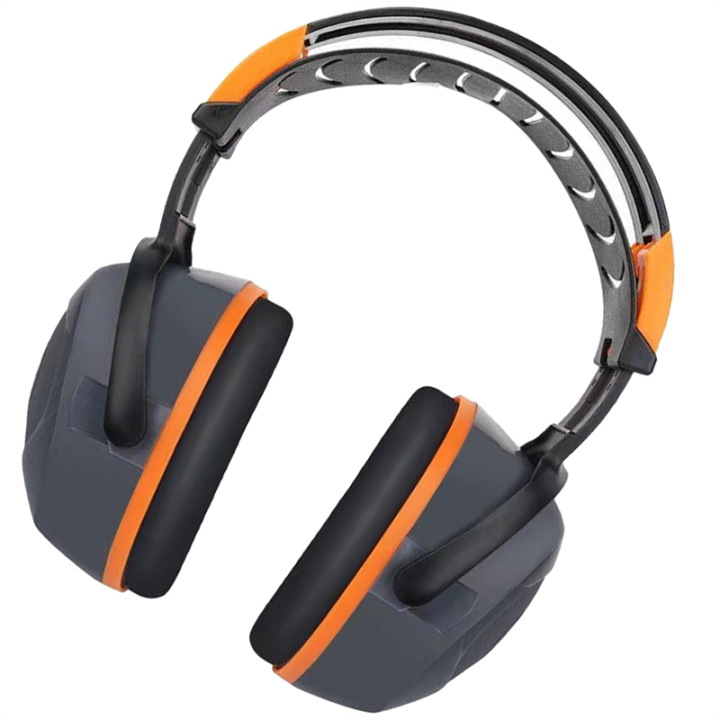
- Passive earmuffs: may block more hazardous noise than ordinary consumer headphones when properly rated and fitted.
Do not assume that smaller headphones are weaker or that larger headphones are always better. The seal, ANC design, and frequency of the noise decide the result.

Can ANC headphones protect your hearing?
Ordinary noise-canceling headphones should not be treated as certified hearing protection.
ANC can make a loud environment feel quieter, but consumer ANC headphones may not have a published Noise Reduction Rating (NRR). Without an NRR, you should not use them as a substitute for approved hearing protectors in workplaces, shooting ranges, concerts, construction areas, or other hazardous environments.
The National Institute for Occupational Safety and Health (NIOSH) identifies 85 dBA over eight hours as a recommended exposure limit for occupational noise. NIOSH also uses a 3 dB exchange rate, meaning the allowed exposure time falls as sound levels rise. See the CDC and NIOSH guidance on noise and hearing loss.
For loud work, use hearing protection designed for that purpose:
- Earplugs with an appropriate rating
- Earmuffs with a listed NRR
- Double protection when the noise requires it
- Hearing protection that fits and stays in place
If you use ANC headphones in a loud setting, keep the playback volume low. Noise cancellation may reduce the need to turn music up, but it does not make loud music safe by itself.

How to compare noise-canceling performance
The most useful comparison is not the largest number on a product page. Look for independent measurements that show attenuation across frequencies.
A good comparison should identify:
- The exact headphone model
- Whether the test measured ANC, passive isolation, or both
- The sound frequency range
- Whether the result came from a human listener or a test fixture
- The headphone fit and settings
- Whether the measurement was repeated
A single dB number can hide important differences. One headphone may perform extremely well at 100 Hz but only moderately at 1,000 Hz. Another may provide better passive isolation at higher frequencies.
When reading a product claim, ask:
- Does the number describe maximum ANC or average reduction?
- Does it apply to all frequencies?
- Was the test independent?
- Was the headphone tested with its best fit?
- Does the test measure the exact version sold in the United States?
Independent lab data from sources such as RTINGS’ headphone isolation tests can help, but their results are still test results under specific conditions. They should be used for comparison rather than treated as a universal promise.
Common mistakes when judging ANC
Several common assumptions lead to unrealistic expectations.
Mistake 1: Treating “40 dB ANC” as total silence
The advertised number may apply only to a narrow range of low frequencies. Voices and sharp sounds may remain clearly audible.
Mistake 2: Ignoring the ear seal
A poor seal can reduce both passive isolation and the perceived benefit of ANC. This is especially common with earbuds and glasses.
Mistake 3: Comparing different test methods
A manufacturer’s maximum value, a lab’s average attenuation, and a user’s listening impression are not interchangeable measurements.
Mistake 4: Using ANC as work-rated hearing protection
Consumer headphones usually do not replace earplugs or earmuffs with an NRR.
Mistake 5: Turning the volume up too high
If outside sound remains audible, some users increase music volume. That can expose the ears to more sound, even if the environment seems quieter.
Mistake 6: Expecting ANC to block all airplane noise
ANC can reduce the engine rumble, but you may still hear announcements, cabin movement, seat noise, and nearby passengers.

Frequently asked questions
Do noise-canceling headphones block 100% of noise?
No. They reduce some sounds more than others. Steady, low-frequency noise is usually reduced the most, while voices and sudden sounds are harder to cancel.
Is 30 dB of noise cancellation good?
A reduction of about 30 dB can be strong for low-frequency noise under suitable test conditions. It does not mean every sound will be 30 dB quieter.
Do noise-canceling headphones work without music?
Usually, yes. ANC can operate without music, although the headphones need battery power. Passive isolation may continue to work when ANC is switched off.
Are noise-canceling headphones safe to wear all day?
The headphones themselves are not automatically unsafe, but high playback volume can damage hearing. Keep the volume moderate and take breaks, especially if your ears ring or feel tired.
Which is better for blocking noise: earbuds or headphones?
Neither is always better. Over-ear headphones often provide stronger coverage, while well-fitted earbuds can provide excellent isolation. The best choice depends on the seal, fit, comfort, and type of noise.
Can ANC headphones block snoring?
They may reduce the low rumble of snoring, but they will not reliably remove it. A good seal, low-volume masking sound, or properly fitted earplugs may help more, depending on the situation.

The bottom line
Most noise-canceling headphones reduce steady low-frequency noise by about 20 to 30 dB, while some models can reach around 30 to 40 dB in limited conditions. They are most effective against airplane engines, vehicle hum, fans, and air conditioners.
They are less effective against speech, alarms, horns, barking, and sudden sounds. Fit is critical, and passive isolation often matters as much as the ANC electronics.
For travel and everyday comfort, choose a model with strong independent isolation data and a reliable seal. For hazardous noise, use hearing protection with an appropriate NRR instead of relying on ordinary consumer ANC.