Best Headphone For Music Production: Studio Guide

The RØDE NTH-100 is my top pick for balanced, comfortable, and reliable music production monitoring.
Mixing with the wrong headphones can hide muddy bass, sharp highs, and small vocal flaws until your song sounds different on other systems. I tested these picks by focusing on sound balance, comfort, isolation, cable design, power needs, and value. The best headphone for music production should reveal detail without making the music feel harsh. It should also stay comfortable during long recording or editing sessions. My list includes studio monitors for serious work, plus lower-cost choices for home studios, beginners, and portable setups.
See the differences between my top picks at a glance.
| Model | Design | Best Use | Key Strength | Power | Amazon |
|---|---|---|---|---|---|
| RØDE NTH-100 | Closed-back over-ear | Mixing and editing | Comfort and clear detail | Wired | View on Amazon |
| AKG K240STUDIO | Semi-open | Mixing and mastering | Open, natural presentation | 55 ohms, wired | View on Amazon |
| AKG K72 | Closed-back over-ear | Home recording | Isolation and comfort | Wired | View on Amazon |
| TASCAM TH-02 | Closed-back over-ear | Beginner studios | Low-cost studio design | Wired | View on Amazon |
| StreamEye Cans50 | Closed-back over-ear | Tracking and DJ work | 50mm drivers | Wired | View on Amazon |
| NUBWO HD01 | Over-ear wired | Instruments and podcasts | 50-ohm design and sharing | Wired | View on Amazon |
| Apple EarPods USB-C | Wired earbuds | Portable checking | Simple USB-C connection | USB-C | View on Amazon |
| Logitech H390 | USB headset | Voice and calls | Built-in microphone | USB-A | View on Amazon |
RØDE NTH-100 Headphones

The RØDE NTH-100 is my strongest all-around choice for music production. It uses a closed-back over-ear design, so it works well for editing, recording, and late-night mixing. The earcups cover the ears without adding the strong pressure found on some studio headphones. Its wired connection also avoids Bluetooth delay during recording.
I especially like the focus on fit. The headband adjusts with a simple locking system, and the ear cushions help keep the headphones stable during long sessions. The sound presents useful detail for vocals, guitars, electronic parts, and spoken audio. Still, I would check the final mix on speakers because every headphone can change your sense of space.
Pros:
- Clear, detailed sound for editing and mixing
- Closed-back design helps reduce outside noise
- Comfortable fit for long production sessions
- Useful for music, podcasts, and location work
- Wired connection avoids wireless recording delay
- Strong choice for home studio owners
Cons:
- Closed-back sound feels less open than semi-open models
- Wired use may feel less convenient for casual listening
- Some users may prefer a stronger bass sound
What Amazon Buyers Are Saying
Amazon buyers commonly praise the comfort, solid build, and clean sound. Many users like the fit for editing, recording, and long work periods. Some buyers report that the sound needs a short adjustment period because it does not simply boost bass for excitement. As with any headphone, comfort and tonal balance can vary by head shape and personal taste.
My Recommendation
I recommend the NTH-100 for producers who want one dependable pair for tracking, editing, and careful listening. It is worth buying when comfort matters as much as detail. I rate it highly as the best headphone for music production for most home users.
AKG K240STUDIO Semi-Open Headphones

The AKG K240STUDIO remains a smart pick for producers who want a wider, more natural presentation. Its semi-open design lets some outside sound in and lets some headphone sound out. That design can make instruments feel less trapped inside the head. The 55-ohm impedance works best with a suitable audio interface or headphone amplifier.
These headphones suit mixing, mastering, keyboard work, and detailed arrangement checks. The self-adjusting headband keeps the design simple, while the classic earcup shape gives the ears room. I would not use them beside a live microphone because their semi-open design can allow bleed. They also work best in a quiet room.
Pros:
- Natural, spacious presentation
- Useful for hearing instrument placement
- Good fit for mixing and mastering practice
- Replaceable-style studio cable design
- Comfortable, lightweight feel for many users
- Proven studio headphone design
Cons:
- Limited isolation from room noise
- Sound leakage can affect microphone recordings
- May need a good interface for strong volume
What Amazon Buyers Are Saying
Amazon buyers often mention the open feel, light weight, and useful detail. Many use the K240STUDIO for home recording, keyboard practice, and mixing. Common complaints focus on sound leakage and the need for a stronger source in some setups. Buyers who expect heavy isolation may prefer a closed-back model instead.
My Recommendation
I recommend the K240STUDIO for quiet-room mixing and for producers who value space over isolation. It is a strong value if your audio interface can drive it well. It is not my first choice for vocal tracking, but it remains one of the best headphone for music production options for open, natural monitoring.
AKG K72 Closed-Back Headphones
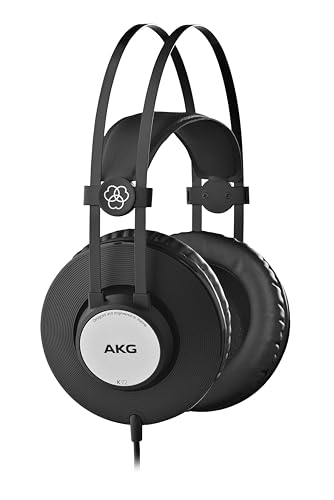
The AKG K72 offers an easy path into studio monitoring. Its closed-back over-ear design helps keep music in and room noise out. The 40mm drivers and high-sensitivity design make it suitable for many home setups and portable sources. It also gives beginners a more controlled listening space than ordinary consumer earbuds.
The large earcups feel relaxed, which helps during recording and podcast sessions. The sound is useful for finding clicks, background noise, vocal problems, and rough balance issues. It may not provide the same open space as the K240STUDIO. Even so, it is a practical choice for home producers who need isolation at a sensible price.
Pros:
- Closed-back isolation for home recording
- Comfortable over-ear shape
- High sensitivity suits many devices
- Good option for beginner producers
- Useful for vocals, podcasts, and instruments
- Simple wired design with no battery needs
Cons:
- Soundstage is narrower than semi-open models
- Large earcups may feel warm during long sessions
- Not designed for wireless listening
What Amazon Buyers Are Saying
Amazon buyers frequently like the comfort, light feel, and isolation. Many describe the K72 as a useful first studio headphone for recording and general audio work. Some users find the low end fuller than expected, while others want a flatter presentation. This difference shows why producers should compare their mixes on speakers or a second reference pair.
My Recommendation
I recommend the K72 for beginners, vocal tracking, and home studios that need closed-back monitoring. It offers useful studio features without a complex setup. For its balance of comfort, isolation, and cost, I rate it as an excellent budget contender.
TASCAM TH-02 Studio Monitor Headphones
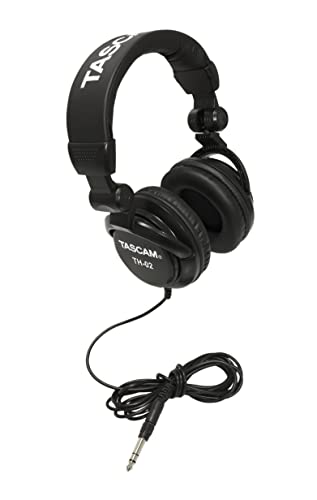
The TASCAM TH-02 is a low-cost wired headphone for people building a first recording setup. Its over-ear, closed-back design helps reduce distractions during practice and tracking. The included 1/4-inch adapter makes it easy to connect with many audio interfaces, mixers, and keyboards. It also folds, which helps with storage and transport.
I see the TH-02 as a practical starter rather than a final mastering tool. It can help you monitor vocals, guitars, podcasts, and simple arrangements. The sound may not reveal every small balance problem as clearly as a more advanced studio model. Still, it gives new producers a real over-ear monitoring design at a very accessible price.
Pros:
- Very approachable choice for beginners
- Closed-back design helps with tracking
- Includes a 1/4-inch adapter
- Foldable design helps with storage
- Works for music, podcasts, and basic DJ use
- Does not require charging or software
Cons:
- Build feels more basic than premium models
- Long sessions may expose comfort limits
- Mix decisions should receive a second reference check
What Amazon Buyers Are Saying
Amazon buyers often value the low price, included adapter, and easy setup. Many use the headphones for beginner recording, gaming, practice, or casual listening. Some reviews mention a less refined sound and basic materials. Those comments match the product’s role as an entry-level studio monitor.
My Recommendation
I recommend the TH-02 when the budget is tight or when you need extra headphones for a small studio. It is worth buying for basic monitoring, but serious mixers may outgrow it. I rate it highly for starter value, not for top-level tonal accuracy.
StreamEye Cans50 Studio Headphones

The StreamEye Cans50 is a closed-back wired headphone built for monitoring, mixing, recording, and DJ work. Its 50mm drivers target a full over-ear sound with enough detail for everyday production tasks. The closed design also makes it useful when you record in a room with computer fans or other mild background noise. It connects without Bluetooth, so it avoids wireless latency.
This model makes sense for users who want a large-driver studio headphone without moving into a premium price range. It can help with beat making, instrument practice, and vocal tracking. I would still check bass-heavy mixes on another system because large drivers do not automatically mean neutral sound. Fit and seal also affect the bass you hear.
Pros:
- Closed-back design suits recording
- 50mm drivers offer a full listening presentation
- Useful for DJs and home producers
- Wired connection avoids Bluetooth delay
- Over-ear format helps during focused work
- Simple setup with no app or battery
Cons:
- Sound balance may not suit every mixing style
- Large earcups can feel warm over time
- Less established studio history than AKG or TASCAM
What Amazon Buyers Are Saying
Amazon buyers commonly focus on the price, large drivers, and closed-back fit. Some users find the headphones useful for recording and DJ practice. Other buyers may want a more neutral sound for final mix decisions. I suggest treating them as a versatile monitoring tool and using another reference when polishing a release.
My Recommendation
I recommend the Cans50 for new producers who want closed-back headphones for tracking and beat work. It is a reasonable value when isolation matters more than a wide soundstage. It is not my top choice for critical mastering, but it can serve a growing home studio well.
NUBWO HD01 Wired Studio Headphones

The NUBWO HD01 targets guitar, piano, recording, podcasting, and music production users. Its 50-ohm design suits studio work, while the included 6.35mm connection fits common audio equipment. The product also supports audio sharing, which can help when two people need to follow a lesson or recording session. Its listed 241-gram weight suggests a fairly manageable option for long use.
I like this model for learners who move between an instrument, an interface, and a computer. The wired setup keeps operation simple and avoids battery concerns. It may not deliver the same proven tuning or long-term support as a classic professional model. However, it gives beginners several useful features in one affordable package.
Pros:
- Designed for guitar, piano, and recording use
- 50-ohm wired studio connection
- Includes 6.35mm jack support
- Audio-sharing feature adds flexibility
- Useful for lessons and podcast work
- Moderate listed weight for daily use
Cons:
- May need a suitable source for best volume
- Less proven for critical mix translation
- Feature set may matter less to solo producers
What Amazon Buyers Are Saying
Amazon buyers tend to value the instrument-focused design, wired connection, and sharing feature. Users who practice piano, guitar, or spoken content may find the setup convenient. Some buyers may compare the sound with more expensive studio headphones and notice less refinement. Results can also change with the audio interface and the fit around the ears.
My Recommendation
I recommend the HD01 for learners, instrument players, and creators who want more than a basic listening pair. It offers useful flexibility for its class. I would choose a more established reference headphone for final mastering, but this model is a good practical starter.
Apple EarPods With USB-C

The Apple EarPods with USB-C are not studio monitor headphones, but they have a useful role in music production. Their wired USB-C plug makes them simple to use with compatible devices. The built-in remote controls music, calls, and volume. Their small earbud shape also gives producers a quick way to hear how a mix may sound on ordinary portable listening gear.
I would not use these as my only mixing headphones. Earbud fit varies, and the seal is not the same as a closed-back over-ear model. Still, they work well as a final translation check after you make the main decisions on studio monitors. They are also handy for editing on the move and checking vocal balance without carrying large headphones.
Pros:
- Compact and easy to carry
- USB-C connection suits compatible devices
- Built-in remote supports basic controls
- Useful second reference for mix translation
- Simple wired operation with no charging
- Helpful for portable editing and review
Cons:
- Not a substitute for studio monitor headphones
- Earbud fit varies from person to person
- Limited isolation from outside sound
What Amazon Buyers Are Saying
Amazon buyers often like the familiar shape, compact design, and easy USB-C use. Many choose them for calls, travel, and everyday listening. Common concerns include device compatibility, earbud fit, and cable wear over time. Buyers should view them as portable headphones and a reference tool, not as a full studio monitoring system.
My Recommendation
I recommend the EarPods as a secondary check, not as the best headphone for music production. They are useful when you want to test a mix on a small, common listening device. If you need accurate tracking or serious balance work, choose an over-ear studio model first.
Logitech H390 USB Headset

The Logitech H390 is mainly a computer headset for calls, meetings, voice recording, and casual music. Its USB-A connection and built-in noise-canceling microphone make it convenient for content creators. The inline controls provide quick access to volume and mute functions. It can help a beginner edit spoken audio without buying a separate microphone at once.
This headset is not built as a neutral studio monitor. The microphone and USB design are its main strengths, while music producers should expect less detail than they would get from AKG or RØDE headphones. It still has value for podcasts, video calls, rough voice edits, and online lessons. I would use it alongside, not instead of, a dedicated pair for mixing.
Pros:
- Built-in microphone for voice work
- Simple USB-A computer connection
- Inline volume and mute controls
- Useful for podcasts and online lessons
- Easy setup for beginners
- Good multipurpose office and creator design
Cons:
- Not tuned as a dedicated studio monitor
- USB-A limits connection flexibility
- Microphone features add little for instrumental mixing
What Amazon Buyers Are Saying
Amazon buyers commonly like the plug-and-play setup, microphone, and low effort controls. Many use it for meetings, remote work, calls, and basic voice recording. Common complaints often involve USB compatibility, cable concerns, or sound that does not match dedicated audio headphones. That feedback makes sense given the headset’s computer-first purpose.
My Recommendation
I recommend the H390 for voice creators who need one simple USB headset. I do not recommend it as a primary mixing tool. It is a useful budget headset for speech, but music producers should select a dedicated studio model for tonal decisions.
How to Choose the Best Headphone for Music Production
Choosing the best headphone for music production depends on your room, interface, music style, and work habits. A good pair should help you hear problems without causing ear fatigue. It should also match the job. Tracking vocals needs isolation. Mixing needs balance and detail. Portable checking needs a small and familiar sound.
1. Choose Closed-Back or Semi-Open Design
Closed-back headphones keep more sound inside the earcups. They also reduce the sound that reaches a microphone. This makes them a good choice for vocal tracking, guitar recording, podcasting, and noisy rooms. The RØDE NTH-100, AKG K72, TASCAM TH-02, and StreamEye Cans50 all follow this useful approach.
Semi-open headphones allow more air and room sound around the music. They can create a wider presentation and help with instrument placement. The AKG K240STUDIO uses this design. It works best in a quiet room and away from sensitive microphones.
2. Match the Headphones to Your Audio Interface
Check the connector before you buy. Many studio headphones use a standard 3.5mm plug with a 1/4-inch adapter. That setup works well with computers, interfaces, mixers, and keyboards. Some models, such as the NUBWO HD01, list a 50-ohm design. A suitable headphone output helps the headphones reach a clean and useful volume.
Do not buy based only on driver size or impedance. A bigger driver does not guarantee a better mix. Your fit, source device, room noise, and listening level also affect the result. Keep the volume moderate so your ears stay fresh during long sessions.
3. Focus on Tonal Balance, Comfort, and Mix Translation
The best headphone for music production should not make every song sound exciting. It should help you hear low-end buildup, vocal sibilance, clicks, noise, and harsh instruments. A strong bass boost can make you remove too much bass from your mix. Very sharp treble can make you reduce detail that should remain.
Comfort matters just as much. Look for earcups that surround your ears, a stable headband, and a cable that does not pull. After mixing, check your work on speakers, earbuds, a car system, or another familiar device. This step helps your mix translate beyond your headphones.
Final Verdict: Which Should You Buy?
The RØDE NTH-100 is my top choice because it combines comfort, isolation, detail, and practical wired monitoring. Choose the AKG K240STUDIO if you prefer a wider semi-open sound in a quiet room.
For beginners, the AKG K72 and TASCAM TH-02 offer strong value. The best headphone for music production is the pair that fits your room, interface, budget, and mixing routine.
FAQs Of best headphone for music production
What is the best headphone for music production overall?
The RØDE NTH-100 is the best overall choice in this review. It offers a comfortable closed-back design, clear detail, and a reliable wired connection.
Are closed-back headphones better for recording vocals?
Yes. Closed-back headphones usually reduce sound leakage, so less headphone audio reaches the microphone during vocal tracking.
Can I mix music with Apple EarPods?
You can use Apple EarPods for a secondary mix check. However, they should not replace dedicated studio headphones for critical mixing.
Do I need an amplifier for studio headphones?
Not always. Many headphones work from a computer or interface, but higher-impedance models may benefit from a strong headphone output.
Is the AKG K240STUDIO good for beginners?
Yes, if you work in a quiet room. Its semi-open design gives a spacious sound, but it leaks audio and offers less isolation than closed-back models.
Should music production headphones have a microphone?
No. A microphone helps with calls and podcasts, but it does not improve music mixing. Dedicated studio headphones usually focus more on monitoring.