Best Headphone For Ear Health: Safe Listening Guide

The best headphone for ear health is an open-ear model that limits ear canal pressure and supports safe listening habits.
Long workouts, busy commutes, and long work calls can make your ears feel sore or blocked. Regular sealed earbuds may also trap heat and sound close to the eardrum. Open-ear and bone-conduction designs offer a useful alternative because they let you hear more of your surroundings. Still, no headphone can prevent hearing damage if you play loud audio for too long. I compared comfort, ear contact, water protection, battery claims, fit, and daily value to help you choose with care.
See the differences between my top picks at a glance.
JOYWISE Bluetooth Sports Headphones

The JOYWISE Bluetooth Headphones use an in-ear shape with earhooks. The hooks can help keep the buds in place during runs and gym sessions. The supplied listing states Bluetooth 5.3, stereo sound, 16 hours of playtime, and IPX7 water protection. These features make the pair practical for active users who dislike loose earbuds.
This is not a fully open-ear headphone, so the tips still sit inside the ear canal. That means fit and volume matter for ear comfort. The earhooks may reduce the need to push the buds tightly into the ears. I would use this pair at a moderate level and take breaks during long sessions.
Pros:
- Secure earhook design for movement
- IPX7 rating listed for sports use
- Bluetooth 5.3 connection listed
- Compact design for the gym or commute
- Up to 16 hours of playtime stated
- Less likely to fall out than basic loose earbuds
Cons:
- In-ear tips still contact the ear canal
- Shorter stated battery life than several rivals
- Sound leakage and outside awareness may vary by fit
What Amazon Buyers Are Saying
Public product feedback for sports earbuds often focuses on fit, connection stability, sound level, and battery performance. Buyers who prefer earhooks may like the added hold during exercise. The main points to check before buying are reports about comfort over long periods, charging, and whether the IPX7 claim matches your intended use. Individual results can vary because ear shape affects fit.
My Recommendation
I recommend JOYWISE for active users who want a secure, low-cost sports pair. It is not my first choice for the best headphone for ear health because it seals the ear canal. It can still work well when you keep the volume low and use regular listening breaks.
PocBuds Wireless Sports Earbuds

PocBuds targets people who want long battery life in a sports earbud. The listing states up to 80 hours with the charging case, plus a digital display. Earhooks help add stability, while the IPX7 rating is listed for water protection. The design suits workouts, travel, television, and general phone use.
Like the JOYWISE model, PocBuds uses an in-ear design. It may feel stable, but it does not remove pressure from the ear canal. The large battery claim is useful for people who dislike frequent charging. For healthier listening, I would still focus on low volume, short sessions, and clean, dry ear tips.
Pros:
- Up to 80 hours stated with the charging case
- Digital case display makes charge checks easy
- Earhooks support a stable workout fit
- IPX7 protection is listed
- Works with phones, laptops, and televisions according to the listing
- Useful choice for frequent travelers
Cons:
- Sealed in-ear fit may feel warm over time
- Large battery case may be less pocket-friendly
- Not an open-ear solution for maximum awareness
What Amazon Buyers Are Saying
Customer feedback for this type of product commonly centers on the long case battery, secure hooks, and ease of use. Buyers should pay close attention to comments about case size, microphone quality, and comfort with their own ears. Battery results also change with volume, call use, and charging habits. Check current buyer feedback for the latest information before ordering.
My Recommendation
PocBuds is a strong value pick for long battery life and exercise stability. I would choose it over JOYWISE for travel or frequent use, but not for shoppers who need an open ear. It is worth considering if you already know that in-ear tips feel comfortable to you.
Hmaxrd Open-Ear Bone Conduction Headphones

Hmaxrd is the most health-focused design in this group because it uses open-ear bone conduction. It does not rely on a deep ear tip. The listing highlights a lightweight build, Bluetooth 6.0, long battery life, a stable connection, and waterproof protection. This format can suit runners, cyclists, hikers, and people who need to hear nearby sounds.
Bone conduction does not make loud listening safe, and it may sound different from standard earbuds. Bass can feel lighter, especially in noisy places. Still, the open design may reduce the plugged-up feeling that some people get from sealed buds. I would place this model near the top for awareness and reduced ear-canal contact.
Pros:
- Open-ear design avoids deep ear-canal insertion
- Bone conduction format supports outdoor awareness
- Lightweight build is suited to active use
- Bluetooth 6.0 is listed on the product page
- Long battery life is advertised
- Useful for running, cycling, and hiking
Cons:
- Sound quality may differ from sealed earbuds
- Bass can be less strong in loud outdoor areas
- Waterproof details should be checked for your exact activity
What Amazon Buyers Are Saying
Feedback on bone-conduction headphones often highlights outdoor awareness, comfort without ear tips, and a secure fit. Some buyers may prefer the open sound, while others may want stronger bass or more isolation. Check current reviews for fit around glasses, head size, call quality, and battery results. Those points can matter more than the Bluetooth version for daily comfort.
My Recommendation
Hmaxrd is my leading choice for the best headphone for ear health among these products. Its open-ear bone-conduction design reduces direct ear-canal contact and keeps the user more aware of the surroundings. It is worth buying for outdoor activity, provided you keep the volume moderate.
Open-Ear Bluetooth 5.4 Earbuds

These open-ear earbuds use air conduction rather than a sealed tip. The product listing states Bluetooth 5.4, an HD microphone, HiFi stereo sound, an LED power display, up to 50 hours, and IPX7 protection. The design aims to balance awareness with a more familiar earbud sound. It can work well for people who want music while working or exercising.
Air conduction sends sound toward the ear without closing the canal. That may feel more comfortable than an in-ear model, but nearby noise can compete with music. You may raise the volume in a loud place, so choose a quiet setting when possible. The earbud shape and hook should be checked for comfort during long use.
Pros:
- Open-ear design helps keep the canal uncovered
- Bluetooth 5.4 is listed
- Up to 50 hours with the case is advertised
- LED display gives quick battery information
- IPX7 protection is listed
- HD microphone supports calls according to the listing
Cons:
- Open sound may lose detail in busy places
- Fit can vary with ear shape
- Air conduction does not block outside noise
What Amazon Buyers Are Saying
Buyers of open-ear earbuds often praise comfort, awareness, and the lack of ear pressure. Common areas to review include sound strength in traffic, call clarity, and how well the buds stay in place. Since open-ear products fit outside the canal, personal fit has a large effect on sound. Read recent feedback that matches your use, such as office work, running, or cycling.
My Recommendation
This is a good choice for shoppers who want open-ear comfort with a familiar wireless earbud style. I rate it highly for daily work and light exercise. It is a practical alternative to sealed buds, though Hmaxrd remains better for buyers who specifically prefer bone conduction.
bmani Wireless Sport Earbuds

bmani uses an over-ear hook with an in-ear bud. The supplied listing highlights up to 80 hours with the LED display case, stereo sound, a microphone, and physical button controls. The hook can help the earbud stay secure during running and gym work. Button controls may also reduce accidental taps while exercising.
This model still places a tip in the ear canal, so it does not offer the same open feel as the Hmaxrd, OHAYO, or Ortizan models. Its main strengths are stability and battery value. I would choose it for movement rather than for long, quiet listening sessions. Keep the tips clean and avoid pushing them in tightly.
Pros:
- Over-ear hooks help hold the buds in place
- Up to 80 hours with the case is advertised
- LED case display shows charge status
- Physical buttons can be easy to use during exercise
- Built-in microphone is listed
- Designed for running, workouts, and gym use
Cons:
- In-ear tips can create pressure for some users
- Water-resistance details are not stated in the supplied listing
- May feel bulky compared with open-ear designs
What Amazon Buyers Are Saying
Feedback for hook-style sport earbuds usually focuses on secure fit, button control, battery life, and comfort. Buyers should look for recent comments about pairing, charging, and whether the hooks work with glasses. Because the supplied listing does not state a water rating, I would not assume that this pair suits heavy rain or water sports. Confirm the current product page before using it outdoors.
My Recommendation
bmani is a useful budget sports option when stability and long battery life matter most. I would not call it the best headphone for ear health because the ear tips remain inside the canal. Buy it for secure workouts, not as a replacement for an open-ear design.
OHAYO Open-Ear Headphones
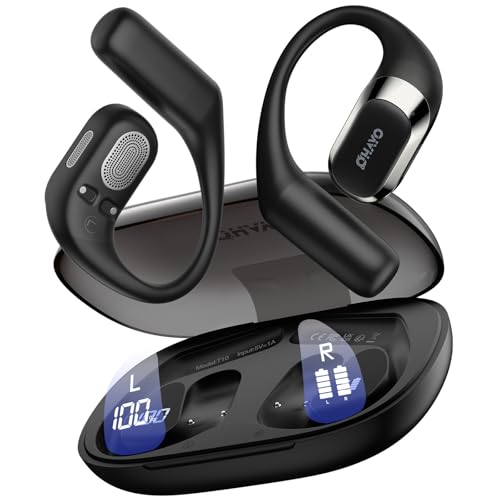
OHAYO takes an open-ear approach with an ergonomic earhook. The listing states Bluetooth 5.4, a smart digital display, 40 hours of playtime, IPX6 water protection, and touch controls. The design suits cycling, running, and workouts because it leaves the ear canal more open. It also avoids the tight seal that some in-ear users dislike.
The IPX6 rating can help with sweat and strong water spray, but it does not mean the headphones are made for swimming. Touch controls offer a clean look, yet they can respond differently when fingers are wet. For ear health, the open format is the key benefit. I would pair it with low volume and quiet routes when possible.
Pros:
- Open-ear form reduces direct canal contact
- Ergonomic earhook supports active use
- Up to 40 hours of playtime is advertised
- Bluetooth 5.4 is listed
- IPX6 protection suits sweat and water spray
- Touch controls provide quick access
Cons:
- Not intended for swimming based on the stated IPX6 rating
- Open design offers little noise isolation
- Touch controls may be less reliable with wet fingers
What Amazon Buyers Are Saying
Open-ear buyers commonly look for comfort, stable hooks, clear calls, and enough sound in outdoor settings. Recent feedback is most useful when it describes cycling, running, or office use. Check comments about touch control response and wind noise. Also remember that IPX6 does not equal full submersion protection.
My Recommendation
OHAYO is a strong middle-ground pick. It offers open-ear comfort, useful battery life, and a secure hook at a practical level. I recommend it for workouts and daily outdoor use, but I would choose the swimming model for pool use and Hmaxrd for bone-conduction comfort.
Swimming Bone Conduction Headphones

This model is made for water use and combines bone conduction with an open-ear design. The listing states IPX8 waterproofing, Bluetooth 5.4, MP3 mode, 32GB storage, secure fit, and up to eight hours of playtime. The built-in storage matters because Bluetooth signals may not work well underwater. It can also serve runners who want an open fit.
The eight-hour battery claim is lower than the long-play models in this guide, but it may be enough for training sessions. IPX8 is the strongest water rating listed among these products, yet the exact depth and time limits still matter. Read the current instructions before swimming. Bone conduction may sound less like a normal earbud, but it avoids ear-canal plugs.
Pros:
- Open-ear bone-conduction design
- IPX8 waterproof rating is listed
- MP3 mode supports use where Bluetooth may fail
- 32GB storage is advertised
- Secure fit for swimming and running
- Useful option for users who dislike ear tips
Cons:
- Eight-hour playtime is shorter than several alternatives
- Sound may differ from standard stereo earbuds
- Water limits must be checked before deep or long swims
What Amazon Buyers Are Saying
Buyers of swimming headphones usually care about waterproof performance, staying power during laps, simple controls, and MP3 storage. Look for current comments that describe pool use rather than only gym use. Battery results may change with volume and storage playback. Since water damage can vary by use, follow the maker’s care and charging instructions.
My Recommendation
This is the best specialist choice here for swimmers. It also ranks well for ear comfort because it does not use sealed ear tips. I recommend it when water use is your main goal, but I would select Hmaxrd for everyday outdoor listening because it offers a longer-use design focus.
Ortizan Open-Ear Headphones

Ortizan uses an open-ear air-conduction design for sport and outdoor listening. The listing states Bluetooth 5.3, premium sound, clear calls, IPX6 water protection, and a light 19-gram build. Its low weight may help reduce fatigue during walks, cycling, and short workouts. The open shape also lets users hear more of the nearby environment.
Unlike bone conduction, air conduction sends sound through the air toward the ear. That may deliver a more familiar sound, but it may also leak more in quiet rooms. The listing does not state battery life in the supplied information, so buyers should confirm it before purchase. I see this as a simple open-ear choice for people who value low weight.
Pros:
- Light 19-gram weight is listed
- Open-ear design keeps the canal less covered
- Bluetooth 5.3 is listed
- IPX6 protection suits exercise and sweat
- Clear-call feature is advertised
- Designed for running, cycling, and workouts
Cons:
- Battery duration is not stated in the supplied listing
- Open fit provides little isolation in loud places
- IPX6 is not a swimming rating
What Amazon Buyers Are Saying
People shopping for light open-ear headphones often discuss weight, fit, sound leakage, and call quality. Check recent reviews for how the earhooks feel during long walks and how well the pair handles wind. Buyers should also confirm the current battery details before ordering. Personal ear shape can change both comfort and sound volume.
My Recommendation
Ortizan is a sensible choice for users who want a lightweight open-air design. It ranks behind Hmaxrd and the swimming model because the supplied details provide less battery information. Still, it can be a good daily pick when low weight and outdoor awareness matter most.
How to Choose the Best Headphone for Ear Health
Choosing the best headphone for ear health means looking beyond bass, price, and battery life. The safest choice depends on how you listen. A quiet office, a busy street, a running trail, and a swimming pool all need different features. The key goal is to reduce loud sound exposure while choosing a fit that feels comfortable.
1. Choose Open-Ear Contact When It Feels Better
Open-ear air-conduction and bone-conduction headphones do not seal the ear canal like standard earbuds. They may reduce the plugged feeling and let you hear nearby sounds. This does not make them risk-free. You can still damage hearing if you raise the volume to compete with traffic or gym noise.
For the best headphone for ear health, start with the design. Choose Hmaxrd or another bone-conduction model when you want minimal canal contact. Choose OHAYO, Ortizan, or the open-ear Bluetooth model when you want air conduction. Pick in-ear products only when they fit gently and do not cause pain, pressure, heat, or itching.
2. Control Volume, Time, and Noise
Volume and listening time matter more than the brand name. I use a simple rule: keep the volume as low as practical, take breaks, and avoid turning it up to overcome loud surroundings. Noise-canceling headphones can help in some settings because they may reduce the urge to raise volume, but none of the products reviewed here should be treated as hearing protection.
Watch for ringing, muffled hearing, pain, or a blocked feeling after use. Stop listening if these signs continue. A medical professional can assess ongoing symptoms. Also keep earbuds clean and dry. Do not share ear tips, and do not insert them deeper just to get more bass.
3. Match Water Protection and Fit to Your Activity
Water ratings are not all the same. IPX6 can handle strong water spray, while IPX7 and IPX8 offer higher protection under stated test conditions. Only the swimming model in this guide is clearly designed around swimming, with IPX8, MP3 mode, and 32GB storage listed. Always check the maker’s limits for depth, time, salt water, and charging.
Fit also affects safe listening. A loose pair may tempt you to raise the volume. A tight pair may cause pressure and soreness. Earhooks help during running, but they can rub against glasses or hair. Test the fit during a short session first. Battery claims can also vary, so treat advertised playtime as a guide rather than a guarantee.
Final Verdict: Which Should You Buy?
Hmaxrd is my top choice for the best headphone for ear health because its open-ear bone-conduction design avoids deep ear-canal contact and supports outdoor awareness. Choose the swimming model for pool use, or OHAYO for a lighter open-ear workout pair.
Keep volume moderate and take breaks with any headphone. The best headphone for ear health is the one that fits comfortably, suits your setting, and helps you listen less loudly.
FAQs Of best headphone for ear health
Are open-ear headphones better for ear health?
They may reduce ear-canal pressure and help you hear nearby sounds. They can still harm hearing if you use high volume for long periods.
Is bone conduction safer than regular earbuds?
Bone conduction avoids deep ear-canal insertion, which may improve comfort. It does not remove the risk from loud sound exposure.
What volume is safe for headphones?
Use the lowest level that lets you hear clearly. Take regular breaks, and lower the volume when you notice ringing or muffled hearing.
Can I swim with open-ear headphones?
Only use a model made for swimming and rated for that purpose. The swimming model reviewed here lists IPX8, MP3 mode, and 32GB storage.
What should I do if headphones cause ear pain?
Remove them and let your ears rest. If pain, ringing, drainage, or muffled hearing continues, seek advice from a qualified health professional.