10 Best Xbox Series S Headsets for Gaming in 2026

A good headset changes how the Xbox Series S headset feels to play. Footsteps in a shooter land with more direction, teammates come through clearly instead of muffled static, and long sessions feel less fatiguing on the ears and head. Since the Series S has no optical or 3.5mm jack on some controllers by default and relies on either the controller’s headphone port or Xbox Wireless, the headset a player picks has a direct effect on setup and sound quality.
Xbox headsets generally fall into three connection types: wired models that plug into the controller’s 3.5mm jack, 2.4GHz wireless models that connect through a USB dongle or built-in Xbox Wireless radio, and hybrid units that add Bluetooth for phone calls or music. Each has trade-offs in latency, range, and multiplatform flexibility. Spatial audio formats like Dolby Atmos and Windows Sonic also matter for pinpointing enemy locations, but not every headset supports them without extra setup.
The most important factors for a Series S headset are connection type, microphone clarity, and comfort during long sessions, since these affect daily use far more than driver size or marketing claims. Battery life matters for wireless models, and mic monitoring (hearing your own voice in the headset) helps prevent shouting during matches. The picks below cover a full range of budgets and connection styles, from wireless Xbox-native headsets to affordable wired options.
Best overall wireless: Xbox Wireless Gaming Headset
Best battery life: Turtle Beach Stealth 500
Best for competitive comfort: ASTRO A20 Gen 2
Best wired for durability: HyperX CloudX
Best mic clarity on a budget: Razer BlackShark V2 X
Best budget wired pick: Turtle Beach Recon 50
Best powered wired headset: Turtle Beach Recon 200 Gen 2
Best for long battery life plus multiplatform: Turtle Beach Stealth 700
Best budget wireless with RGB: Gvyugke Captain 560
Best simple wired option: JBL Quantum 100M2
Xbox Series S headset
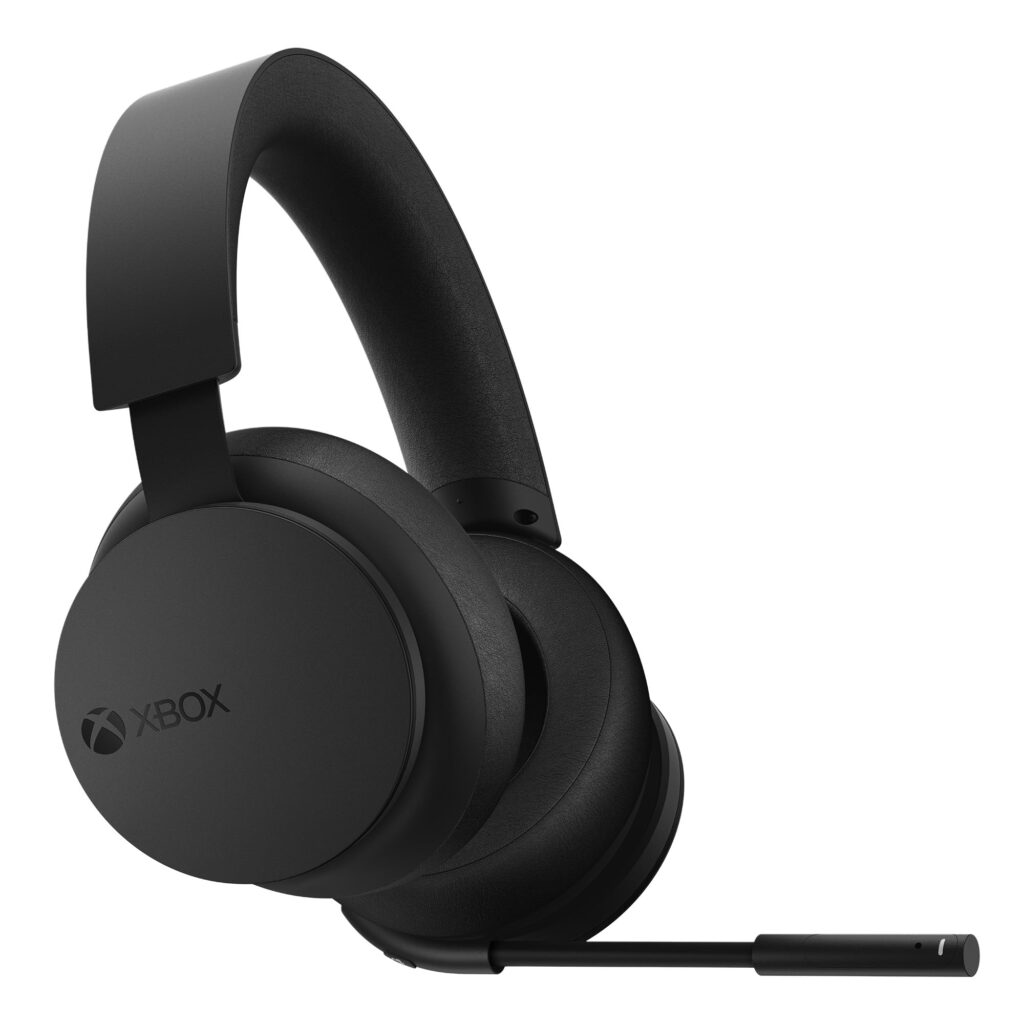
This is the most straightforward wireless option for Series S owners who want native Xbox connectivity without a dongle.
Pros
- Connects directly to Xbox with no dongle required
- Dolby Atmos included at no extra cost
- Up to 20 hours of battery life
Cons
- Bluetooth LE Audio only works on select devices
- Plastic build feels less premium than pricier rivals
Built by Microsoft specifically for Xbox hardware, this headset pairs instantly using Xbox Wireless technology, the same system consoles use for controllers. That means no USB dongle taking up a port and no Bluetooth latency during gameplay. Dolby Atmos comes standard, giving a real edge in games that support spatial audio for directional sound cues.
The mic uses auto-mute and voice isolation to cut background noise, and reviewers note clear team chat. Simultaneous Bluetooth 5.3 lets players connect a phone for calls or music while gaming on console. Comfort holds up over multi-hour sessions thanks to the adjustable headband, though some buyers note the earcup dials feel loose out of the box.
Turtle Beach Stealth 500
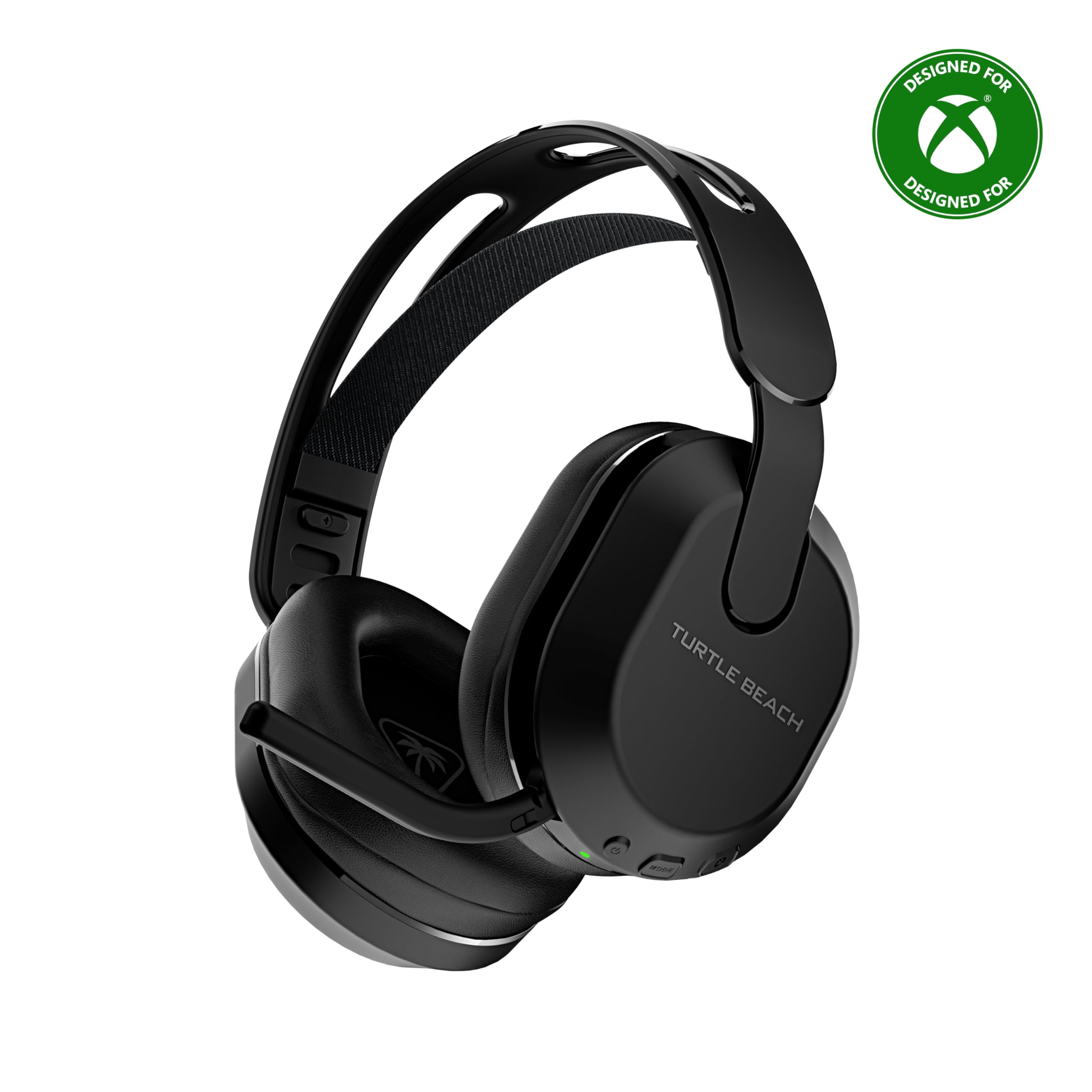
This headset suits players who hate charging gear constantly, thanks to a battery rated for up to 40 hours per charge.
Pros
- Up to 40 hours of battery life plus quick charge
- QuickSwitch button toggles between 2.4GHz and Bluetooth instantly
- Swarm II app adds 10-band EQ and Superhuman Hearing
Cons
- Some buyers report an unreliable USB dongle connection
- Bluetooth mode loses some advanced audio features
The Stealth 500 connects to Series S through a low-latency 2.4GHz USB transmitter, with Bluetooth 5.2 available for phones or tablets. The QuickSwitch button lets a player flip between the two instantly, useful for taking a call mid-match without pausing the game.
Turtle Beach’s Superhuman Hearing setting boosts quiet sounds like footsteps, a genuine advantage in competitive shooters. The flip-to-mute mic and mic monitoring feature let players hear their own voice level, which helps avoid shouting. Comfort is strong thanks to the floating headband design, though the transmitter’s reliability is a recurring complaint in owner reviews.
ASTRO A20 Gen 2

This headset delivers a well-rounded mix of range, comfort, and simple controls for players who want reliable performance without a companion app.
Pros
- Wireless range up to 50 feet via 2.4GHz signal
- On-device game/chat audio balance
- Lightweight design for extended sessions
Cons
- No spatial audio app or advanced EQ software
- 15-hour battery life trails the Turtle Beach models
The A20 Gen 2 uses a 2.4GHz USB transmitter built for Xbox, giving stable audio at longer distances than Bluetooth typically allows. A flip-to-mute mic keeps chat control simple, and onboard EQ presets let players adjust sound without opening an app.
Battery life lands at 15 hours, shorter than several rivals here but enough for a full evening of gaming. Reviewers consistently praise its comfort during long sessions and note the audio balance dial as genuinely useful for hearing teammates over game sound. It lacks Bluetooth for phone pairing, so it’s built for console and PC use rather than multitasking with mobile audio.
HyperX CloudX

This wired headset is built for players who want durability and comfort without worrying about batteries or wireless drops.
Pros
- Official Xbox license with tested compatibility
- Durable aluminum frame
- Memory foam ear cushions for long sessions
Cons
- Wired only, no Bluetooth or wireless mode
- Some buyers report ear soreness after extended use
The CloudX plugs into the Series S controller’s 3.5mm jack, so setup takes seconds and there’s no latency or battery to manage. The aluminum frame is built to survive daily wear, and several long-term owners report years of heavy use without failure.
In-line controls put volume and mic mute within reach without digging through console menus. The detachable noise-cancelling mic can be removed entirely for music listening. Comfort is generally well-reviewed thanks to the memory foam padding, though a handful of buyers with sensitive ears report soreness after long stretches.
Razer BlackShark V2 X

This wired headset stands out for mic clarity, thanks to a cardioid pickup pattern designed to cut background noise better than typical budget mics.
Pros
- HyperClear cardioid mic reduces background noise
- Lightweight at roughly 240 grams
- Works with Windows Sonic spatial audio
Cons
- Wired 3.5mm only, no wireless option
- No companion app for EQ customization
Razer’s Triforce Titanium drivers split audio into three tuned bands for highs, mids, and lows, which gives clearer separation between voice chat and game effects. The cardioid mic focuses on the player’s voice while tapering off background sound, a genuine improvement over standard omnidirectional mics at this price.
Memory foam ear cushions and a lightweight frame make it comfortable for long play sessions. It plugs directly into the Series S controller, works with Windows Sonic for spatial audio, and includes passive noise isolation from its closed earcup design. It offers no wireless mode, so players who want to roam away from the console should look elsewhere.
Turtle Beach Recon 50
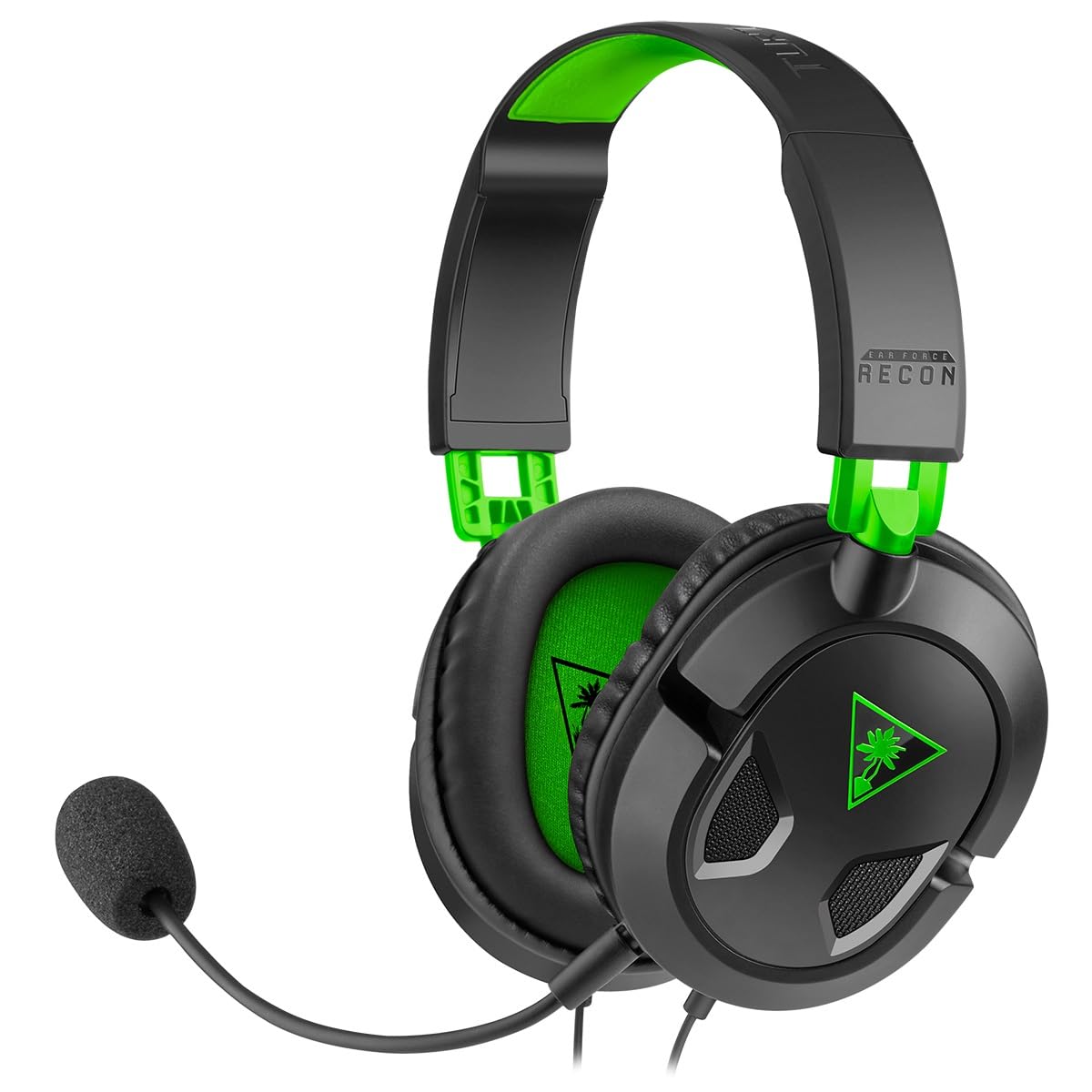
This is the most affordable dependable option on this list, and one of the best-selling Xbox headsets on Amazon for good reason.
Pros
- Very low price for the audio quality delivered
- Supports Windows Sonic, Dolby Atmos, and DTS Headphone
- Removable mic for music listening
Cons
- Small earcups may not fit larger heads comfortably
- No mic monitoring or EQ software
The Recon 50X plugs into the Series S controller and supports major spatial audio formats, a surprising feature at this price point. In-line controls handle volume and mute without needing to pause gameplay.
Its 40mm drivers deliver solid clarity for the cost, and the removable mic makes it easy to switch between gaming and casual listening. Some reviewers with larger heads note the earcups run small and the headband offers limited adjustment. For younger gamers or anyone testing whether a dedicated headset is worth owning, it’s a low-risk starting point.
Turtle Beach Recon 200 Gen 2

This powered wired headset adds bass boost and mic monitoring, features usually reserved for wireless models.
Pros
- Rechargeable battery powers bass boost and mic monitoring
- Still works passively for audio if the battery dies
- Glasses-friendly ProSpecs ear cushion design
Cons
- 12-hour battery life is short compared to wireless rivals
- Add-on power features require charging to work
Unlike purely passive wired headsets, the Recon 200 Gen 2 uses a rechargeable battery to power bass boost and variable mic monitoring, letting players hear their own voice level in the headset. Game audio still works over the 3.5mm jack even if the battery runs flat.
The metal-reinforced headband and memory foam cushions hold up well over time, and the ProSpecs design relieves pressure for players who wear glasses. Battery life tops out at 12 hours, which is fine for the powered extras but modest next to fully wireless models on this list.
Turtle Beach Stealth 700
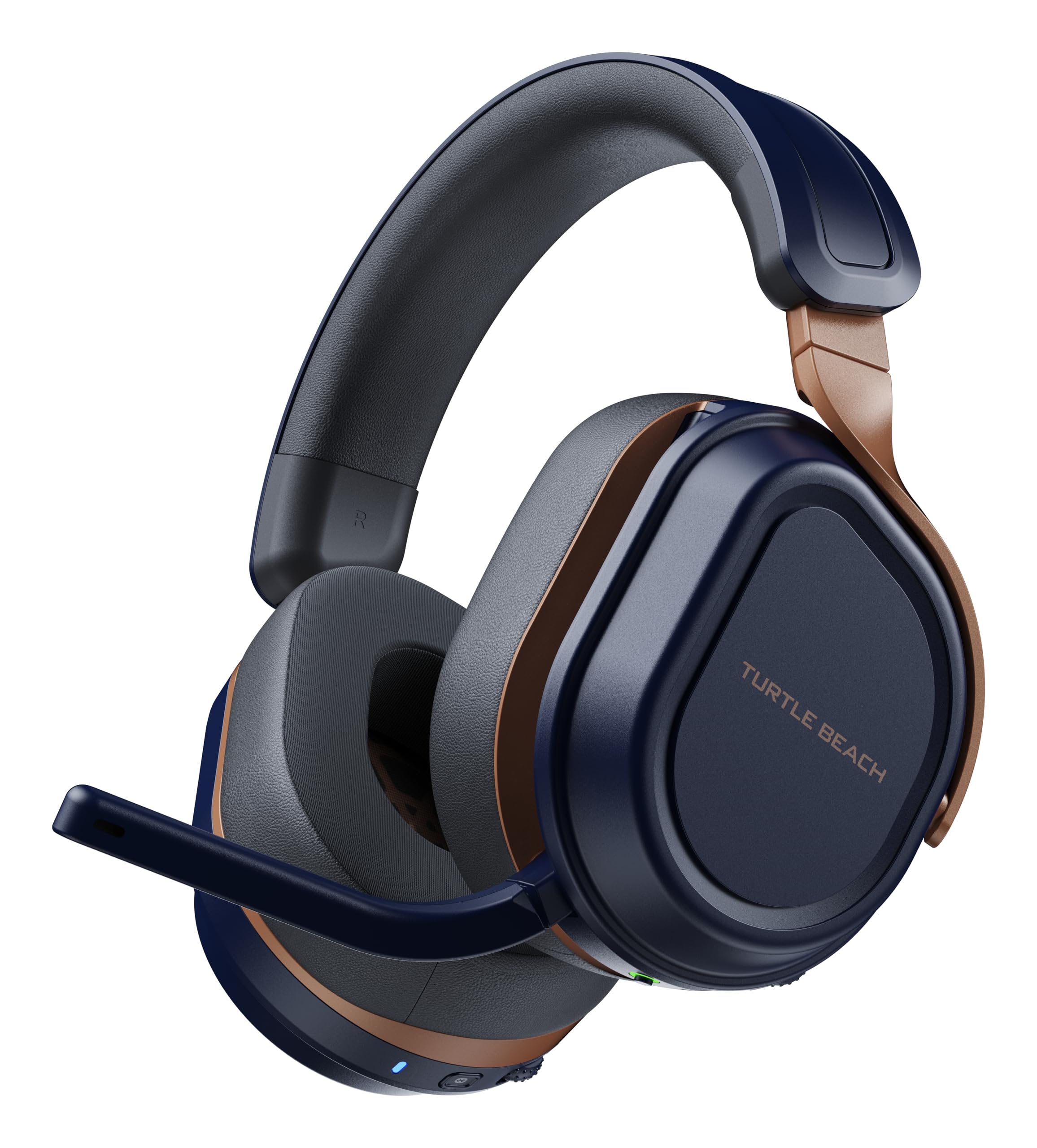
This is the most feature-dense wireless headset here, built for players who game across Xbox, PC, and mobile regularly.
Pros
- Up to 80 hours of battery life with quick charge
- Dual USB transmitters switch between console and PC instantly
- Large 60mm dual drivers separate bass and treble clearly
Cons
- Some owners report occasional Bluetooth disconnects
- Heavier than other headsets on this list
The Stealth 700’s CrossPlay system includes two transmitters, so a player can swap between Xbox and PC without unplugging anything. Simultaneous Bluetooth lets a phone connect for Discord or music at the same time as console audio.
Its 60mm dual drivers split woofer and tweeter duties, giving noticeably more detail than single-driver headsets at lower volumes. Battery life is rated up to 80 hours, among the longest on this list. A few reviewers mention the added weight and occasional Bluetooth hiccups, so it fits players who value features and battery life over the lightest possible fit.
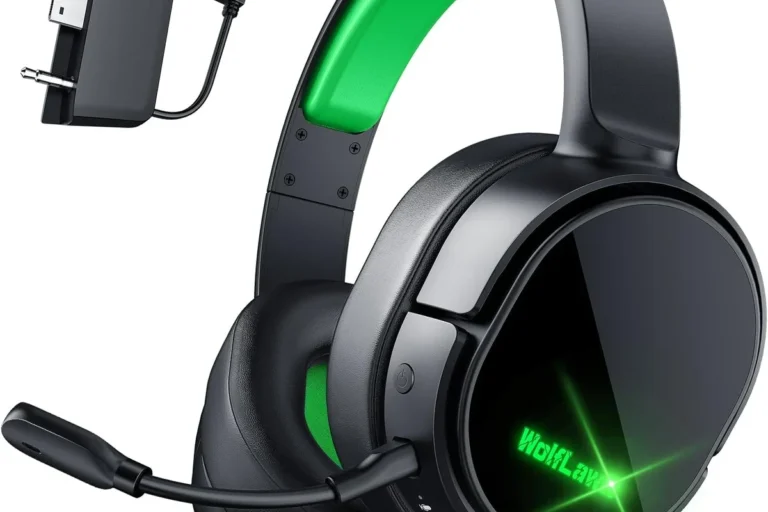
Gvyugke Captain 560
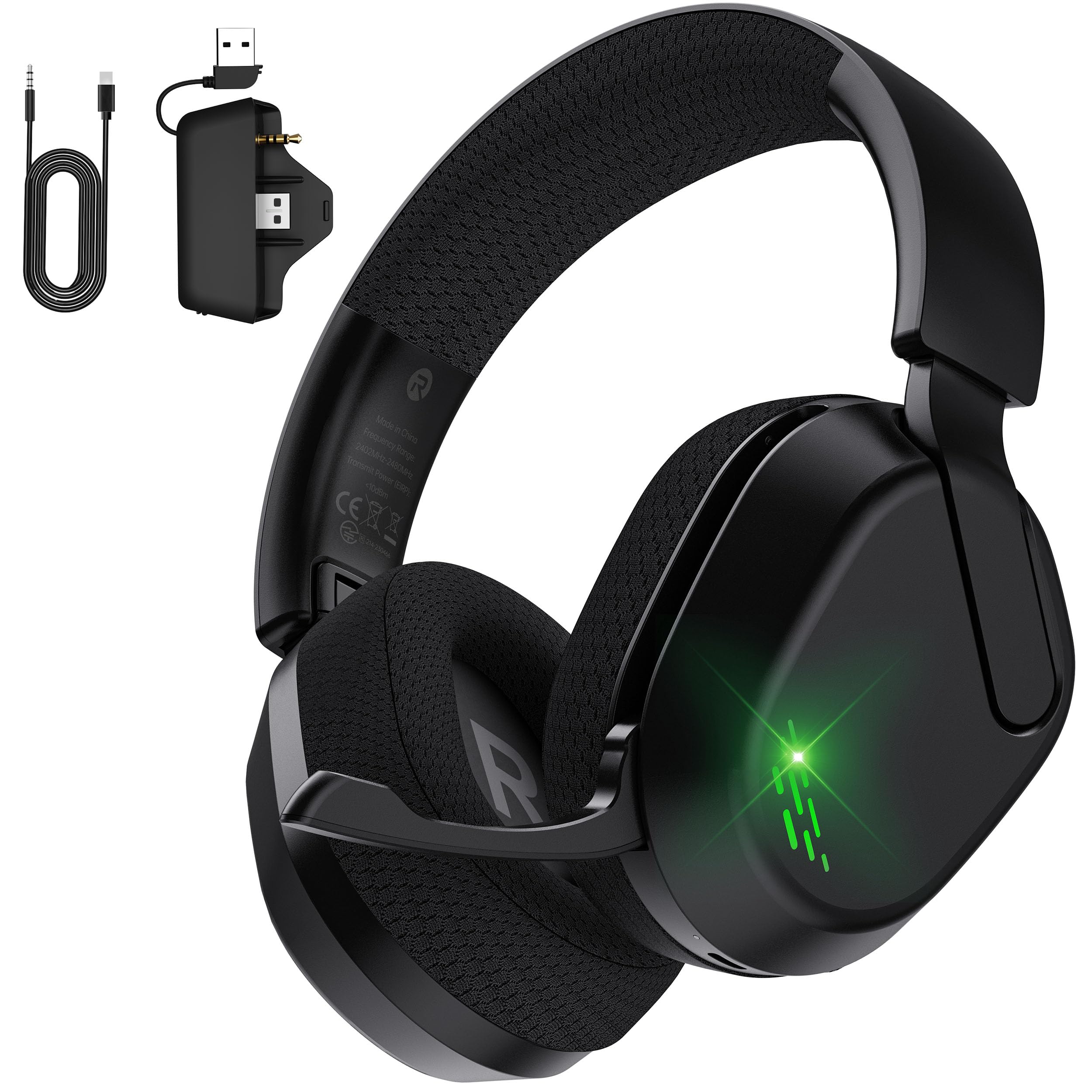
This budget wireless headset offers surprisingly long battery life and RGB lighting for players who want a low-cost alternative to name-brand options.
Pros
- Up to 70 hours of battery life with RGB off
- Triple connectivity: 2.4GHz, Bluetooth 6.0, and wired 3.5mm
- Flip-to-mute mic reduces background noise
Cons
- Bluetooth mode does not support Xbox consoles directly
- Mic quality varies according to some reviewer reports
The Captain 560 connects to Series S through a 2.4GHz USB dongle designed for official Xbox controllers. Bluetooth 6.0 is reserved for mobile devices only, so it can’t be used for simultaneous phone and console audio like some pricier models.
Battery life is a strong point, rated at up to 70 hours with RGB lighting disabled. The 50mm drivers and memory foam cushions offer decent comfort and clarity for the price, though a few owners report an echo on their own voice during chat. It’s a reasonable pick for budget-conscious players who still want long battery life and lighting effects.
JBL Quantum 100M2

This simple wired headset works well as an entry-level pick for younger players or casual gaming needs.
Pros
- Affordable wired option with detachable mic
- Compatible with Xbox, PlayStation, PC, and Switch
- Breathable fabric ear cushions for comfort
Cons
- No spatial audio beyond Windows Sonic support
- Build quality feels basic compared to gaming-specific brands
The Quantum 100M2 plugs into the Series S controller’s 3.5mm jack and works across nearly every gaming platform, making it a flexible pick for households with multiple consoles. The detachable directional mic mutes easily and can be removed entirely.
JBL’s QuantumSOUND tuning delivers clear enough audio for casual and competitive play, and Windows Sonic support adds directional cues on Xbox. Reviewers note the plastic build feels less rugged than dedicated gaming headset brands, but comfort remains solid thanks to the memory foam padding. It suits younger gamers or anyone who wants a low-cost backup headset.
Buying Guide
Match The Connection Type To How You Play
Wired headsets plug into the Series S controller’s 3.5mm jack and need no charging, but they tie the player to controller range. Wireless headsets use a 2.4GHz USB transmitter or Xbox Wireless radio for lower latency than Bluetooth, which matters most in competitive games where sound timing affects reaction speed.
| Connection Type | Setup | Best For |
|---|---|---|
| Wired 3.5mm | Plug into controller | Budget builds, no battery worries |
| 2.4GHz Wireless | USB dongle or built-in radio | Low latency, stable range |
| Bluetooth | Pairs with phone/PC | Music, calls, secondary audio |
Check Xbox-Specific Compatibility
Not every wireless headset connects directly to Series S. Some rely on Bluetooth, which Xbox consoles don’t support for game audio, so those models work for mobile or PC only. Confirm a headset lists Xbox Series X|S compatibility for its primary wireless mode, not just Bluetooth pairing.
Compare Microphone Features
A flip-to-mute mic offers quick, physical control over when a player is heard. Mic monitoring, sometimes called sidetone, lets a player hear their own voice through the headset, which helps prevent shouting during matches. Noise isolation or cardioid pickup patterns reduce background noise picked up by the mic.
Battery Life And Charging
Wireless headset battery ratings range widely, from around 12 hours on powered wired models to 80 hours on some flagship wireless designs. Quick-charge features that add a few hours of use from a short charge matter for players who forget to charge overnight.
Comfort For Long Sessions
Look for memory foam ear cushions, adjustable headbands, and lightweight builds under roughly 300 grams for multi-hour comfort. Glasses wearers should check for ear cushion designs built to reduce pressure points around the temples.
Spatial Audio And Multiplatform Use
Dolby Atmos, Windows Sonic, and DTS Headphone all add directional sound cues, useful for locating enemies by ear in competitive games. Some formats require extra app downloads or one-time purchases, so check what’s included before buying. Multiplatform headsets that support Xbox, PlayStation, and PC add value for households with more than one console.