10 Best PS4 Wireless Headsets in 2026

A wireless headset changes how a PS4 wireless headset feels to play. Cutting the cord means no more tangled cables snagging on a controller during a clutch moment, and a good microphone keeps party chat clear when a squad needs callouts fast. The right headset also shapes how well a player hears footsteps, gunfire, or dialogue, which matters as much in a quiet RPG as it does in a firefight.
Not every wireless headset connects to a PS4 the same way. Some rely on a USB dongle using 2.4GHz wireless, which the PS4 supports directly. Others lean on Bluetooth, a connection type the PS4 does not support for audio without extra hardware. That single detail decides whether a headset works out of the box or needs a workaround, so it deserves attention before checking battery life or driver size.
Comfort and battery life round out the short list of things worth checking closely. A headset that clamps too hard becomes distracting after an hour, and a battery rated for 40 hours means little if it dies mid-session because RGB lighting or Bluetooth was left on. The headsets below were evaluated on how they actually perform with a PS4, not just what their spec sheets promise.
Best PlayStation-first pick: PlayStation Gold Wireless Headset
Best for long multiplayer sessions: Turtle Beach Stealth 600 Gen 3
Best all-around value: Turtle Beach Stealth 500
Best for broad device compatibility: AOC Wireless Gaming Headset
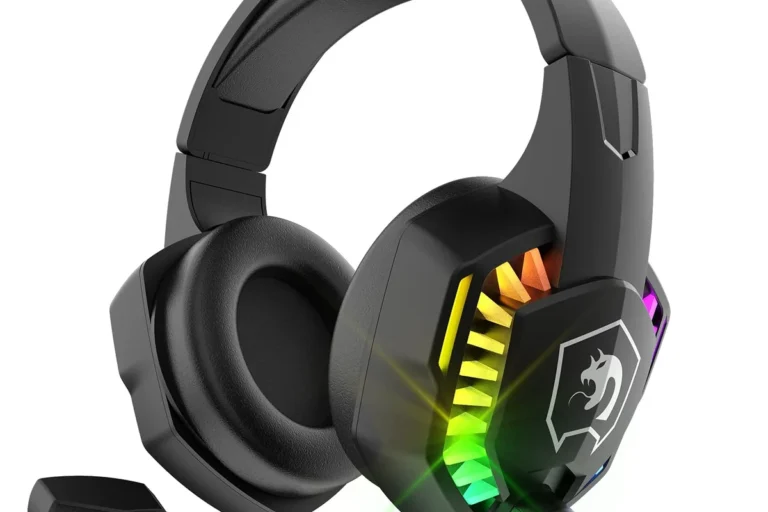
Best battery life for marathon gamers: NUBWO G06
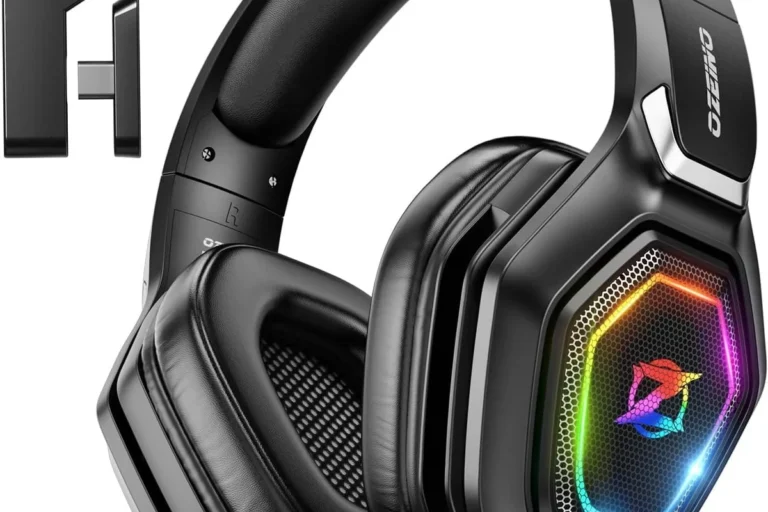
Best for FPS competitive play: Ozeino OW810
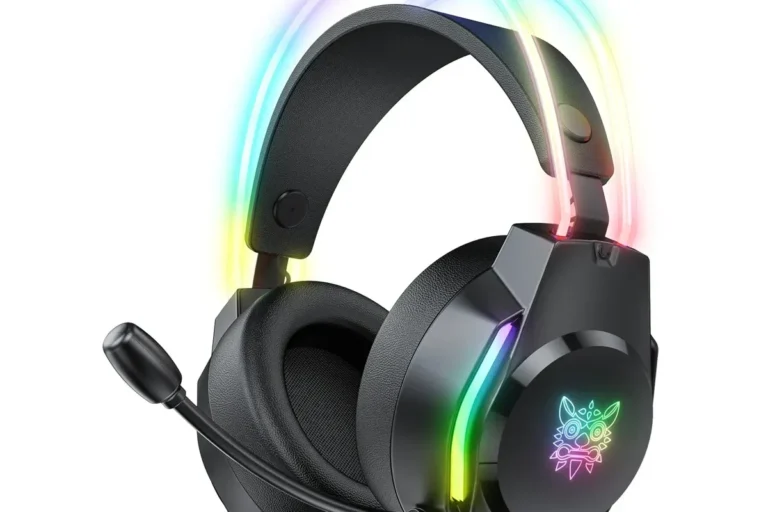
Best budget pick with RGB styling: WESEARY WG1
Best for casual and family use: Tatybo WT5
Best for multi-device switching: Valorise UG-08S
Best for retro console crossover: WolfLawS TA2000
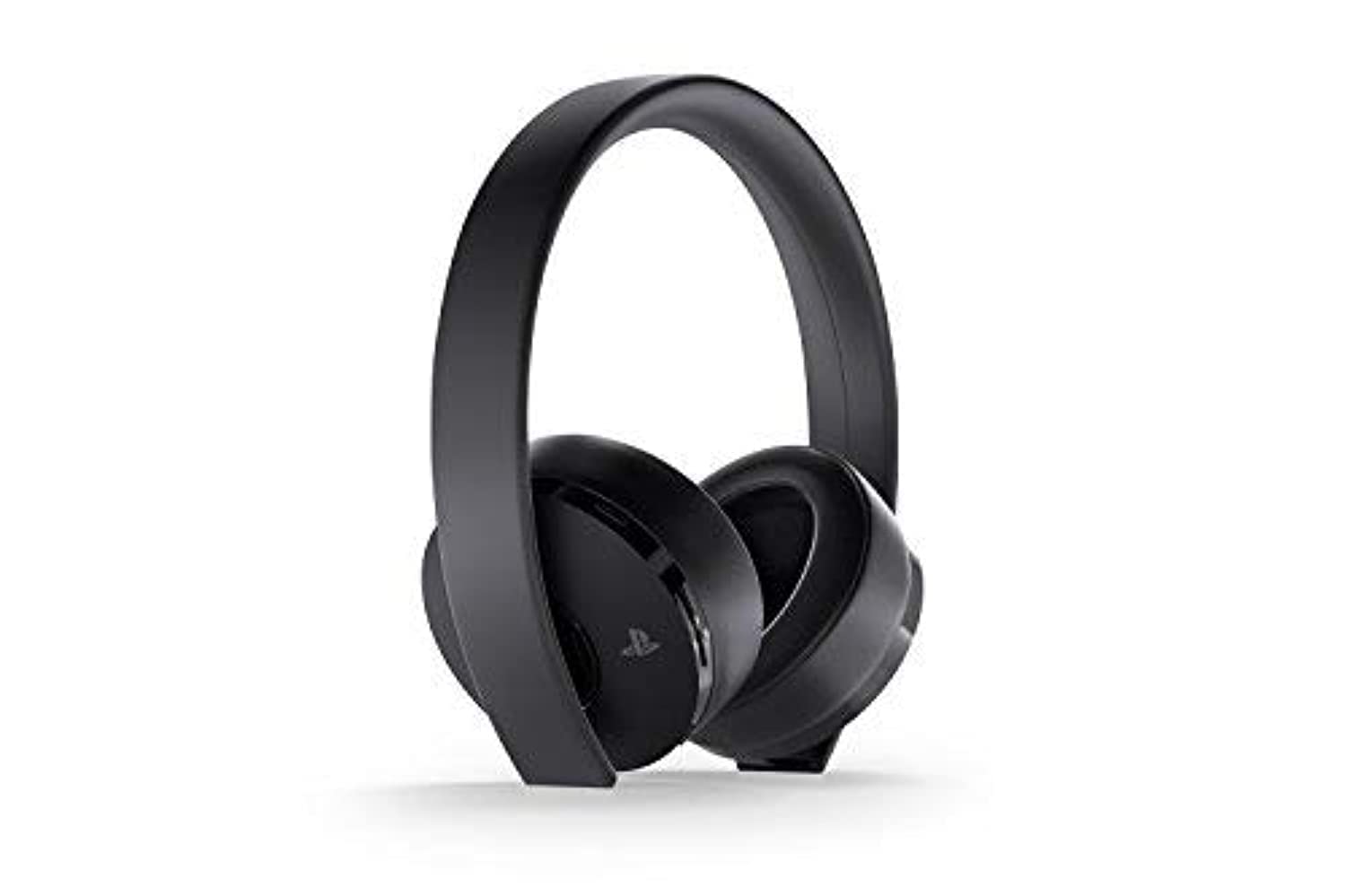
PlayStation Gold Wireless Headset
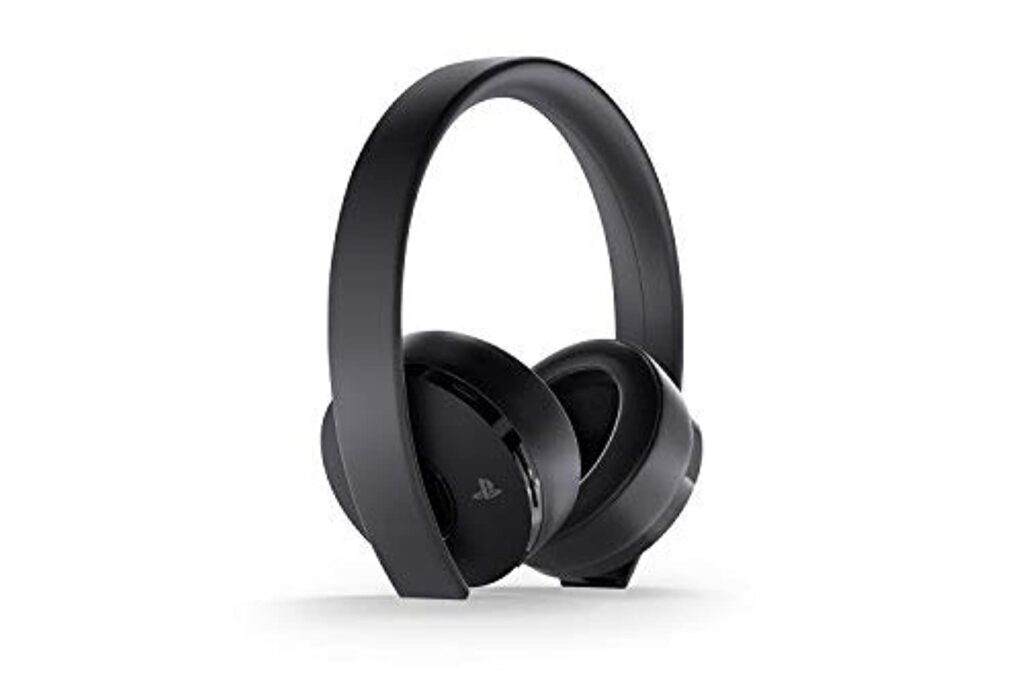
This is the headset to buy for guaranteed, plug-and-play PS4 compatibility with no dongle guesswork involved.
Pros
- Built specifically for PlayStation systems, so pairing and audio modes work without extra setup
- Hidden noise-canceling microphone keeps party chat clear
- Companion app unlocks developer-tuned audio profiles for supported games
Cons
- Battery life is short compared to newer competitors
- Uses RF wireless, not Bluetooth, so it won’t pair with a phone
- Design has not changed much since its original release
The Gold headset uses RF wireless through a USB adapter, which the PS4 recognizes immediately. That native support is its biggest strength; there is no dongle compatibility to question. The 7.1 virtual surround sound is tuned specifically for PlayStation titles, and it does a solid job separating footsteps from gunfire in shooters.
Battery life is the clear weak point, rated around three hours per charge, which means frequent trips back to the charging cable during long sessions. It also lacks Bluetooth, so it cannot double as a phone headset. For PS4 owners who want something simple and reliable, though, it remains a dependable choice.
Turtle Beach Stealth 600 Gen 3

This headset suits players who want long, uninterrupted sessions without babysitting a battery indicator.
Pros
- Rated for up to 80 hours of battery life, among the longest in this lineup
- Flip-to-mute microphone with A.I. noise reduction improves chat clarity
- QuickSwitch button toggles between 2.4GHz wireless and Bluetooth instantly
Cons
- Waves 3D Audio and some EQ features are PC-exclusive, not PS4 features
- Swarm II software setup can be finicky on first use
- No 3.5mm jack for a fully wired backup connection
The Stealth 600 connects to a PS4 through its 2.4GHz USB adapter, keeping latency low for competitive play. Its 50mm drivers deliver clean, detailed audio, and the memory foam cushions hold up well over multi-hour sessions. The mappable wheel and mode button add a nice layer of customization.
Buyers should know that Waves 3D Audio, one of the headline features, only activates in PC mode. On a PS4, the headset still sounds good, but that specific enhancement will not apply. The 80-hour battery claim also assumes lighter feature use; running Bluetooth and 2.4GHz simultaneously will drain it faster.
Turtle Beach Stealth 500

This headset balances comfort, sound, and price better than most in this roundup, making it a strong everyday pick.
Pros
- Floating headband design reduces pressure during long sessions
- Four built-in EQ presets adjust sound without needing the app open
- QuickSwitch button simplifies moving between wireless and Bluetooth
Cons
- 40-hour battery life is solid but well short of the Stealth 600’s rating
- Some users report inconsistent audio in one ear over time
- Swarm II app is needed to unlock full EQ control
The Stealth 500 uses the same 2.4GHz wireless connection for PS4 as its sibling, so latency stays low during fast gameplay. Its 40mm drivers are tuned for spatial audio out of the box, meaning PS4 owners get a reasonable surround effect without extra software. The omni-directional flip-to-mute mic is a convenient touch for quick muting.
Comfort is a highlight here, with lightweight construction and plush cushions that hold up over multi-hour play. Audio customization is more limited without the Swarm II app installed on a phone or PC, but the core sound quality is dependable even with default settings.
AOC Wireless Gaming Headset
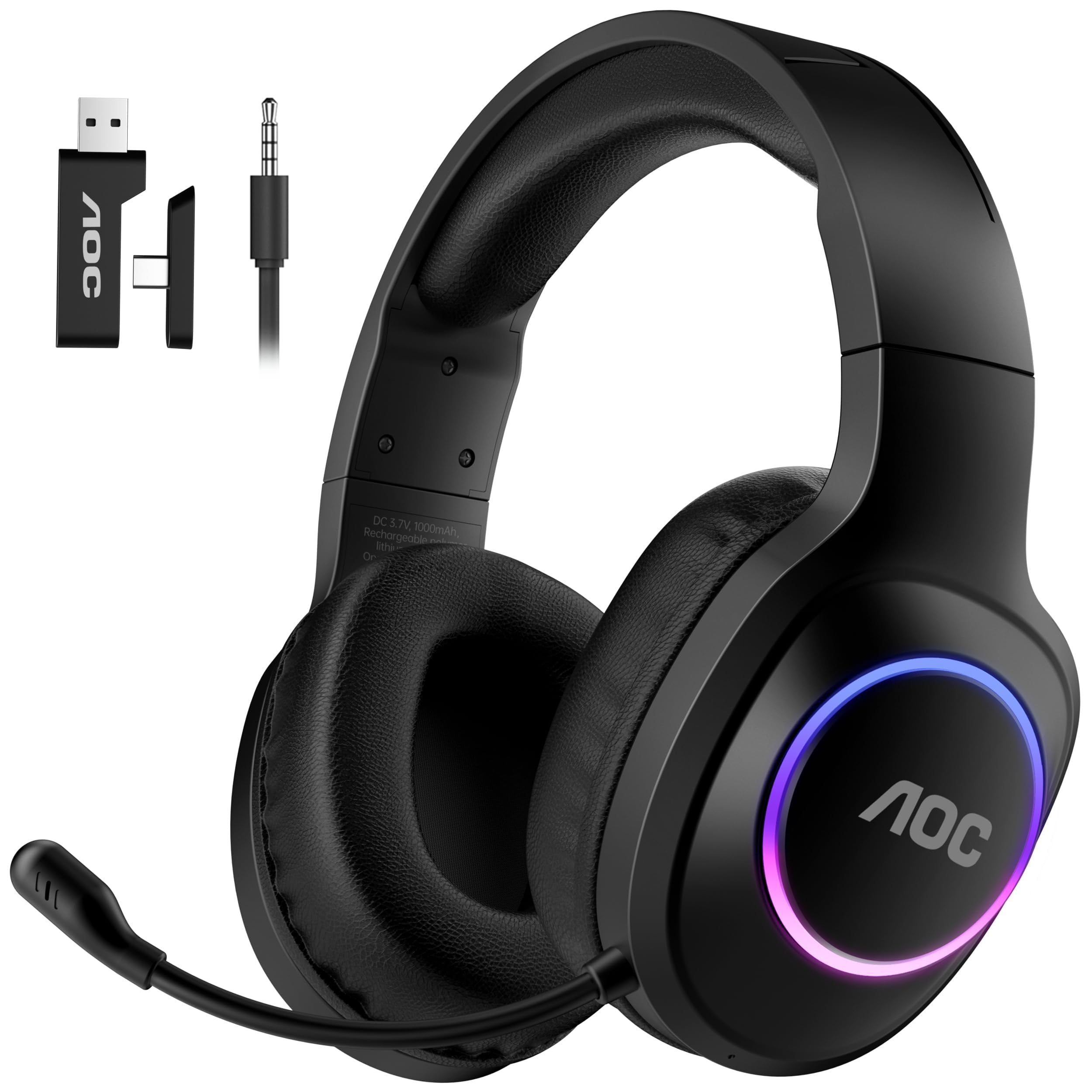
This headset is the pick for players who bounce between a PS4, a PC, and a phone and want one device that handles all three.
Pros
- Four connection modes cover USB-A, USB-C, Bluetooth, and 3.5mm wired
- Rated 45-hour battery life with a 2-hour fast charge
- Triple-stage microphone processing improves clarity in noisy rooms
Cons
- Bluetooth mode does not work with PS4 or PS5, only 2.4GHz or wired
- 7.1 virtual surround is most noticeable in supported PC titles
- Xbox compatibility is limited to wired mode only
The AOC headset’s 2.4GHz connection keeps latency near 20 milliseconds on a PS4, which is fast enough for competitive shooters. Its 50mm graphene drivers and built-in DAC produce a clean, detailed sound signature, and the lightweight build stays comfortable over long stretches.
The one caveat worth repeating: Bluetooth is a mobile-and-PC feature here, not a PS4 one. Players expecting to pair it directly to a PS4 over Bluetooth will need the 2.4GHz dongle or a wired connection instead. Within that limitation, it is one of the most flexible headsets in this group.
NUBWO G06
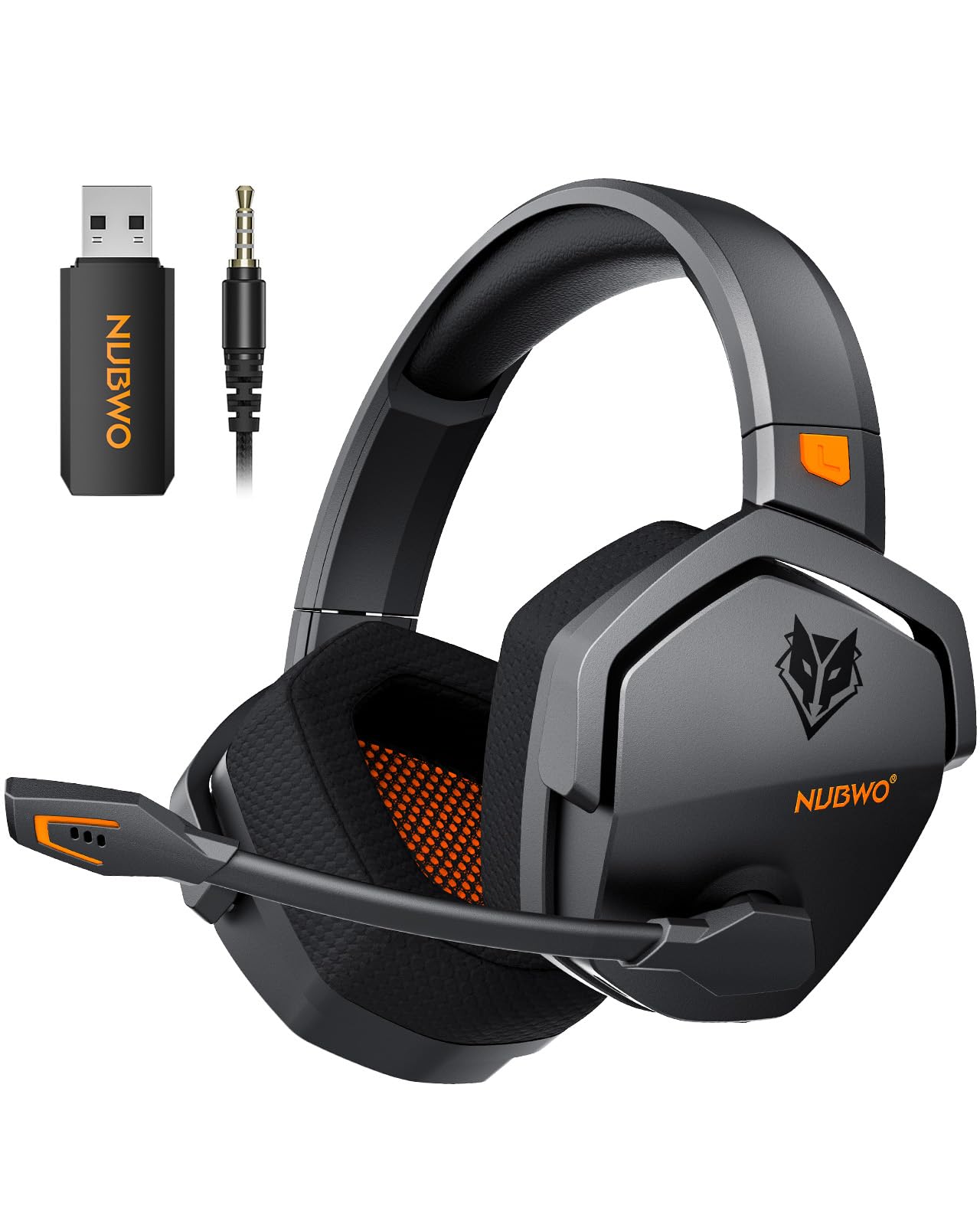
This headset targets players who hate charging headsets and want a battery that lasts through several days of play.
Pros
- Rated 100-hour battery life, among the longest of any headset here
- Simultaneous 2.4GHz and Bluetooth connections let calls interrupt gameplay audio
- 50mm drivers give a full, punchy sound for both games and music
Cons
- Xbox works only through the 3.5mm wired connection, not wirelessly
- Build quality feels less refined than pricier competitors
- Bluetooth pairs to phones only, not to the PS4 itself
The NUBWO G06 connects to a PS4 through its 2.4GHz dongle, which the brand says avoids interference from nearby Wi-Fi and other wireless peripherals. That claim held up well in mixed-device environments where other headsets occasionally stuttered. The dual wireless setup is a genuinely useful feature: a phone call can come through the Bluetooth side without pausing PS4 audio.
At this price point, few competitors offer a 100-hour battery figure, though real-world life will vary based on volume and mic use. The plastic build is lighter and less premium-feeling than Turtle Beach’s offerings, but it has not been a dealbreaker for long-session players.
Ozeino OW810
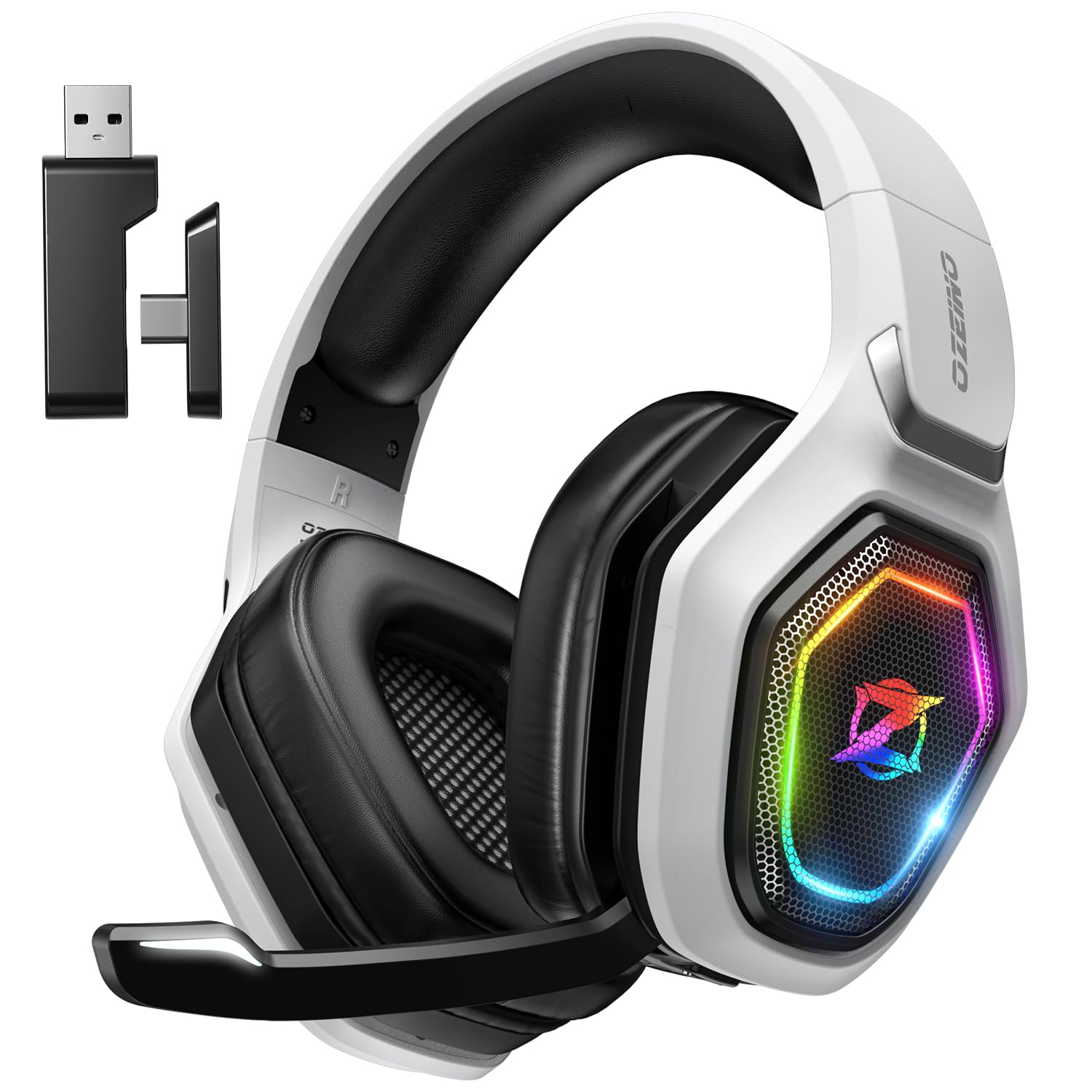
This headset fits competitive PS4 shooters best, thanks to its sub-30ms latency claim over the 2.4GHz connection.
Pros
- Low-latency 2.4GHz USB and Type-C connection suits fast-paced FPS games
- 50mm drivers pick up directional cues like footsteps clearly
- Supports charging while in use, so play never has to pause
Cons
- Bluetooth needs an extra adapter to work with a PS4, PC, or Mac
- No native noise cancellation on the microphone
- Some users report occasional connection dropouts during long sessions
The OW810 leans hard into its 2.4GHz wireless mode for PS4 use, and that focus pays off in responsiveness. Players who prioritize hearing an enemy’s position before seeing them will appreciate the driver tuning here. The multi-button layout on the earcup keeps volume and mute controls within easy reach mid-match.
Bluetooth is present but limited; it will not connect directly to a PS4 without an external USB Bluetooth adapter, which is not included. For anyone planning to stick with the 2.4GHz dongle full time, that limitation matters less, but it is worth knowing upfront.
WESEARY WG1
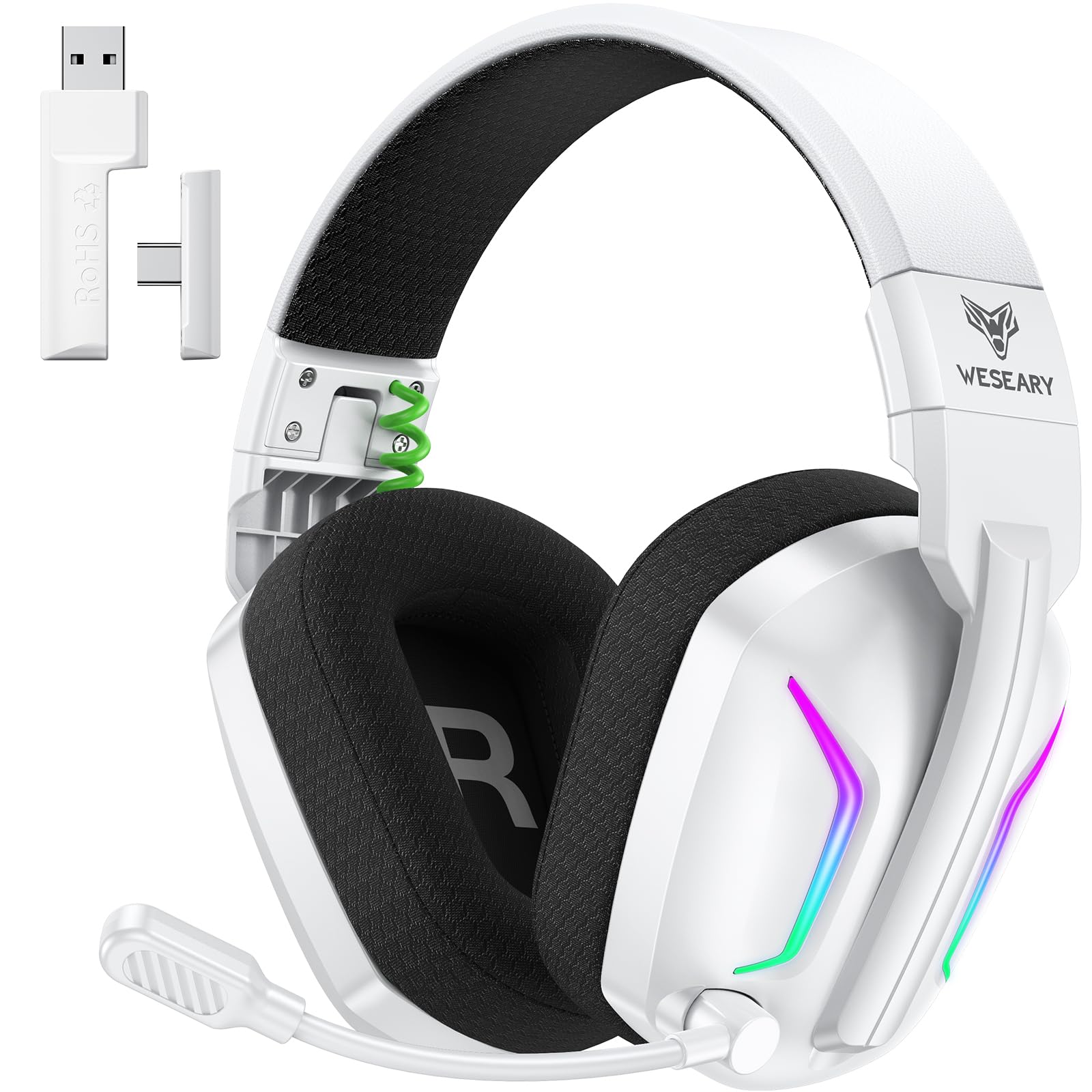
This headset appeals to budget-minded players who still want RGB styling and a long-lasting battery.
Pros
- Rated 50-hour battery life with lights off, with fast 2.5-hour charging
- Titanium-plated 50mm drivers aim for clear directional audio
- Memory foam cushions and mesh fabric stay comfortable over time
Cons
- RGB lighting shortens battery life noticeably when active
- Bluetooth does not connect to a PS4 without an added adapter
- Switch compatibility drops microphone function in that mode
The WG1 connects to a PS4 through its included 2.4GHz USB-C transmitter, delivering low-latency audio rated near 20 milliseconds. The 3D surround effect is a pleasant addition for single-player games, adding a sense of depth to footsteps and ambient sound. The one-touch RGB button is a nice personalization option for streamers or anyone who wants a more customized setup.
Battery life takes a hit once the lights are switched on, so players chasing the full 50-hour figure should expect less with RGB active. Bluetooth again serves mobile devices and PCs rather than the PS4 directly, a pattern common across nearly every headset in this price range.
Tatybo WT5

This headset works well as a simple, comfortable option for families or casual PS4 players who don’t need advanced features.
Pros
- Soft protein leather ear cups suit extended, relaxed play sessions
- 2.4GHz dongle connects easily to PS4 without extra setup
- Switchable 7.1 surround adds noticeable depth in supported games
Cons
- 30-hour battery life trails most competitors in this list
- Some buyers report static or interference issues over time
- Bluetooth mode is separate from PS4 use, mainly suited to mobile pairing
The WT5 handles PS4 connections through its 2.4GHz dongle without complications, and its 50mm drivers produce a warm, full sound suited to both games and casual movie watching. The optional virtual 7.1 mode adds a wider soundstage in games that support it, though the effect is more noticeable in cinematic or open-world titles than fast-paced shooters.
Battery life sits at the lower end for this category, so players planning marathon sessions may want a backup charging cable nearby. Build quality is generally solid, though a small number of users have reported connection static after months of regular use.
Valorise UG-08S
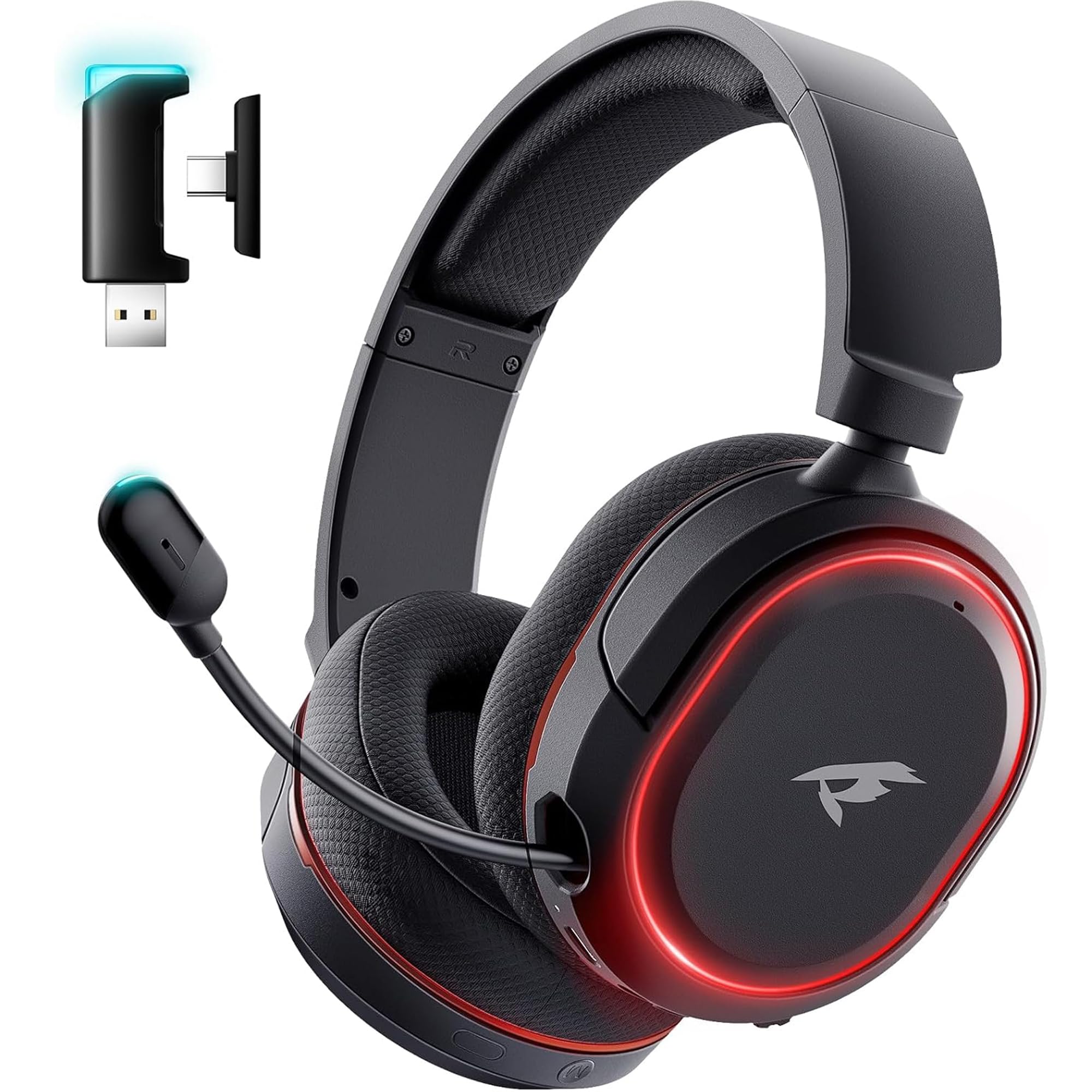
This headset suits players who juggle a PS4, a Switch, and a phone and want to switch between them without swapping hardware.
Pros
- Three connection modes (2.4GHz, Bluetooth, wired) cover most devices
- Retractable ENC microphone reduces background noise during calls
- Battery rated up to 100 hours in Bluetooth mode with lights and mic off
Cons
- PS5 and PS4 only support the 2.4GHz dongle mode, not Bluetooth
- 100-hour battery figure applies only under reduced-feature use
- RGB lighting and mic use will shorten real-world battery life significantly
The UG-08S connects to a PS4 through its 2.4GHz USB and Type-C dongle, with claimed latency near 5 milliseconds, fast enough that most players won’t notice any delay between action and sound. The retractable microphone design is a practical touch, tucking away cleanly when not in use.
The battery claims deserve a closer look. The 100-hour figure applies to Bluetooth mode with RGB and mic switched off, a setup that doesn’t apply to PS4 play. Realistic 2.4GHz battery life on a PS4, with mic and lighting active, lands closer to 45 hours, still respectable but well short of the headline number.
WolfLawS TA2000

This headset is worth a look for players who also use older consoles and want one headset that bridges PS4 and retro setups.
Pros
- Rated 48-hour battery life with on-earcup charging status lights
- 120° adjustable microphone improves flexibility for different head shapes
- Wired 3.5mm mode extends compatibility to Xbox and other classic consoles
Cons
- Bluetooth does not work with a PS4 without an added adapter
- Plastic build feels less durable than some pricier alternatives
- HRTF spatial audio benefits vary by game and are hard to verify objectively
The TA2000 uses a 2.4GHz USB receiver for PS4 audio, and its 50mm drivers with HRTF tuning aim to sharpen directional cues like footsteps and gunfire. The closed-back design with memory foam does a reasonable job blocking outside noise, which helps in shared living spaces.
Its biggest selling point for multi-console households is the 3.5mm wired fallback, useful for Xbox or older systems that don’t support the 2.4GHz dongle. Bluetooth is present but geared toward phones and Switch rather than a PS4, consistent with most headsets in this lineup.
PS4 Wireless Headsets Buying Guide
Choosing a wireless headset for a PS4 comes down to matching connection type, comfort, and battery habits to how someone actually plays. Specs on a box only tell part of the story.
Connection Type Matters More Than Bluetooth Version
The PS4 does not support Bluetooth audio devices natively. Nearly every headset in this category connects through a 2.4GHz USB dongle instead, which behaves like its own private wireless channel rather than standard Bluetooth. Check that a headset includes this dongle and lists PS4 as a supported device before assuming Bluetooth will work.
| Connection Type | Works with PS4? | Notes |
|---|---|---|
| 2.4GHz USB dongle | Yes | Main method for wireless PS4 audio |
| Bluetooth | No (without adapter) | Works with phones, PCs, some Switch use |
| 3.5mm wired | Yes | Reliable backup, no battery needed |
Latency and Audio Positioning
Lower latency means less delay between an in-game sound and hearing it. Most 2.4GHz headsets claim 20 to 30 milliseconds, which is fast enough that players won’t notice a lag in competitive games. Features like 7.1 virtual surround or 3D spatial audio can improve a sense of direction in games that support them, but the effect depends heavily on the specific title and mix, not just the headset hardware.
Battery Life Claims Need Context
A headset advertising 80 or 100 hours of battery life usually reaches that number with RGB lighting off and minimal microphone use. Turning on lighting effects or using Bluetooth and 2.4GHz together will shorten real-world battery life. A more realistic expectation is 30 to 50 percent less than the advertised maximum during regular use.
Microphone Quality and Muting
A flip-to-mute or dedicated mute button matters for quick, reliable muting during party chat. Noise-canceling or A.I.-based mic processing reduces background sound, which helps in shared rooms or noisy households. Omni-directional microphones pick up sound from all directions, while unidirectional designs focus more narrowly on the speaker’s voice.
Comfort for Long Sessions
- Memory foam cushions reduce pressure during multi-hour sessions
- Floating or adjustable headbands prevent a tight, clamped feeling
- Lighter overall weight (under 300 grams) reduces fatigue over time
- Breathable ear cup material helps prevent overheating
Compatibility Beyond PS4
Many of these headsets also work with PC, Switch, and mobile devices, but features vary by platform. Xbox support is often limited to wired 3.5mm connections only, since Xbox uses a different wireless protocol than PS4 and PC. Always check which specific features, like surround sound or app-based EQ, are limited to certain platforms before assuming they will work the same way on a PS4.