How Well Do Noise Cancelling Headphones Work: Explained

For people in the United States, noise-canceling headphones work very well against steady, low sounds such as airplane engines, bus noise, air conditioners, and office hum. They work less well against speech, dogs barking, horns, and other sudden sounds.
The best results come from two systems working together:
- Active noise cancellation (ANC) uses microphones and speakers to reduce outside sound.
- Passive noise isolation comes from the ear cups or ear tips that block sound by forming a seal.
ANC can make travel, work, and study more comfortable. It does not create total silence, and it does not make loud music safe for your hearing. Performance depends on the headphone design, the fit, the type of noise, and the device settings.

How noise-canceling headphones reduce sound
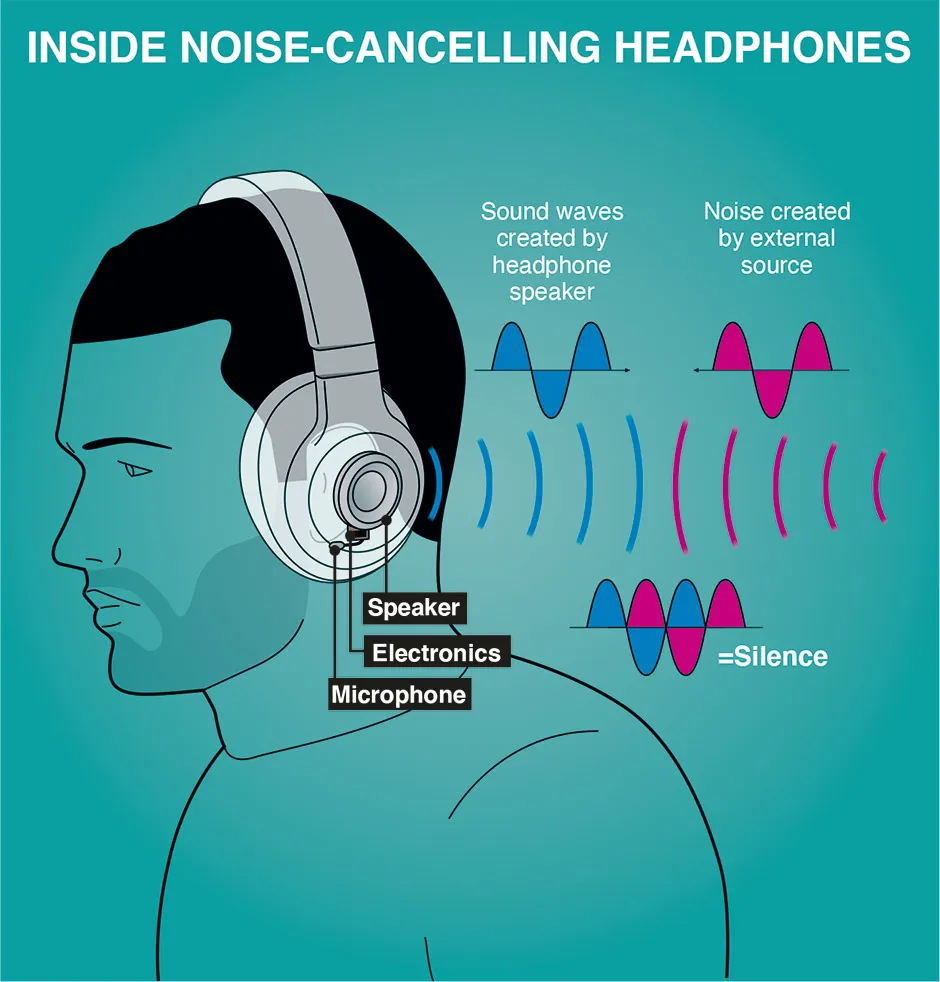
Noise-canceling headphones listen to outside sound and create a matching sound wave that reduces it. This process is called destructive interference.
A simple example is a low engine drone. The headphone microphone detects the drone. The headphone speaker then produces an inverse wave. When the two waves meet, the unwanted sound becomes quieter at the ear.
The system does not “erase” sound in the room. It reduces the sound that reaches your ears. The effect is strongest when the noise is:
- Low in pitch
- Continuous
- Predictable
- Close to the microphones
- Reaching both ears in a similar way
This is why ANC often performs well on an airplane or train. Engine noise is fairly steady. The headphones have time to detect and reduce it.
The three common ANC designs
Most active noise-canceling headphones use one or more of these designs:
- Feedforward ANC: Microphones sit outside the ear cup and detect sound before it reaches your ear.
- Feedback ANC: Microphones sit inside the ear cup and measure sound near your ear.
- Hybrid ANC: The design uses microphones inside and outside the ear cup.
Hybrid systems can respond to more conditions, but the design alone does not prove that one model will perform better. Tuning, microphones, software, speakers, and fit all matter.
Passive isolation still matters
The ear cup or ear tip blocks some sound before ANC begins. A good seal can reduce higher-pitched noise, such as keyboard clicks, nearby voices, and some road sounds.
This creates a useful division of labor:
| Sound type | Main source of reduction |
|---|---|
| Low airplane or bus rumble | Active noise cancellation |
| Air conditioner hum | Active noise cancellation |
| High hiss | Passive isolation and ANC |
| Nearby speech | Passive isolation, with limited ANC |
| Sudden shout or horn | Mostly passive isolation |
| Wind | Fit, microphone design, and wind control |
The practical lesson is simple: ANC is not a replacement for a strong physical seal.

How well does ANC work in real life?
ANC can reduce the sense of background noise by a large amount, but results vary by sound and by model. A quiet airplane cabin may feel much easier to tolerate. A busy coffee shop may still sound busy, even with ANC switched on.
Airplanes and public transportation
Airplane cabins are one of the best settings for ANC. The engine produces a constant low-frequency sound, which ANC can target well.
On buses and trains, ANC can also reduce motor and wheel noise. However, bumps, braking, announcements, and nearby conversations can still come through.
For long trips, comfort matters as much as raw noise reduction. A tight seal may block more sound but feel uncomfortable after several hours.
Offices and home workspaces
ANC can reduce heating, ventilation, and air-conditioning noise. It may also lower the background sound from fans, computers, and distant traffic.
It usually will not remove a coworker’s voice. Human speech changes quickly and covers a wide range of frequencies. The headphone may reduce parts of the voice, but words can remain easy to understand.
Streets and city travel
ANC can lower traffic rumble, but it should not be treated as a safety system. Users may miss a bicycle bell, car horn, emergency vehicle, or warning call.
When walking, cycling, driving, or crossing roads, use the setting that lets you hear your surroundings. Never wear headphones in a way that prevents you from responding to traffic or safety signals.
Wind and outdoor noise
Wind can confuse the microphones and create a rushing sound. Some headphones have wind-reduction modes, but no ANC system handles every gust well.
A secure fit helps. So does placing the microphones away from direct wind. Earbuds may be more exposed to wind than large, well-sealed over-ear headphones, but the result depends on the design.

What ANC cannot block well
Noise-canceling headphones have clear limits. They are not silent-room devices.
ANC is less effective against sounds that are sudden, irregular, or rich in high frequencies. Examples include:
- A nearby person speaking
- A baby crying
- A dog barking
- Dishes clattering
- A door slamming
- A car horn
- Construction impacts
- A smoke alarm
- A loud alarm or public announcement
Passive isolation can help with these sounds. Playing music or steady masking noise may also make them less noticeable. That does not mean the headphones have fully removed them.
Some headphones offer adaptive ANC. This feature changes the cancellation level as the environment changes. It can improve comfort, but it may also change how much outside sound you hear. The name “adaptive” does not guarantee better results in every setting.
Why voices remain audible
Speech is difficult to cancel because it changes in pitch, volume, and timing. It also contains many frequencies. The brain is very good at detecting speech, even when the sound is partly reduced.
A closed-back over-ear design with thick cushions may block more speech than open earbuds. Even then, nearby voices may remain clear enough to understand.
Why you may hear a faint hiss
Some ANC headphones produce a soft electronic hiss when ANC is active. This can be easier to hear in a quiet room with no music playing.
A small amount of hiss does not necessarily mean the headphones are faulty. It is a side effect of the microphones, amplifiers, and signal processing. A sudden crackle, strong imbalance, or loud repeating noise may indicate a problem.
ANC versus passive noise isolation
Active noise cancellation and passive isolation solve different problems.
Passive isolation uses materials and fit. It needs no battery. It often works well against higher-frequency sound and sudden noise.
ANC uses electronics. It can reduce low-frequency sound that is harder to block with padding alone. It needs power and may introduce processing artifacts or wind noise.
The strongest overall result usually comes from both. A headphone with excellent ANC but a poor seal may perform worse than a model with moderate ANC and a comfortable, secure fit.
Earbuds versus over-ear headphones
| Design | Common strengths | Common limits |
|---|---|---|
| ANC earbuds | Small, light, easy to carry | Seal depends on ear tips; wind may be noticeable |
| ANC over-ear headphones | Large seal, often comfortable for travel | Bigger, warmer, and less portable |
| Passive earmuffs | Simple, no battery | May not block low engine noise as well as ANC |
| Open-back headphones | Natural sound and airflow | Little passive isolation; not designed for noisy places |
Earbuds need the correct ear tip size. If the tip is too small, sound leaks in and bass may sound weak. If it is too large, the fit may hurt or become unstable.
Over-ear headphones need cushions that sit around the ears. Glasses, hair, hats, and worn cushions can create gaps and reduce isolation.

How to get the best noise-canceling performance
Use these steps before judging how well your headphones work.
1. Choose the correct ear tip or headband fit
For earbuds, try each supplied tip size. The right tip should feel secure without painful pressure. Music should sound balanced, and outside noise should drop even before ANC turns on.
For over-ear headphones, adjust the headband so the cushions surround your ears. The cushions should touch your head all the way around.
2. Check the listening mode
Many headphones have several modes:
- ANC or noise canceling
- Off
- Transparency or ambient sound
- Adaptive or automatic control
Confirm that ANC is active. Transparency mode intentionally brings outside sound into the headphones. It can seem like ANC is weak when the wrong mode is selected.
3. Keep the microphones clear
Do not cover the microphone openings with clothing, tape, dirt, or a tight case. Clean the headphones according to the manufacturer’s instructions.
Sweat, dust, and skin oils can affect ear tips and microphone openings. Replace worn ear tips and damaged cushions when possible.
4. Test with steady noise
A fair test uses a fan, air conditioner, airplane-style rumble, or another steady sound. Compare ANC on and off at the same volume.
Do not test by increasing music volume until outside noise disappears. That measures loud music, not ANC performance.
5. Use the companion app carefully
Some apps include an equalizer, hearing test, fit test, wind mode, or adaptive control. These tools can change the result.
A hearing test may improve the sound balance. It does not turn the headphones into medical hearing protection.
6. Update and reset only when needed
If cancellation becomes uneven, check the battery, clean the sensors, and confirm the fit. Then check the manufacturer’s support instructions for firmware updates or a reset.
If one side cancels less than the other after these checks, contact the manufacturer or retailer.

Does noise cancellation protect your hearing?
ANC can make a noisy place feel quieter, but ordinary consumer headphones should not be assumed to provide certified hearing protection.
The National Institute for Occupational Safety and Health (NIOSH) explains that hearing protection depends on the protector, the fit, the noise level, and the time of exposure. A product with a Noise Reduction Rating (NRR) is evaluated under a specific hearing-protection system. Many consumer ANC headphones do not carry an NRR.
If you work around loud machinery, firearms, aircraft, power tools, or other hazardous noise, use hearing protection intended and labeled for that setting. Follow workplace rules and seek advice from a safety professional when needed.
ANC does not make loud music harmless
Noise exposure depends on both sound level and duration. ANC may let you listen at a lower volume because you do not need to overpower background noise. That is a useful benefit.
It does not make high-volume listening safe. The World Health Organization recommends safe listening habits, including reducing volume, taking breaks, and using well-fitted headphones.
Practical signs that the volume may be too high include:
- Ringing in your ears
- Muffled hearing after listening
- Ear pain
- Needing to raise your voice to speak
- Difficulty hearing people after removing the headphones
Stop listening and reduce exposure if these signs occur. If ringing, pain, or hearing changes persist, contact a qualified health professional.

Common ANC problems and fixes
The headphones barely reduce noise
Possible causes include a poor seal, the wrong mode, low battery, blocked microphones, or a design that is weak against that type of noise.
Start by checking the mode and fit. Then test the headphones against a steady low sound. If they perform well there but not against voices or sudden sounds, the result may be normal.
One ear sounds different
Check whether one ear tip is loose or one cushion has a gap. Clean both sides and confirm that the audio balance is centered.
A blocked ear canal, earwax, or a hearing difference can also affect the result. If the imbalance remains with more than one device, consider a hearing check.
ANC causes pressure or discomfort
Some users describe ANC as pressure, even though the headphones do not create a vacuum. The sensation may result from reduced low-frequency sound, the fit, or sensitivity to the processing effect.
Try a lower ANC setting, transparency mode, a different fit, or another headphone design. Do not continue wearing the headphones if they cause pain, dizziness, or severe discomfort.
Wind noise gets worse
Turn on wind reduction if the device offers it. Adjust the fit and move away from direct airflow. If the problem occurs only outdoors, it may be a microphone limitation rather than a fault.
Are noise-canceling headphones worth it?
ANC headphones are most useful when you regularly face steady background noise or want to listen at a lower volume during travel and work.
They may be worth considering if you:
- Fly often in the United States
- Ride buses or trains
- Work near fans or HVAC systems
- Study in moderately noisy spaces
- Prefer less background sound during calls or music
They may not solve your problem if you need to block voices, sudden impact noise, or hazardous workplace sound. In those cases, a strong passive seal, purpose-built hearing protection, or a quieter location may matter more.
Before buying, compare the fit, comfort, battery behavior, transparency mode, microphone quality, repair options, and return policy. Independent measurements can help, but results may differ from your ears, music, and surroundings.

Key takeaways
- ANC works best against steady, low-frequency noise.
- Ear cups and ear tips provide passive isolation that ANC cannot replace.
- Voices, alarms, wind, and sudden sounds are harder to reduce.
- A correct fit can matter as much as the electronic cancellation system.
- ANC may help you listen at a lower volume, but it is not a guarantee of hearing safety.
- Do not treat ordinary consumer headphones as certified hearing protection unless the product is specifically labeled and rated for that use.
Frequently asked questions
Do noise-canceling headphones block all sound?
No. They reduce some outside sound, especially steady low-frequency noise. You can still hear voices, alarms, sudden noises, and some high-frequency sounds.
Is ANC better than earplugs?
Neither is best for every situation. ANC is convenient for travel and steady background noise. Earplugs can provide strong passive protection, but their performance depends on fit and the product type. For hazardous noise, use hearing protection made and labeled for that exposure.
Can people hear me while I use noise-canceling headphones?
Usually, yes. ANC affects what you hear more than what others hear. Call quality depends on the headphone microphones, background noise, your surroundings, and the device or app used for the call.
Does ANC work without music?
Yes. The cancellation system can operate with no music playing. You may still hear a small amount of electronic hiss, and the headphones will not remove every type of sound.
Can noise-canceling headphones cause hearing loss?
ANC itself is not known to cause hearing loss when the headphones are used at safe volume levels. Hearing risk comes mainly from excessive sound level and exposure time. Keep the volume moderate and take breaks.
Conclusion
Noise-canceling headphones work best as a tool for reducing steady background sound, not as a promise of silence. Their real-world performance depends on ANC quality, passive fit, the type of noise, and how well the headphones stay sealed.
For airplane engines, transit rumble, and office hum, a well-fitted ANC model can make a clear difference. For speech, alarms, sudden noise, and dangerous sound levels, use realistic expectations and the right form of hearing protection.