How Long Do Noise Cancelling Headphones Last: Lifespan Guide

For most people in the United States, noise-canceling headphones last about 2 to 5 years. The built-in rechargeable battery usually limits the useful life before the ear cushions, hinges, or speakers wear out.
A single charge often lasts 20 to 40 hours, depending on the model, volume, Bluetooth settings, and whether active noise cancellation (ANC) is on. With careful use, some headphones can work well beyond five years. However, a battery that no longer holds a charge can make an otherwise good pair feel unusable.
The exact lifespan depends on four things:
- Battery quality and charging habits
- Daily use and storage conditions
- Build quality and repair options
- Exposure to sweat, heat, dust, and physical stress
This guide explains how long ANC headphones last, what wears out first, and how to extend their service life.

The Short Answer: Expect 2 to 5 Years
Two to five years is a practical lifespan for most wireless noise-canceling headphones. Heavy daily use may reduce that period. Light use, careful storage, and a replaceable battery may extend it.
There are two different meanings of “last”:
- Battery life per charge: How many hours the headphones play before charging.
- Product lifespan: How many years the headphones remain useful before repair or replacement.
A pair may provide 30 hours per charge when new but only a few hours after years of battery wear. The headphones may still turn on, but the short runtime can make them difficult to use.
Typical lifespan by use
| Usage pattern | Likely useful lifespan | Common reason for replacement |
|---|---|---|
| Occasional use | 4–7 years | Battery aging or outdated software |
| Daily home or office use | 3–5 years | Battery wear, pads, or hinges |
| Daily travel and commuting | 2–4 years | Physical wear and frequent charging |
| Heavy travel, gym, or outdoor use | 1–3 years | Sweat, drops, heat, and cable stress |
These ranges are estimates, not guarantees. A well-built pair may last longer, while a damaged pair may fail much sooner.

How Long Does the Battery Last Per Charge?
Most modern wireless ANC headphones provide about 20 to 40 hours of playback per charge. Some models offer less with ANC enabled, while others use power-saving modes to reach longer figures.
Manufacturers usually measure battery life under controlled conditions. Real-world use can differ because of:
- Active noise cancellation
- High listening volume
- Voice-assistant features
- Multipoint Bluetooth connections
- Call use
- Head-tracking or spatial audio
- Cold weather
- Frequent switching between devices
For example, a headphone rated for 30 hours may last less if you use it for loud calls, enable spatial audio, and keep ANC active all day.
ANC versus normal listening
Active noise cancellation uses microphones, signal processing, and speakers to reduce outside sound. That extra processing uses power.
Many headphones last longer with ANC turned off. The difference varies by model, so check the manufacturer’s specifications rather than assuming a fixed percentage.
A useful rule is simple:
If you need the longest runtime, turn off ANC, spatial audio, and other smart features when you do not need them.
Battery life after several years
rechargeable lithium-ion batteries lose capacity over time. Each full charge and discharge cycle causes some wear. Heat, deep discharge, and long periods at full charge can also speed up aging.
Battery decline is gradual. You may notice that the headphones:
- Need charging more often
- Shut down during long trips
- Show an inaccurate battery percentage
- Work normally only when connected to USB power
- Lose power much faster during calls or ANC use
What Usually Wears Out First?
The battery is often the first major part to degrade, but ear cushions and hinges may show wear sooner. The failure point depends on how you use and store the headphones.
1. Rechargeable battery
The internal battery commonly becomes the main limitation after several years. Some brands offer battery service or replacement. Others make replacement difficult or do not sell batteries to consumers.
Check the support page for your exact model. A battery replacement may cost less than a new premium headset, but labor and shipping can change the value.
2. Ear cushions
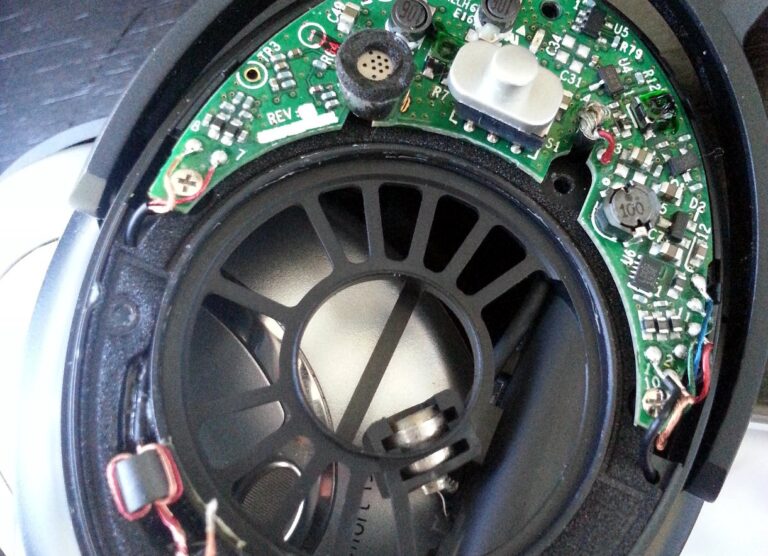
Ear pads absorb sweat, skin oil, and pressure. They may flatten, crack, peel, or lose their seal.
Worn pads affect more than comfort. A poor seal can:
- Let in more outside noise
- Reduce bass
- Make ANC seem weaker
- Cause you to raise the volume
Many popular headphones use removable replacement pads. Replacing them can restore comfort and improve the seal without replacing the entire headset.
3. Headband and hinges
Hinges take stress each time you fold or unfold the headphones. The headband may also crack if the headphones are stretched too far or stored under heavy objects.
Do not force a stiff hinge. Small resistance can become a broken joint if you keep applying pressure.
4. Charging port and cable
Repeated bending can damage the charging cable or port. Dirt inside a USB-C port may also prevent proper charging.
Try a different known-good cable and power adapter before assuming the battery has failed. Do not insert metal tools into the port.
5. Microphones and speakers
ANC depends on microphones that detect outside sound. A blocked microphone opening can reduce noise cancellation or create a hiss.
The speakers may last for many years, but moisture, high volume, and physical impact can cause distortion. If only one side sounds weak, the cause may be debris, a software issue, a damaged cable, or a failing speaker.

What Factors Affect Headphone Lifespan?
Heat, moisture, impact, and charging habits have the greatest effect on how long noise-canceling headphones last.
Daily listening time
More use usually means more charging cycles and more physical wear. A person who wears headphones for eight hours each day will likely reach battery wear sooner than someone who uses them twice a week.
This does not mean you should avoid charging them. Modern headphones include charging controls, and normal use is safer than trying to keep the battery nearly empty.
Heat
Do not leave headphones in a hot car or in direct sun. High temperatures can damage lithium-ion batteries and may deform ear pads or plastic parts.
The U.S. Department of Energy explains that battery performance and aging are affected by temperature and operating conditions. Keep headphones in a moderate, dry place when possible.
Sweat and moisture
Many over-ear ANC headphones are not waterproof. Even models with some water resistance may not be designed for heavy sweat, rain, or immersion.
Before using headphones during exercise, check the exact water-resistance rating. Do not assume that “wireless” means water-resistant.
Storage
Store headphones in a case when you travel. Keep them away from keys, loose coins, drinks, and heavy bags.
For long-term storage, avoid leaving the battery completely empty. A moderate charge in a cool, dry place is generally more practical than storing the headset at 0% or 100% for months.
Volume
High volume does not normally drain the battery as quickly as ANC and advanced features, but it can damage hearing. The CDC recommends reducing exposure to loud sounds and using hearing protection in noisy places.
ANC can help you listen at a lower volume because it reduces background noise. It does not make loud listening harmless.

How to Make Noise-Canceling Headphones Last Longer
Use the following routine to extend both battery and physical life.
1. Keep the firmware updated
Install official firmware updates when the manufacturer provides them. Updates may fix Bluetooth problems, battery reporting errors, or ANC behavior.
Use the brand’s official app or support page. Avoid unofficial firmware tools.
2. Clean the headphones gently
Wipe the outside with a soft, dry cloth. If the manufacturer allows it, use a slightly damp cloth on non-electronic surfaces.
Keep liquid away from:
- Microphone openings
- Speakers
- Charging ports
- Buttons and seams
Do not spray cleaner directly onto the headphones.
3. Replace the ear pads when needed
Replace pads when they crack, flatten, smell strongly, or no longer create a good seal. Use pads made for the exact model.
Third-party pads may change comfort, sound, and ANC performance. They can be useful, but they are not always acoustically identical to the original pads.
4. Avoid unnecessary full discharges
Charge the headphones before they reach a critically low level if you know you have a long trip ahead. Lithium-ion batteries do not need regular full discharge cycles.
Do not leave the headphones connected to a charger for weeks unless the manufacturer specifically supports that use.
5. Protect the hinges
Fold the headphones only as designed. Carry them in their case and do not place heavy items on top of them.
When putting them on, widen the headband evenly with both hands instead of pulling one side outward.
6. Dry them before storage
If the headphones become damp, wipe them and let them air-dry fully before placing them in a case or connecting a charger.
Do not use a hair dryer or place them on a heater. Strong heat can harm the battery and plastic.
7. Use wired mode when helpful
Some ANC headphones support wired listening. Wired mode may reduce battery use, but the result depends on the model.
Some headphones still need power for ANC or digital processing even when connected by cable. Check the manual before relying on wired mode during travel.

How to Tell Whether the Battery Is Failing
A battery is likely nearing the end of its service life when runtime drops sharply and basic troubleshooting does not help.
Look for these signs:
- Playback time is much shorter than the original specification
- The battery percentage falls in large jumps
- The headphones shut off with a reported charge remaining
- They work only while plugged in
- The charging light behaves unusually
- The headphones become hot during normal charging
- The battery case bulges or separates
Stop using and charging the headphones if the battery swells, leaks, smells unusual, or becomes dangerously hot. Move them away from flammable materials if it is safe to do so, and contact the manufacturer or a qualified battery-recycling service.
Do not puncture, crush, or open a swollen lithium-ion battery.
A simple battery test
To check battery health:
- Fully charge the headphones using the recommended charger.
- Note the starting time and battery percentage.
- Play audio at a normal volume with your usual features enabled.
- Record how long the headphones operate before shutting down.
- Repeat the test once if the result seems unusual.
Compare the result with the original manufacturer rating. The test is not a laboratory measurement, but it can show whether runtime has fallen enough to affect daily use.

Should You Repair or Replace the Headphones?
Repair is more sensible when the headphones are otherwise comfortable, compatible, and in good condition. Replace them when repair cost, safety, or repeated faults outweigh the benefit.
Consider repair when:
- The battery is replaceable
- Replacement ear pads are available
- Bluetooth and ANC still work correctly
- The headband and hinges are intact
- The repair cost is clearly below a comparable replacement
Replacement may make more sense when:
- The battery is swollen
- The headphones have several faults
- The charging port is damaged
- The model no longer receives needed software support
- Replacement parts are unavailable
- Repair requires unsafe battery work
Check warranty and service terms
In the United States, warranty coverage varies by brand, model, seller, and state. Many limited warranties cover manufacturing defects but exclude normal battery capacity loss, accidental damage, liquid exposure, and wear.
Check:
- The purchase date
- Proof of purchase
- The exact model number
- The warranty exclusions
- Authorized repair requirements
- Battery service pricing
Do not open the headphones while they are under warranty unless the manufacturer permits it.
Recycle old headphones properly
Do not place headphones or loose lithium-ion batteries in household trash or curbside recycling. The U.S. Environmental Protection Agency recommends using appropriate electronics or battery-recycling programs.
In the United States, local household hazardous-waste programs, electronics recyclers, and retailer take-back programs may accept old devices. Confirm the rules in your area before disposal.
How Long Do Wired Noise-Canceling Headphones Last?
Wired ANC headphones can last longer between replacements because they may have fewer wireless components and no Bluetooth battery drain. However, active noise cancellation still needs power in many wired models.
A wired pair may last five years or more when stored carefully. Its cable, connectors, battery, switches, and ear pads can still wear out.
The main advantage is not that wired headphones never fail. It is that a wired connection may keep the headphones useful for audio after wireless features or pairing support become unreliable.
If the cable is removable, replacing the cable may solve connection problems. If the cable is permanently attached, a failure near the plug may be harder to repair.

How Long Do Noise-Canceling Earbuds Last?
Noise-canceling earbuds often last about 2 to 3 years, though the charging case and tiny batteries can fail sooner than those in over-ear headphones.
Earbuds face extra challenges:
- Small batteries have limited capacity
- Sweat and earwax can block microphones
- The charging case adds another battery
- Individual earbuds can be lost
- Replacement parts may be limited
Over-ear headphones often last longer because they have larger batteries, bigger physical parts, and replaceable ear cushions. Earbuds are smaller and more portable, but they may be harder to repair.

Common Mistakes That Shorten Headphone Life
Avoid these habits if you want your ANC headphones to last longer:
- Leaving them in a hot vehicle
- Storing them wet in a closed case
- Pulling one side of the headband to put them on
- Charging with a damaged cable
- Using strong cleaners on the pads or shell
- Placing them loose in a bag with sharp objects
- Ignoring battery swelling or overheating
- Using high volume to overcome poor ear-pad seals
- Assuming all wireless models are water-resistant
- Buying replacement pads without checking model fit
The most costly mistake is continuing to use a damaged lithium-ion battery. A short runtime is inconvenient. A swollen or overheated battery is a safety issue.

Frequently Asked Questions
Do noise-canceling headphones stop working after two years?
No. Two years is not a fixed expiration point. Many headphones continue working longer, but battery capacity may decline after years of regular charging and use.
Can replacing the battery make headphones last longer?
Yes, if the battery is the main problem and a safe replacement service exists. The repair must match the exact model and battery specifications.
Does active noise cancellation damage the headphones?
No. ANC is a normal operating function. It uses additional power, but using ANC by itself should not damage a properly designed headset.
Is it bad to leave noise-canceling headphones charging overnight?
Occasional overnight charging is not usually a problem for modern headphones with built-in charging controls. Long-term heat and constant high charge can contribute to battery aging, so follow the manufacturer’s charging guidance.
Can I use ANC headphones while they are charging?
Some models allow it, while others turn off or limit playback during charging. Check the manual. Do not use a damaged cable, loose port, or overheating charger.
Why does noise cancellation get worse over time?
Worn ear pads, blocked microphones, firmware problems, poor fit, and battery or microphone faults can all reduce perceived ANC performance. Replace damaged pads and clean the microphone openings before assuming the electronics have failed.
Conclusion
Noise-canceling headphones usually last 2 to 5 years, while a single battery charge commonly provides 20 to 40 hours of use. The battery, ear pads, hinges, and charging port are the parts most likely to limit their lifespan.
Keep the headphones cool and dry, store them in a case, clean them gently, replace worn pads, and follow the manufacturer’s charging guidance. If the battery swells, leaks, or becomes unusually hot, stop using the headphones and seek proper service or recycling.
The best next step is to check the exact model’s battery rating, warranty terms, water-resistance limits, and battery-repair options.