How To Soundproof Headphones: Easy DIY Guide

Introduction
You cannot make ordinary headphones completely soundproof, but you can reduce outside noise by improving their seal, adding passive barriers, and using active noise cancellation. In the United States, the best setup for most people is a well-sealed pair of over-ear headphones with noise cancellation, used at a safe volume.
The right method depends on the noise. Thick ear pads help block voices and high sounds. Active noise cancellation works best against steady low sounds, such as airplane engines, HVAC systems, and bus noise. A poor fit can weaken both methods.
This guide explains how to soundproof headphones, how to improve isolation at home, what modifications are safe, and when hearing protection is a better choice than regular headphones.

What “soundproof headphones” really means
“Soundproof” headphones do not block all sound. The more accurate terms are passive noise isolation, active noise cancellation, and hearing protection.
Passive noise isolation
Passive isolation uses physical materials to reduce sound before it reaches your ears. These materials include:
- Closed-back ear cups
- Dense foam
- Thick ear pads
- A tight headband
- A complete seal around the ears
Passive isolation works without batteries. It is often effective against speech, keyboard noise, traffic, and sudden sounds. However, it may feel warm or tight during long use.
Active noise cancellation
Active noise cancellation, or ANC, uses microphones and speakers to reduce outside noise. The headphones listen to incoming sound and create an opposing signal.
ANC is strongest against steady, low-frequency noise. It may reduce the hum of an airplane or air conditioner well. It is usually less effective against a nearby conversation, a dog bark, or a door closing.
ANC does not make headphones hearing protection. Unless the product has a verified noise-reduction rating, do not use ordinary headphones for loud workplaces, firearms, power tools, or other high-noise settings.
Sound leakage
Sound leakage is noise that leaves the headphones and reaches people nearby. It is different from outside noise entering the headphones.
Closed-back headphones usually leak less sound than open-back headphones. Open-back models are designed to let air and sound pass through the ear cups, so they are poor choices when you want privacy or quiet.
The fastest way to improve headphone isolation
The ear-pad seal is usually the most important part of passive isolation. Even a strong pair of headphones will perform poorly if the pads sit on glasses, hair, or uneven skin.
Use these steps first:
-
Choose closed-back headphones.
Open-back headphones cannot be made fully isolating without changing their design. -
Center each ear cup over your ear.
Your ear should fit inside the pad, not press against its edge. -
Adjust the headband.
The cups should touch your head all around the ear. They should not hurt or create sharp pressure. -
Move hair away from the seal.
Thick hair can create small gaps that let sound in. -
Check eyeglasses and jewelry.
Glasses frames can break the seal near the temples. Thin frames usually cause less leakage than thick frames. -
Replace worn ear pads.
Crushed or cracked pads allow more sound through. replacement pads can restore isolation without replacing the headphones. -
Try memory-foam replacement pads.
Foam can conform to the shape of your head. Choose pads made for your exact headphone model, since the wrong size may reduce comfort and sound quality.
A simple test is to play a quiet track and gently press the ear cups against your head. If outside noise drops sharply, the fit is the main issue. Do not use excessive pressure as a permanent solution. A seal that hurts your ears is not a good seal.

How to make headphones more soundproof with ear pads
Replacing ear pads is one of the safest headphone modifications. It can improve isolation, comfort, and sound leakage, but the result depends on the pad design.
Choose the right pad material
Memory foam can improve the seal because it compresses around the head. It may also reduce small gaps caused by glasses or facial movement.
Dense synthetic leather, often called protein leather or polyurethane leather, usually blocks more sound than thin fabric. It can feel warmer and may wear faster with sweat.
Velour and cloth pads are often cooler and more comfortable, but they may allow more sound to pass through. They can also change the headphone’s sound because they alter the distance between your ears and the drivers.
Choose the right pad shape
A deeper pad can keep your ears from touching the driver cover. A wider pad can fit larger ears. The pad must still press evenly against your head.
Avoid pads that are too large for the ear cup. Gaps between the pad and the headphone housing can allow sound through. Pads that are too small may press on your ears and break the seal.
Replace pads without damaging the headphones
Most ear pads attach with a lip, clips, or adhesive. Before removing them:
- Check the headphone manual.
- Look for a model-specific replacement guide.
- Avoid pulling the driver or internal wires.
- Keep loose foam and adhesive away from the speaker opening.
- Test one side before completing the replacement.
New pads may change bass response. A tighter seal often increases bass, while a looser seal can make the sound thinner. If the sound becomes muddy, the pads may be too dense or too deep for that headphone design.

How to add passive sound blocking safely
You can add limited passive isolation, but do not seal the headphone vents, cover microphones, or place loose material inside the ear cups.
Safe options include:
Use a soft headband or ear warmer
A thin fleece ear warmer can reduce small gaps around the top and sides of the ear cups. It may help in cold rooms, but it should not force the headphones tightly against your ears.
Wear a thin beanie
A thin beanie can reduce air gaps. Avoid thick hats that change the headphone position or create painful pressure. Make sure the ear cups remain centered over your ears.
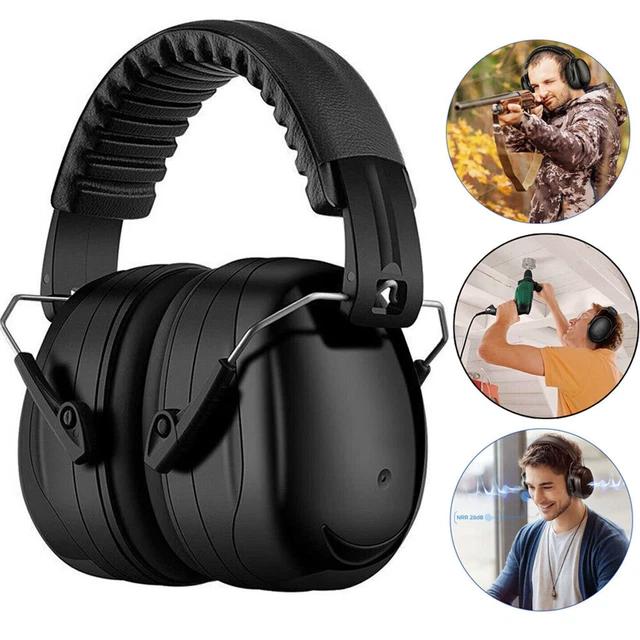
Use hearing-protection earmuffs over headphones
Industrial earmuffs may fit over small earbuds or compact headphones. This can create an extra barrier, but the combination may become hot and uncomfortable.
Do not assume that the hearing-protection rating applies to the entire combination. The protection level depends on fit, frequency, correct use, and the specific equipment. For workplace noise, follow the employer’s hearing-conservation program and use hearing protection marked with a suitable Noise Reduction Rating.
Do not use loose foam inside the ear cups
Loose foam, cotton, tissue, and fabric can touch the driver. They may reduce sound quality, block ventilation, trap heat, or damage the headphone. They also do not create a reliable or tested noise-reduction system.
How to use noise cancellation for better results
ANC works best when the headphones already fit well. It cannot correct a large air gap around the ear.
To get better results:
- Turn on ANC in the manufacturer’s app or headphone controls.
- Select the standard noise-cancellation mode rather than transparency or ambient mode.
- Wear the headphones with both ear cups fully sealed.
- Keep the microphones clear of clothing and hair.
- Update the headphone firmware if the manufacturer recommends it.
- Test different fit or ear-seal settings if the app provides them.
- Use a low-volume audio track instead of turning up the music to hide noise.
Some ANC headphones offer adaptive modes. These modes may change the amount of cancellation as the surroundings change. They can be useful outdoors, but a fixed ANC mode may feel more consistent in an airplane or office.
ANC can create a feeling of ear pressure for some people. This sensation does not necessarily mean that air pressure inside the ear has changed. If ANC causes pain, dizziness, nausea, or a strong headache, stop using it and consider a passive-isolation model.
How to soundproof headphones for different types of noise
The best method changes with the sound source. Use this table as a starting point.
| Noise source | Most useful solution | Why |
|---|---|---|
| Airplane or bus engine | ANC plus closed-back ear cups | Low, steady noise is a strong ANC target |
| Air conditioner or fan | ANC or dense over-ear pads | Both methods can reduce continuous sound |
| Human speech | Strong passive seal plus masking audio | Speech contains changing frequencies that ANC may not remove fully |
| Keyboard clicks | Closed-back pads and a good seal | Passive barriers can reduce sharp, high sounds |
| Dog barking or alarms | Passive isolation and distance | Sudden sounds are hard for ANC to remove |
| Construction tools | Certified hearing protection | Ordinary headphones are not a safe substitute |
| Loud music venue | Earplugs or certified earmuffs | Headphones may not provide a tested protection rating |
| Noise leaking from your headphones | Closed-back design and a lower volume | A good seal reduces sound escaping |
Distance is often more effective than a headphone modification. Moving away from a speaker, closing a door, or adding a room barrier can reduce the sound before it reaches your ears.
How to test whether your headphones block enough noise
There is no single home test that proves a pair of headphones provides a specific level of hearing protection. You can still check fit and practical performance.
Test the seal
Play steady background noise at a low level. Cover one ear cup with your hand for a moment. If the sound changes greatly, the ear cup may not seal well.
Repeat the test while:
- Adjusting the headband
- Moving hair away from the pad
- Removing glasses
- Pressing the ear cup lightly
- Trying a different pad
If a small adjustment causes a large change, fit is the main problem.
Test ANC
Compare ANC on and off while listening to the same steady noise. Keep the headphones in the same position and use the same volume.
A useful ANC system should reduce a steady hum without making the sound harsher. It may not remove voices or sudden sounds. That is a normal limitation, not necessarily a defect.
Watch for signs of a poor setup
Your headphones may need adjustment or replacement if:
- One ear sounds louder than the other
- Outside noise enters through one side
- The pads slide when you move
- The headphones cause pain within a short time
- You increase the volume to uncomfortable levels
- The ear pads are cracked, flat, or peeling
- ANC creates clicking, wind noise, or feedback
Do not measure protection by how silent the headphones feel. A quiet listening experience and safe hearing protection are not the same thing.
Volume and hearing safety
Soundproofing headphones should help you lower the volume, not encourage you to turn it up.
The National Institute for Occupational Safety and Health recommends limiting occupational exposure to an average of 85 dBA over an 8-hour workday, using a 3 dB exchange rate. This is a workplace guideline, not a personal guarantee of safety. The louder the sound, the less time it may take to harm hearing.
Use these habits:
- Keep the volume as low as practical.
- Take regular listening breaks.
- Stop if you notice ringing, muffled hearing, pain, or sound sensitivity.
- Do not wear isolating headphones when you must hear alarms, traffic, coworkers, or announcements.
- Use transparency mode when awareness is necessary.
- Keep children away from high-volume listening and poorly fitting adult headphones.
For loud tools, shooting, industrial equipment, or other hazardous noise, use hearing protection with a stated Noise Reduction Rating. Follow the product instructions and workplace rules. An audiologist, occupational-health professional, or safety professional can help when noise exposure is frequent or severe.
Common mistakes when trying to soundproof headphones
Covering the microphones
ANC headphones need microphones to detect outside sound. Tape, foam, or a case placed over the microphones can reduce performance or cause feedback.
Blocking vents
Some headphones use vents to control pressure and sound. Blocking them can change the audio, create distortion, or damage the enclosure.
Using too much clamping force
A tighter fit may reduce gaps, but excess pressure can cause headaches, jaw discomfort, and ear pain. Comfort matters because an uncomfortable headset is less likely to be worn correctly.
Using open-back headphones
Open-back headphones are built for airflow and a spacious sound. They are not a good starting point for isolation. Ear pads alone cannot turn them into sealed headphones.
Turning up the volume
Louder audio can mask outside noise, but it increases the risk of hearing damage. Improve the seal or move to a quieter place instead.
Treating ANC as a safety device
Consumer ANC headphones may reduce perceived noise without providing a certified protection rating. Do not use them alone for hazardous sound levels.
Mixing parts without checking fit
Third-party ear pads may fit physically but still create leaks, change the sound, or interfere with sensors. Check the exact model and return policy before buying replacement parts.
What to do when soundproofing does not work
If your headphones still let in too much noise, troubleshoot in this order:
-
Check the headphone type.
Replace open-back headphones with a closed-back model if isolation is the main goal. -
Check the seal.
Adjust the cups, hair, glasses, and headband. -
Inspect the ear pads.
Replace pads that are flat, cracked, loose, or oily. -
Test ANC separately.
Compare ANC on and off with steady background noise. -
Check the noise type.
ANC may not help much with voices, sudden sounds, or high-pitched noise. -
Reduce the noise at its source.
Close doors, move farther away, use curtains, or add a room barrier. -
Use certified hearing protection when needed.
Stop relying on consumer headphones if the setting is loud enough to threaten hearing.
If one side suddenly loses isolation, check for a damaged pad, blocked microphone, loose connection, or electronic fault. If you also notice hearing loss, ringing, pain, or dizziness, stop using the headphones and seek medical advice.
Frequently asked questions
Can I make regular earbuds soundproof?
You can improve earbud isolation with the correct silicone or foam tips. Foam tips often create a stronger seal than loose silicone tips. However, earbuds remain vulnerable to fit, ear shape, and movement. They are not automatically hearing protection.
Are noise-canceling headphones better than earplugs?
They serve different purposes. ANC headphones can make travel, work, and study more comfortable. Earplugs and earmuffs designed for hearing protection are the safer choice for hazardous noise when they have an appropriate rating and fit.
Do thicker ear pads block more sound?
Not always. Thick pads can help if they create a complete seal, but the material, shape, density, and fit matter more than thickness alone. A poorly fitted thick pad may block less noise than a thinner pad that seals evenly.
Why does ANC not block people talking?
Speech changes quickly across many frequencies. ANC is usually better at reducing steady, low-frequency sound. A closed-back design, a strong ear-pad seal, and low-level masking audio may help more with voices.
Can I wear earmuffs over headphones?
Sometimes. The earmuffs must fit fully around the headphone or earbud without creating gaps. For hazardous noise, use equipment designed and rated for that purpose. Do not add the ratings of two devices together unless the manufacturer or a qualified safety professional provides a valid method.
Final recommendation
Start with fit, not modification. Use closed-back headphones, replace worn pads, and choose memory-foam or dense pads that seal around your ears. Add ANC when the main problem is steady low-frequency noise.
For loud tools, firearms, industrial equipment, concerts, or other hazardous settings, use certified hearing protection instead of treating ordinary headphones as soundproof. The best setup is the one that reduces noise while staying comfortable, preserving awareness when needed, and allowing you to keep the listening volume low.
For further technical guidance, consult the CDC and NIOSH hearing-loss prevention resources and the Occupational Safety and Health Administration hearing-conservation guidance.